Many-ribbed Salamander
Eurycea multiplicata
A long, skinny salamander that reaches 3-4.5 cm in snout to vent length, although neotenic individuals are common in some populations and they tend to grow larger and rea…
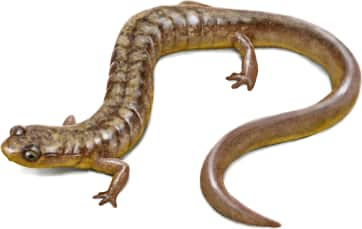
How to identify
A long, skinny salamander that reaches 3-4.5 cm in snout to vent length, although neotenic individuals are common in some populations and they tend to grow larger and reach 5.4 cm in snout to vent length. It is primarily yellow in color and has a small flat head and skinny legs. It has many noticeable costal grooves, and its ventrum is solid yellow without markings.
Range
Southwestern Missouri, northwestern Arkansas, eastern Oklahoma, and extreme southeastern Kansas.
Habitat
This species is primarily aquatic, but sometimes found in cool, moist terrestrial areas around freshwater. They are most often found under rocks or logs in springs or slow-moving streams, but will also inhabit cave mouths.
Variations
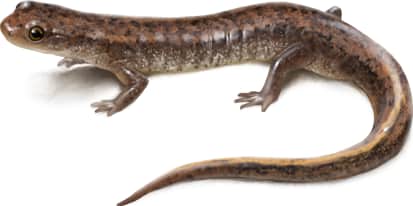
Some have dark longitudinal striping or speckles down their back, while others are more solid yellow with tiny light or dark speckles all over. Adults with external gills are not uncommon.
Similar species
The Oklahoma salamander (*Eurycea tynerensis*) used to be considered a subspecies.
Name and etymology
Genus
Eurycea
Probably honoring Eurydice the wife of Orpheus in Greek mythology. Although Rafinesque, who named the genus, only wrote "mythological"
Origin
Honors
Sources
- Rafinesque, 1822. Kentucky Gazette, Lexington, N. S., Vol. 1, No. 9, Feb. 28, p. 3, column 6
Eurycea. Rafinesque, 1822 - Kentucky Gazette, Lexington, N. S., Vol. 1, No. 9, Feb. 28, p. 3, column 6
Species epithet
multiplicata
Latin for many (multus) folds (plicata), referencing its many costal ribs.
Origin
Sources
- (Cope, 1869). Proc. Acad. Nat. Sci. Philadelphia, Vol. 21, p. 106 ↗
Eurycea multiplicata. (Cope, 1869) - Proc. Acad. Nat. Sci. Philadelphia, Vol. 21, p. 106
Explore more names in the etymology index.
At a glance
Range
Southwestern Missouri, northwestern Arkansas, eastern Oklahoma, and extreme southeastern Kansas.
Habitat
This species is primarily aquatic, but sometimes found in cool, moist terrestrial areas around freshwater. They are most ofte…
Guide
Reptiles and Amphibians of North America
Range map
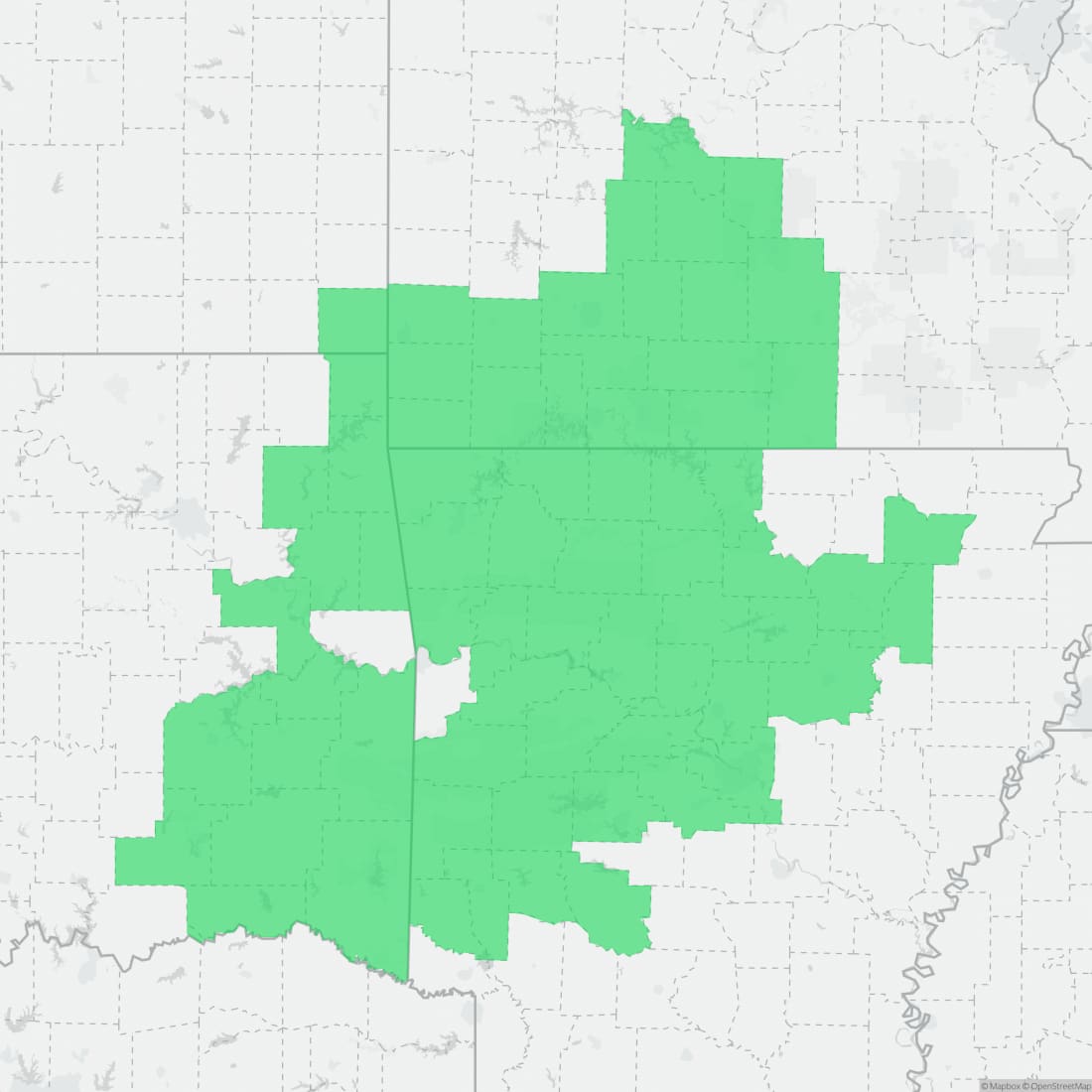
Approximate range. © Mapbox © OpenStreetMap