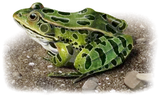
Northern Two-lined Salamander
Eurycea bislineata
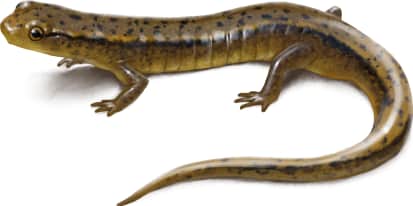
This salamander is slender and averages 2.5 – 5 inches in length. They are identified prominently by the wide stripe that runs from the head to the tail. The stripe is bo…
How to identify
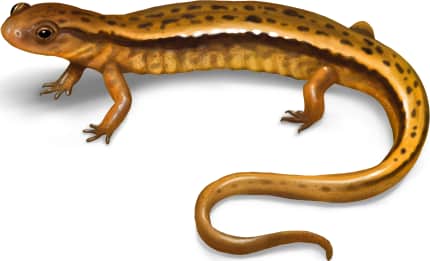
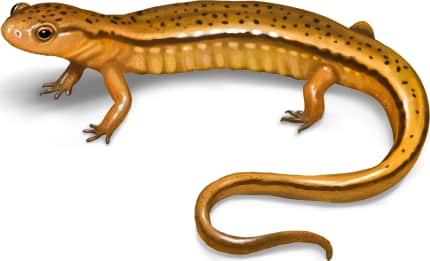
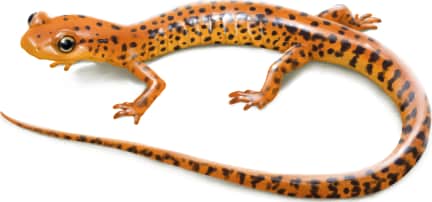
This salamander is slender and averages 2.5 – 5 inches in length. They are identified prominently by the wide stripe that runs from the head to the tail. The stripe is bordered by black lines that may separate into short dashes around the tail. The stripe may range in colors from tan to yellow or greenish-yellow. The sides possess mottled pigmentation and each side had 15 – 16 coastal grooves and a small set of legs. Males display whitish lower eyelid glands in the breeding season and an obvious mental gland on the chin. Males also have a distinctive cirri. E. bislineata larvae have a yellowish ground color that is flecked with spots of brown or gray on the back and head. But old larvae do not have these spots. Both old and young larvae can be distinguished by their characteristic reddish-brown gills.
Range
Eastern United States and Canada; from southern Quebec and eastern Ontario through northeastern United States and ending in central Ohio, eastern West Virginia, and northern Virginia.
Habitat
Adults can be found in rocky streams, moist woodland or habitats with cover from dead foliage, rocks, or logs. They wander far from water sources sometimes, but most times you can find them along stream banks. Larvae are usually found in springs or streams. The females resort to water to lay eggs after the breeding season in fall. The eggs are deposited underneath rocks or logs in flowing water. Although primarily insectivorous (eating beetles, mayflies, centipedes, etc.), adult salamanders also eat other invertebrates like snails and earthworms. The larvae feed on crustaceans and copepods and other invertebrate aquatic larvae.
Similar species
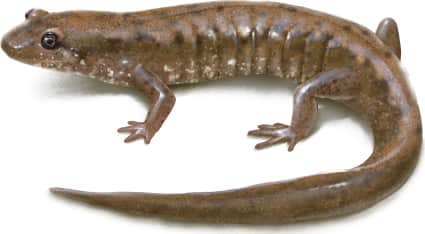
Blue Ridge Two-lined Salamander or Eurycea wilderae was once a subspecies of E. bislineata called E.b. wilderae. A good way to differentiate these salamanders is their location. You can find E. wilderae in the southern range of Virginia. Southern Two-lined Salamander or Eurycea cirrigera was also once a subspecies of E. bislineata (E. b. cirrigera). A physical difference between these two salamanders is that E. cirrigera has black lined that stretch down to the tail. Northern Dusky Salamander or Desmognathus fuscus is roughly equal in size and sometimes has one or two dorsal stripes. However, specimens can appear uniformly and its colors are usually reddish-brown, gray and olive with white or gray undersides.
Name and etymology
Genus
Eurycea
Probably honoring Eurydice the wife of Orpheus in Greek mythology. Although Rafinesque, who named the genus, only wrote "mythological"
Origin
Honors
Sources
- Rafinesque, 1822. Kentucky Gazette, Lexington, N. S., Vol. 1, No. 9, Feb. 28, p. 3, column 6
Eurycea. Rafinesque, 1822 - Kentucky Gazette, Lexington, N. S., Vol. 1, No. 9, Feb. 28, p. 3, column 6
Species epithet
bislineata
Latin for two (bis) lined or streaked (lineata) referencing its two doral stripes.
Origin
Sources
- (Green, 1818). Journ. Acad. Nat. Sci. Philadelphia, Vol. 1, No. 1, p. 352 ↗
Eurycea bislineata. (Green, 1818) - Journ. Acad. Nat. Sci. Philadelphia, Vol. 1, No. 1, p. 352
Explore more names in the etymology index.
At a glance
Range
Eastern United States and Canada; from southern Quebec and eastern Ontario through northeastern United States and ending in c…
Habitat
Adults can be found in rocky streams, moist woodland or habitats with cover from dead foliage, rocks, or logs. They wander fa…
Guide
Reptiles and Amphibians of North America
Range map
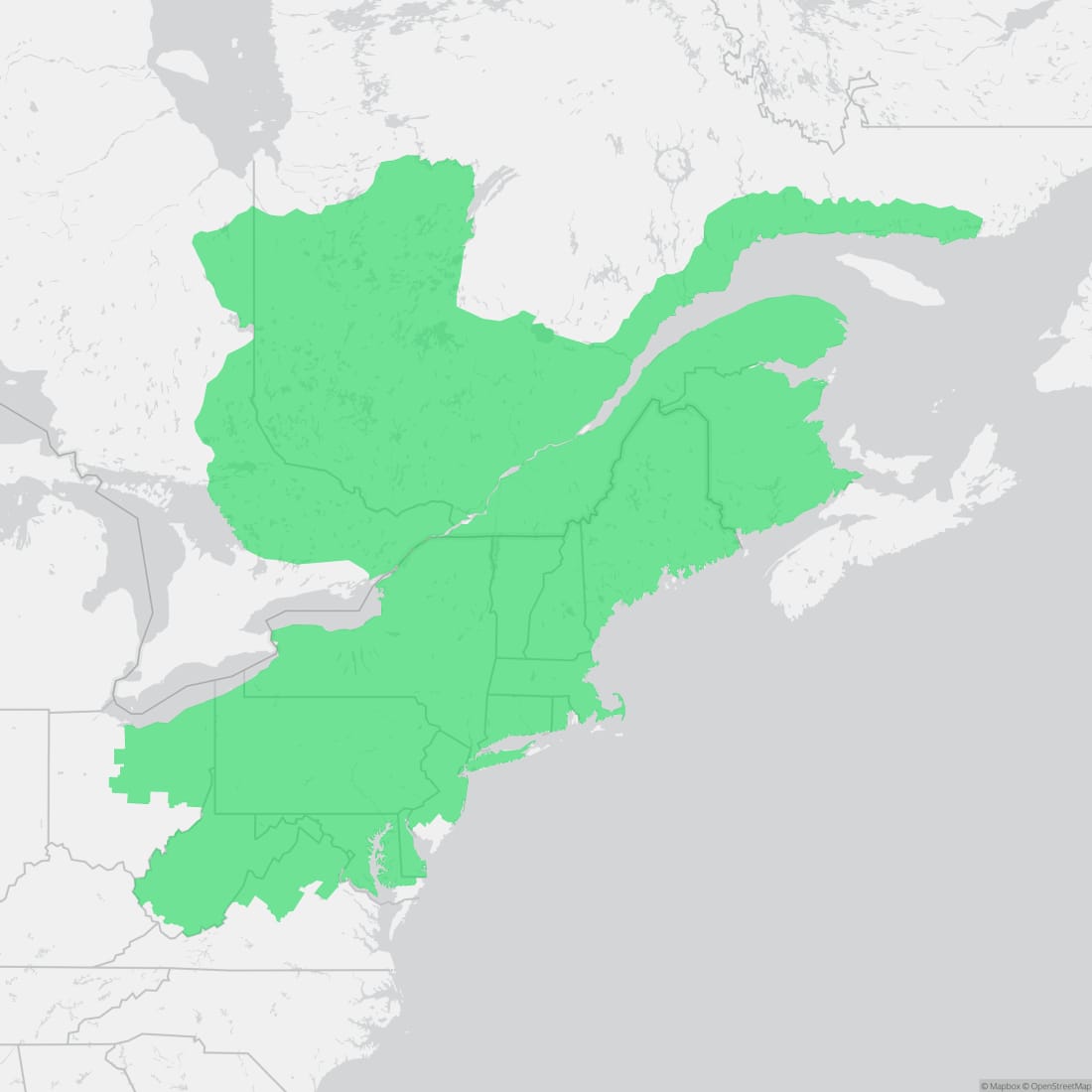
Approximate range. © Mapbox © OpenStreetMap