
Long-tailed Salamander
Eurycea longicauda
E. longicauda is a medium-sized salamander, reaching a total length of 4.5 to 6.5 inches (11.5 to 16.5 cm). As the name suggests, the tail is a prominent feature, contri…
How to identify
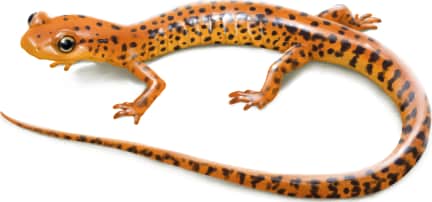
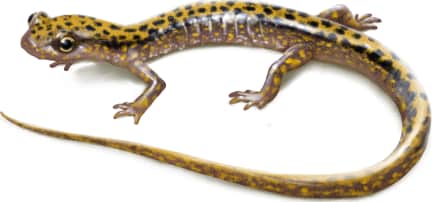
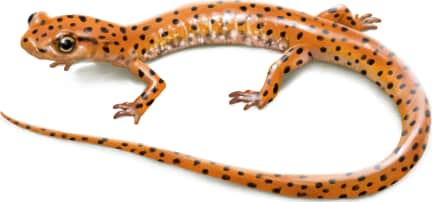
E. longicauda is a medium-sized salamander, reaching a total length of 4.5 to 6.5 inches (11.5 to 16.5 cm). As the name suggests, the tail is a prominent feature, contributing to roughly 60% of the total body length. The body color varies from yellow to different shades of orange, often adorned with a mottled pattern of dark speckles or blotches on the back that may extend onto the tail. The underside is light yellow or cream-colored. The tail is with either dark vertical bars or chevrons.
Range
E. longicauda range stretches across the eastern half of North America, ranging from southeastern Missouri and southern Illinois eastward to the Appalachian Mountains. It extends north to southern New York and south into the panhandle of Florida. E. longicauda longicauda prefers wooded areas with access to permanent sources of moisture, typically residing at lower elevations compared to its close relatives
Habitat
E. longicauda thrives in cool, moist environments near cave entrances, spring seeps, and rocky streams within forested areas. They are primarily aquatic, seeking shelter under rocks or crevices during the day and venturing out at night to forage.
Similar species
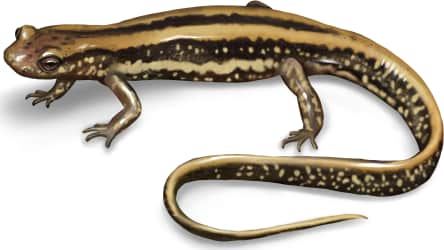
E. longicauda can be mistaken for the Three-lined Salamander (E. guttolineata). However, E. guttolineata has three distinct dorsal stripes running along its back, a feature absent in E. longicauda.
Name and etymology
Genus
Eurycea
Probably honoring Eurydice the wife of Orpheus in Greek mythology. Although Rafinesque, who named the genus, only wrote "mythological"
Origin
Honors
Sources
- Rafinesque, 1822. Kentucky Gazette, Lexington, N. S., Vol. 1, No. 9, Feb. 28, p. 3, column 6
Eurycea. Rafinesque, 1822 - Kentucky Gazette, Lexington, N. S., Vol. 1, No. 9, Feb. 28, p. 3, column 6
Species epithet
longicauda
Latin for long (longus) tailed (cauda).
Origin
Sources
- (Green, 1818). Journ. Acad. Nat. Sci. Philadelphia, Vol. 1, No. 1, p. 351 ↗
Eurycea longicauda. (Green, 1818) - Journ. Acad. Nat. Sci. Philadelphia, Vol. 1, No. 1, p. 351
Explore more names in the etymology index.
At a glance
Size
100 to 200 mm
Range
E. longicauda range stretches across the eastern half of North America, ranging from southeastern Missouri and southern Illin…
Habitat
E. longicauda thrives in cool, moist environments near cave entrances, spring seeps, and rocky streams within forested areas.…
Range map
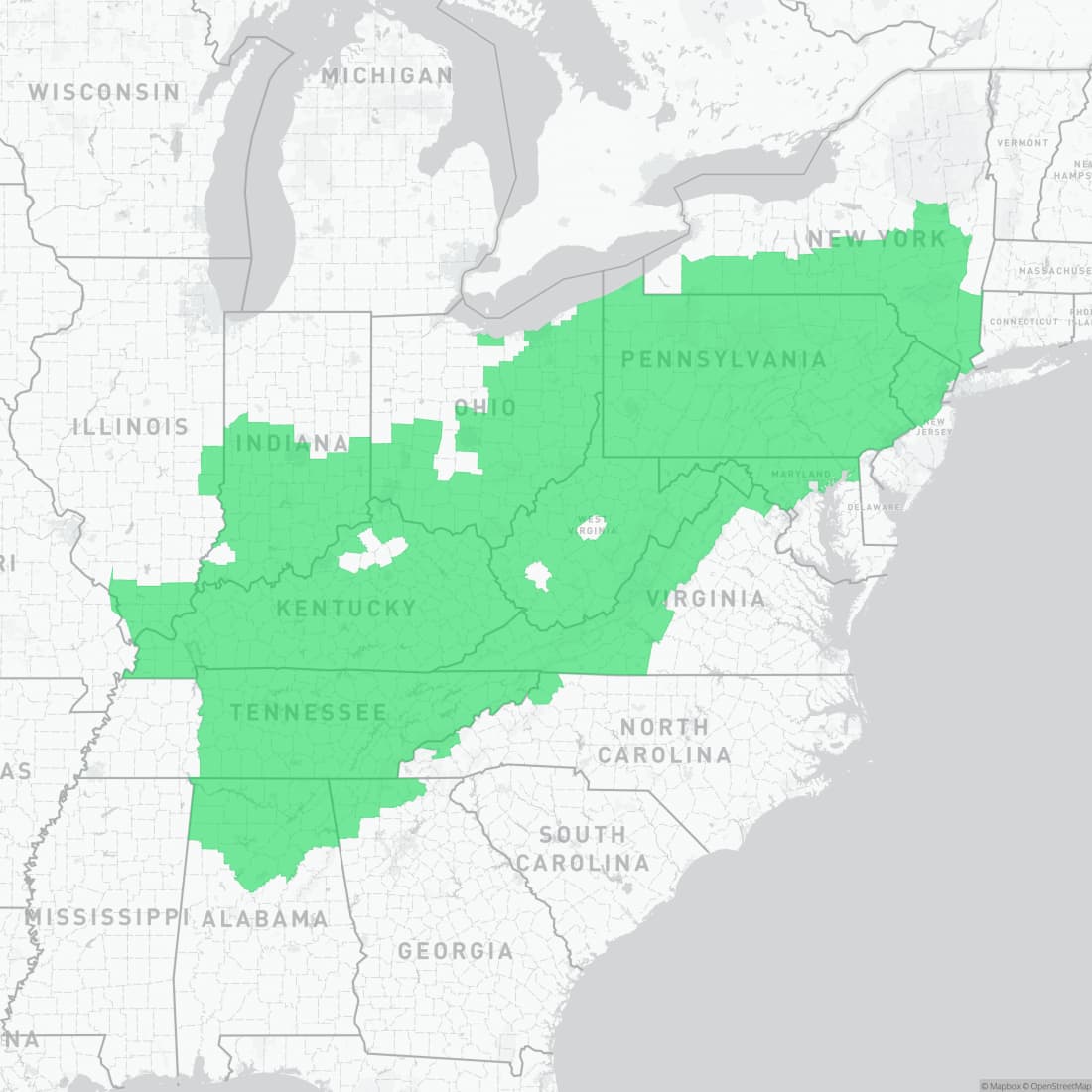
Approximate range. © Mapbox © OpenStreetMap