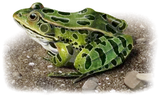
Dark-sided Salamander
Eurycea melanopleura
E. melanopleura is a lungless salamander with a slender body reaching up to 8 inches (20 cm) in total length. The tail makes up a significant portion of this length, typi…
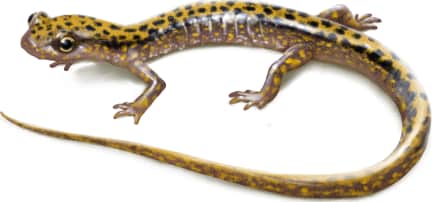
How to identify
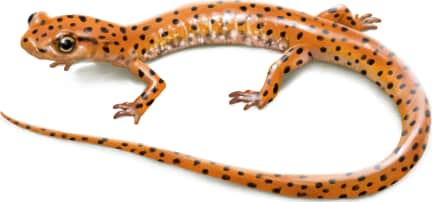
E. melanopleura is a lungless salamander with a slender body reaching up to 8 inches (20 cm) in total length. The tail makes up a significant portion of this length, typically exceeding 60% of the body size. True to its name, the sides of its body are a darker shade of brown or gray compared to the lighter yellowish or brown dorsal surface. Irregular dark spots may be scattered across the back, while the belly is light yellow to cream-colored. A distinguishing characteristic is a series of dark, vertical bars running along the sides of the tail.
Range
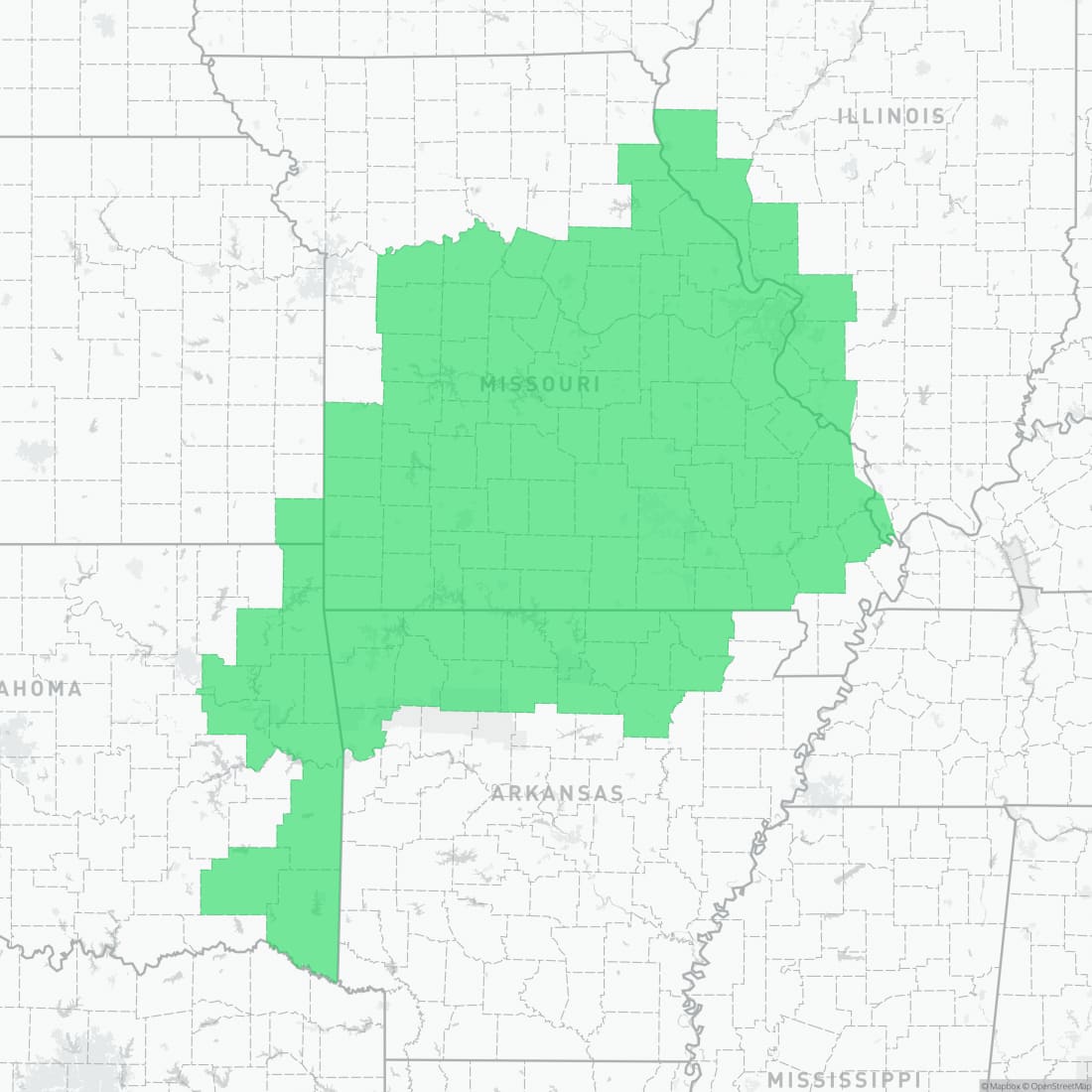
E. melanopleura's range is restricted to the Ozark and Ouachita Mountains, encompassing parts of Missouri, Arkansas, and Oklahoma. E. melanopleura inhabits mid- to high-elevation regions with an affinity for cool, moist environments, particularly near cave entrances and springs
Habitat
E. melanopleura thrives in cool, moist environments near cave entrances, spring seeps, and rocky streams within forested areas. They are primarily aquatic, seeking shelter under rocks or crevices during the day and venturing out at night to forage.
Similar species
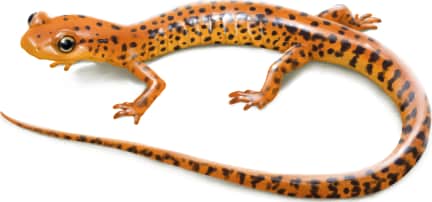
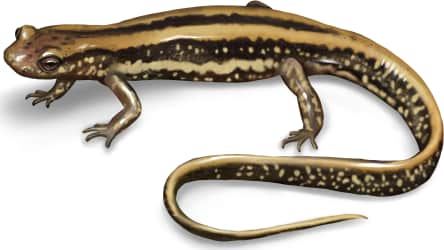
E. melanopleura was once considered a subspecies of the Long-tailed Salamander (E. longicauda) and can we easily confused. E. longicauda has a wider geographic distribution encompassing the Appalachian Mountains. E. melanopleura has more dark sides and often larger sna more numerous dark spots on back.
Name and etymology
Genus
Eurycea
Probably honoring Eurydice the wife of Orpheus in Greek mythology. Although Rafinesque, who named the genus, only wrote "mythological"
Origin
Honors
Sources
- Rafinesque, 1822. Kentucky Gazette, Lexington, N. S., Vol. 1, No. 9, Feb. 28, p. 3, column 6
Eurycea. Rafinesque, 1822 - Kentucky Gazette, Lexington, N. S., Vol. 1, No. 9, Feb. 28, p. 3, column 6
Species epithet
melanopleura
From Greek meaning (malaina) black (pleura) sides of body.
Origin
Sources
- (Cope, 1893). Proc. Acad. Nat. Sci. Philadelphia, Vol. 45, p. 383 ↗
Eurycea longicauda melanopleura. (Cope, 1893) - Proc. Acad. Nat. Sci. Philadelphia, Vol. 45, p. 383
Explore more names in the etymology index.
At a glance
Range
E. melanopleura's range is restricted to the Ozark and Ouachita Mountains, encompassing parts of Missouri, Arkansas, and Okla…
Habitat
E. melanopleura thrives in cool, moist environments near cave entrances, spring seeps, and rocky streams within forested area…
Guide
Reptiles and Amphibians of North America
Range map
Approximate range. © Mapbox © OpenStreetMap