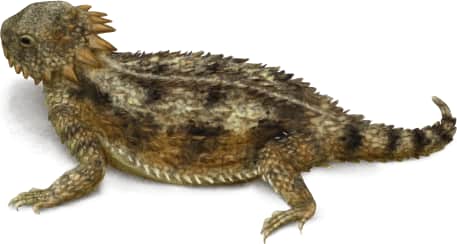
Regal Horned Lizard
Phrynosoma solare
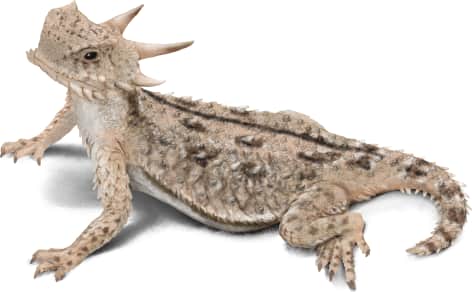
Named for displaying series of horns at the base of head resembling a crown. Rows of keeled scales occupy underside; row fringe scales runs up abdominal area. Overall bod…
How to identify
Named for displaying series of horns at the base of head resembling a crown. Rows of keeled scales occupy underside; row fringe scales runs up abdominal area. Overall body shape is wide, flat, and squat. Colors can include gray, brown, red, or yellow. Has the capacity to change colors to blend into current environment; change takes less than five minutes. Males and females mate in summer. Females lay eggs in late summer; clutches range from 7 to 33 eggs.
Range
Southern United States and northern Mexico; extreme southwestern New Mexico, south-central Arizona, western Chihuahua, northern Sinaloa, and Sonora.
Habitat
Prefers relatively flat terrain with some vegetation including canyons, hills, and lowers mountain slopes. Some females observed to dig holes as deep as 35 cm to lay eggs. Diet includes insects like spiders, sowbugs, and ants.
Variations
Individuals use a variety of tactics to deter enemies like nodding, head bobbing, and pushing their bodies up and down. The same tactics are used while individuals are involved in courtship. When threatened, populations in the United States are able to shoot blood spurts from around their eyes up to a meter in distance after restricting blood flow to head.
Similar species
Name and etymology
Genus
Phrynosoma
Greek for toad (phrynos) body (soma).
Origin
Sources
- Wiegmann, 1828. Isis von Oken, Vol. 21, p. 367 ↗
Phrynosoma. Wiegmann, 1828 - Isis von Oken, Vol. 21, p. 367
Species epithet
solare
Latin for like the sun, referencing the continuous frill of spines.
Origin
Sources
- Gray, 1845. Cat. Liz. Brit. Mus., p. 229
Phrynosoma solare. Gray, 1845 - Cat. Liz. Brit. Mus., p. 229
Explore more names in the etymology index.
At a glance
Range
Southern United States and northern Mexico; extreme southwestern New Mexico, south-central Arizona, western Chihuahua, northe…
Habitat
Prefers relatively flat terrain with some vegetation including canyons, hills, and lowers mountain slopes. Some females obser…
Guide
Reptiles and Amphibians of North America
Range map
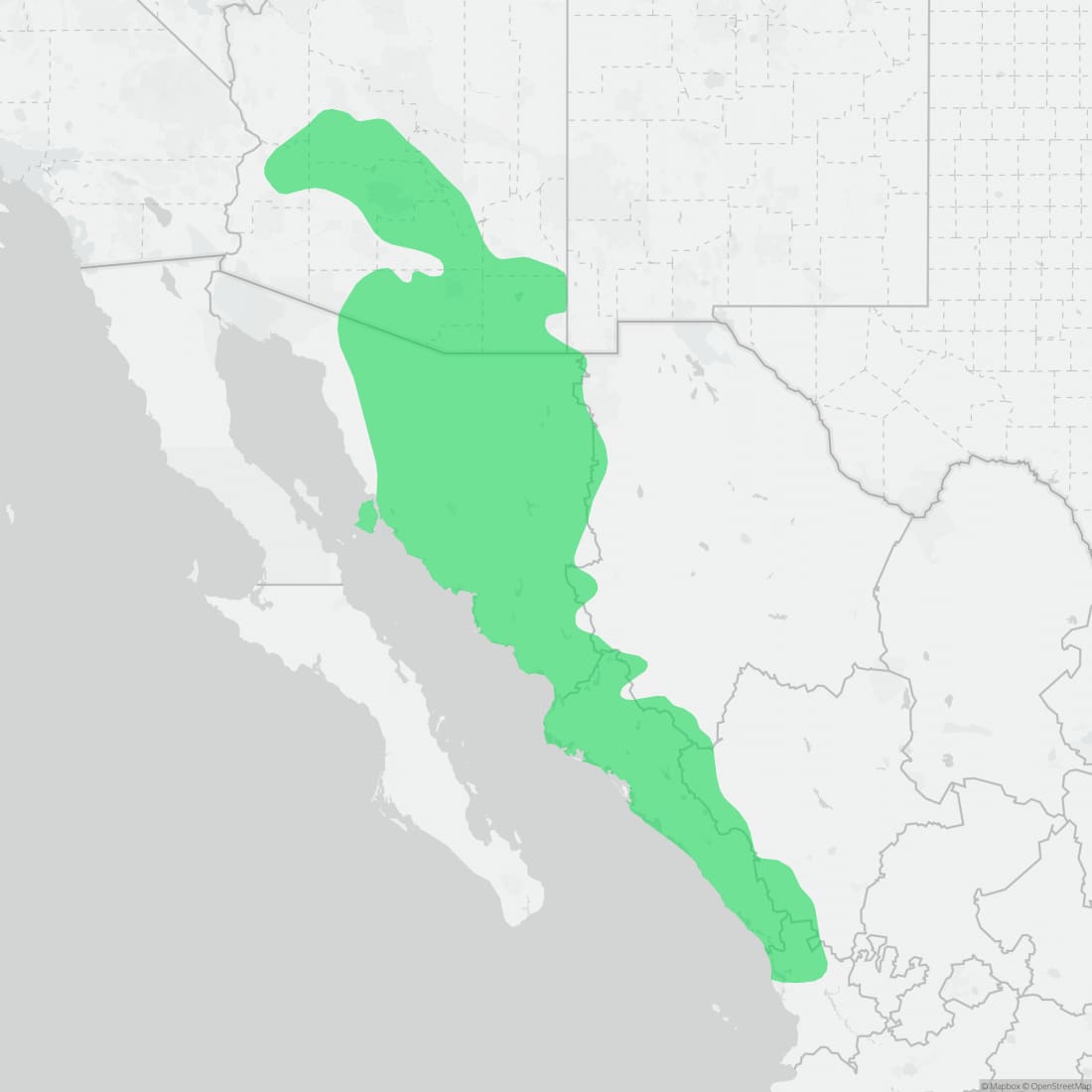
Approximate range. © Mapbox © OpenStreetMap