Texas Horned Lizard
Phrynosoma cornutum
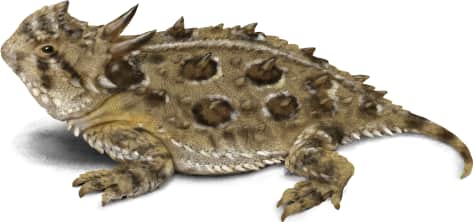
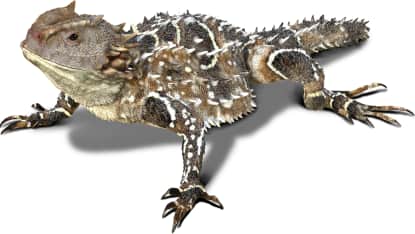
True to its name, exhibits "horns" on head made of bone. Either sandy, reddish, gray, or brownish in color with dark blotches that help it camouflage into surroundings.…
How to identify
True to its name, exhibits "horns" on head made of bone. Either sandy, reddish, gray, or brownish in color with dark blotches that help it camouflage into surroundings. Throat possesses enlarged scales on both sides and spiked scales run down both sides of body. Average snout-vent length between 6.2-12.5 cm. When threatened, will puff up and push scales outwards; this makes it hard for predators to eat.
Range
Southern United States and northern Mexico from Arizona on the north west to Mississippi on the north east.
Habitat
Prefer arid or semiarid areas with little vegetation cover including deserts, prairies, dunes, and foothills. Can be found in loose sand or soil digging to hibernate, nest, or to keep warm. Females lay eggs in nests in soil or under rocks.
Variations
Some individuals exhibit light colored line running down dorsum.
Similar species
Name and etymology
Genus
Phrynosoma
Greek for toad (phrynos) body (soma).
Origin
Sources
- Wiegmann, 1828. Isis von Oken, Vol. 21, p. 367 ↗
Phrynosoma. Wiegmann, 1828 - Isis von Oken, Vol. 21, p. 367
Species epithet
cornutum
Latin for horned.
Origin
Sources
- (Harlan, 1825). Journ. Acad. Nat. Sci. Philadelphia, Vol. 4, p. 299, pl. 20 ↗
Phrynosoma cornutum. (Harlan, 1825) - Journ. Acad. Nat. Sci. Philadelphia, Vol. 4, p. 299, pl. 20
Explore more names in the etymology index.
At a glance
Size
69 to 114 (Female); 94 (Male) mm
Range
Southern United States and northern Mexico from Arizona on the north west to Mississippi on the north east.
Habitat
Prefer arid or semiarid areas with little vegetation cover including deserts, prairies, dunes, and foothills. Can be found in…
Range map
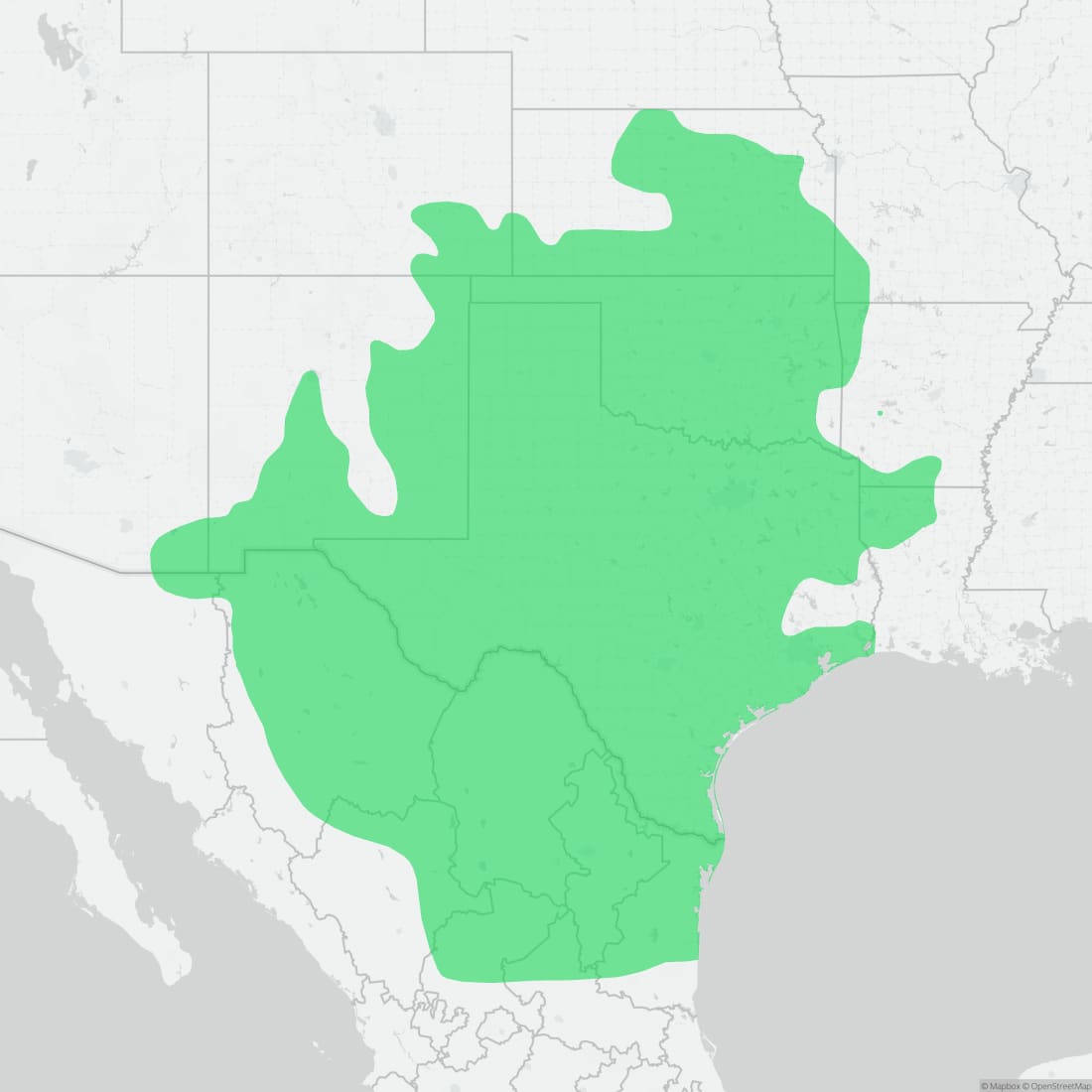
Approximate range. © Mapbox © OpenStreetMap