Pygmy Short-horned Lizard
Phrynosoma douglasii
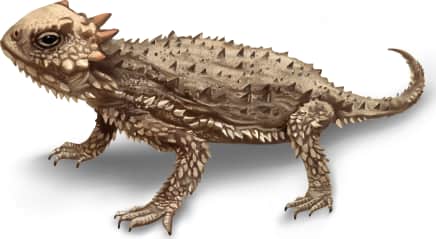
Body small and flat with enlarged pointed scales distributed across upper body and tail. Small horns on back of head extend out horizontally. Either side of body exhibits…
How to identify
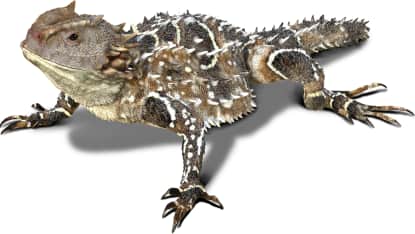
Body small and flat with enlarged pointed scales distributed across upper body and tail. Small horns on back of head extend out horizontally. Either side of body exhibits a row of fringe scales; tail is short and triangular. Dorsum is near-white, gray, tan, yellowish, brown, or black and has two rows of large dark spots. The belly is white or cream and scales are smooth. Males are usually smaller than females and possess enlarged postanal scales. During the breeding season, males' tails will swell. Young are born live between July and September and litters will range between 3 to 15 young.
Range
Central Washington, central Oregon, extreme northeast California, northern Nevada and southern Idaho. Isolated population lives in extreme southern British Columbia, Canada.
Habitat
Inhabit sagebrush, grass plains, pine forests, and open sandy or rocky flats. Known especially for burrowing, they prefer habitats with loose soil to create their own burrows or occupy those of rodents. Can live in colder environments than other horned lizards and will be most active at midday during the spring, summer, and fall. Ingest mainly ants, small grasshoppers and other invertebrates.
Variations
A previous subspecies, the Greater Short-horned Lizard, or *Phrynosoma hernandesi ornatum*, recently became a new species. It is much larger than the Pygmy Short-horned Lizard and inhabits southeast Oregon, southwest Idaho, eastern Nevada, and western Utah. Especially known to exhibit a variety of differences in pattern, color, and geographic habitat.
Similar species
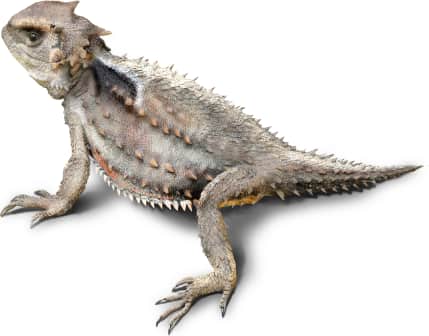
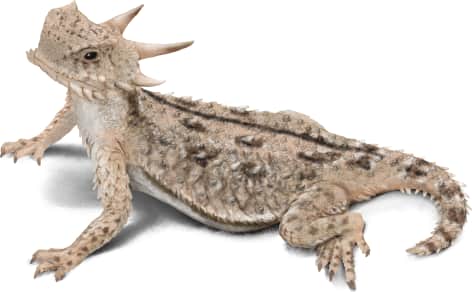
Southern Desert Horned Lizard - Phrynosoma platyrhinos calidiarum Northern Desert Horned Lizard - Phrynosoma platyrhinos platyrhinos Greater Short-horned Lizard - Phrynosoma hernandesi
Name and etymology
Genus
Phrynosoma
Greek for toad (phrynos) body (soma).
Origin
Sources
- Wiegmann, 1828. Isis von Oken, Vol. 21, p. 367 ↗
Phrynosoma. Wiegmann, 1828 - Isis von Oken, Vol. 21, p. 367
Species epithet
douglasii
Honoring David Douglas
Origin
Honors
Sources
- Wikipedia: Phrynosoma douglasii ↗
“Phrynosoma douglasii.” Wikipedia. https://en.wikipedia.org/wiki/Pygmy_short-horned_lizard
Explore more names in the etymology index.
At a glance
Range
Central Washington, central Oregon, extreme northeast California, northern Nevada and southern Idaho. Isolated population liv…
Habitat
Inhabit sagebrush, grass plains, pine forests, and open sandy or rocky flats. Known especially for burrowing, they prefer hab…
Guide
Reptiles and Amphibians of North America
Range map
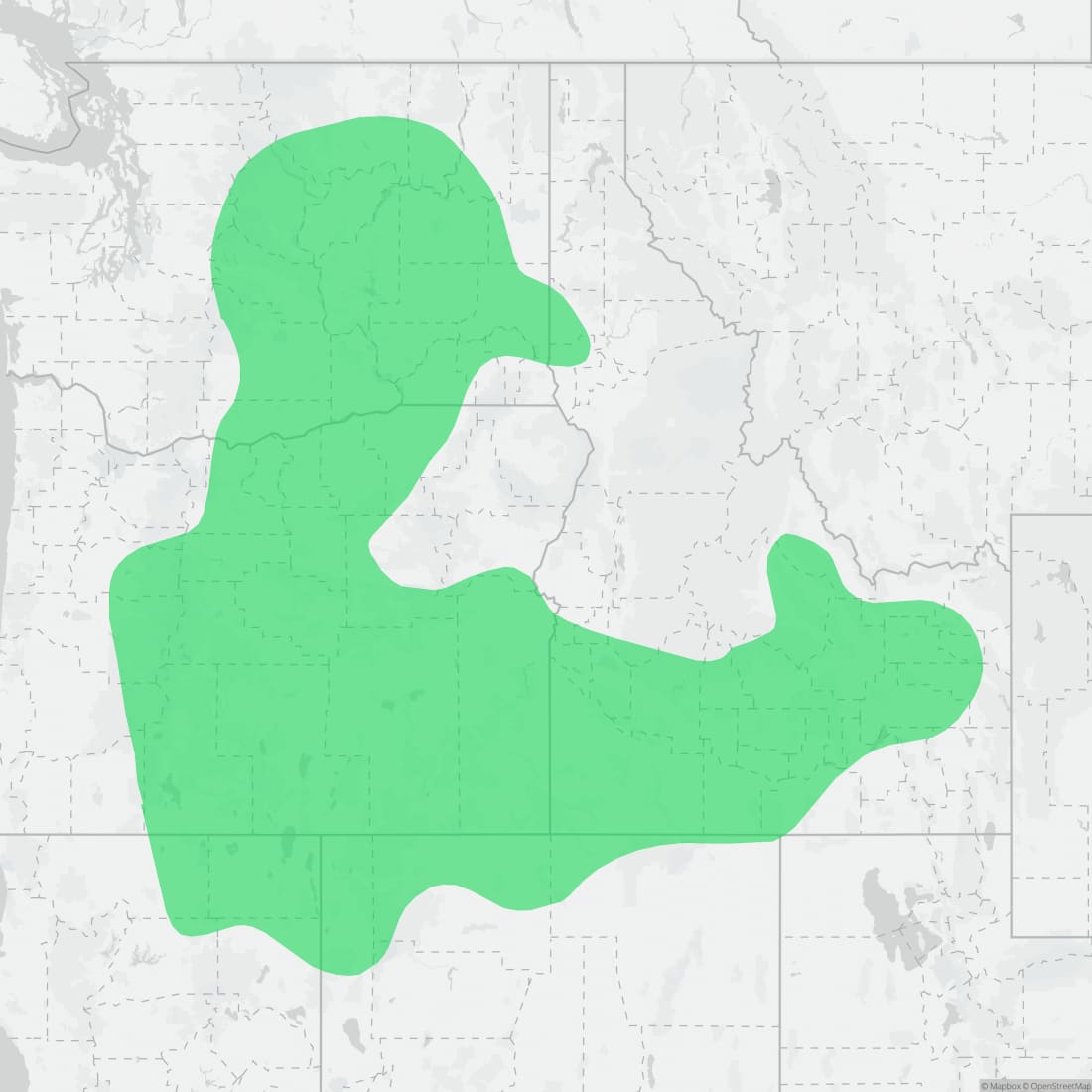
Approximate range. © Mapbox © OpenStreetMap