Desert Horned Lizard
Phrynosoma platyrhinos
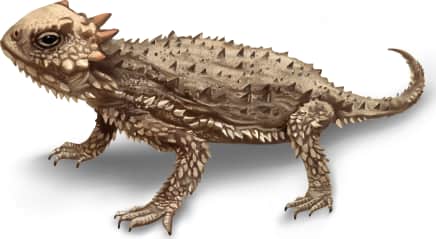
This small, wide, flat-bodied lizard has distinctive spiked scales along the sides of its body and on the back of its head (occipital horns), forming a crowned appearance…
How to identify
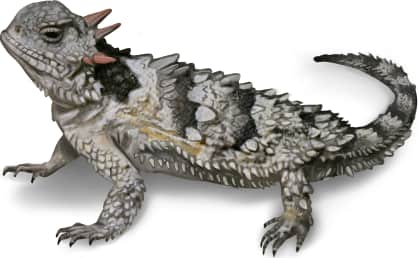
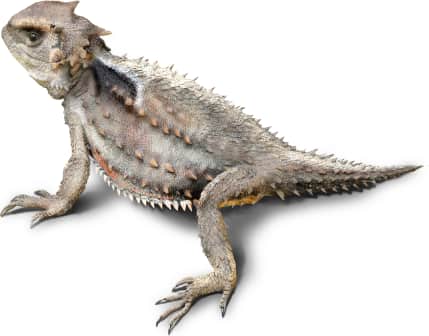
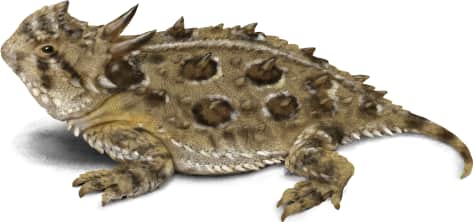
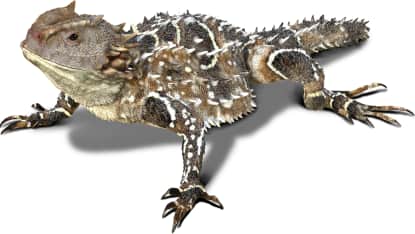
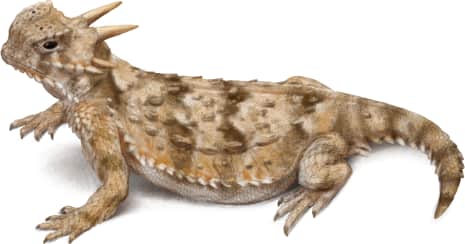
This small, wide, flat-bodied lizard has distinctive spiked scales along the sides of its body and on the back of its head (occipital horns), forming a crowned appearance. Its face is blunt and stubby, with spiked scales along the bottom jawline. It has a relatively short, stubby tail. It has bumpy scales on its body, giving it a rough texture to match its surroundings. Its colors are a wavy, blotchy mixture of earth-toned brown, grey, cream, and rusty red, that come together to form bands on the tail. It typically has 2 black patches on the back of its neck, and may have pink or orange shading on its sides. It reaches almost 4 inches from snout to vent.
Range
Ranges throughout the inland west, from southeastern Oregon and southern Idaho, south to the northern Baja Peninsula, including all of Nevada, western Utah and western Arizona, as well as southeastern California.
Habitat
Inhabits a wide variety of habitats throughout its range, including desert scrub, chaparral, woodland, grassland, and prairie. It generally prefers sandy or loamy soil where ants (its primary food source) are prevalent.
Variations
Colors vary to match their environment.
Similar species
Several other species of horned lizard are similar, but they all have variations in size, color and spike pattern, as well as geographic range. These include: Sonoran (Goode's) horned lizard (*Phrynosoma goodei*) Pygmy short-horned lizard (*Phrynosoma douglasii*) Texas horned lizard (*Phrynosoma cornutum*) Greater short-horned lizard (*Phrynosoma hernandesi*) Blainville's horned lizard (*Phrynosoma blainvillii*)
Name and etymology
Genus
Phrynosoma
Greek for toad (phrynos) body (soma).
Origin
Sources
- Wiegmann, 1828. Isis von Oken, Vol. 21, p. 367 ↗
Phrynosoma. Wiegmann, 1828 - Isis von Oken, Vol. 21, p. 367
Species epithet
platyrhinos
Latin for flat (platys) nosed (rhinos).
Origin
Sources
- Girard, 1852. Proc. Acad. Nat. Sci. Philadelphia, Vol. 6, p. 69 ↗
Phrynosoma platyrhinos. Girard, 1852 - Proc. Acad. Nat. Sci. Philadelphia, Vol. 6, p. 69
Explore more names in the etymology index.
At a glance
Range
Ranges throughout the inland west, from southeastern Oregon and southern Idaho, south to the northern Baja Peninsula, includi…
Habitat
Inhabits a wide variety of habitats throughout its range, including desert scrub, chaparral, woodland, grassland, and prairie…
Guide
Reptiles and Amphibians of North America
Range map
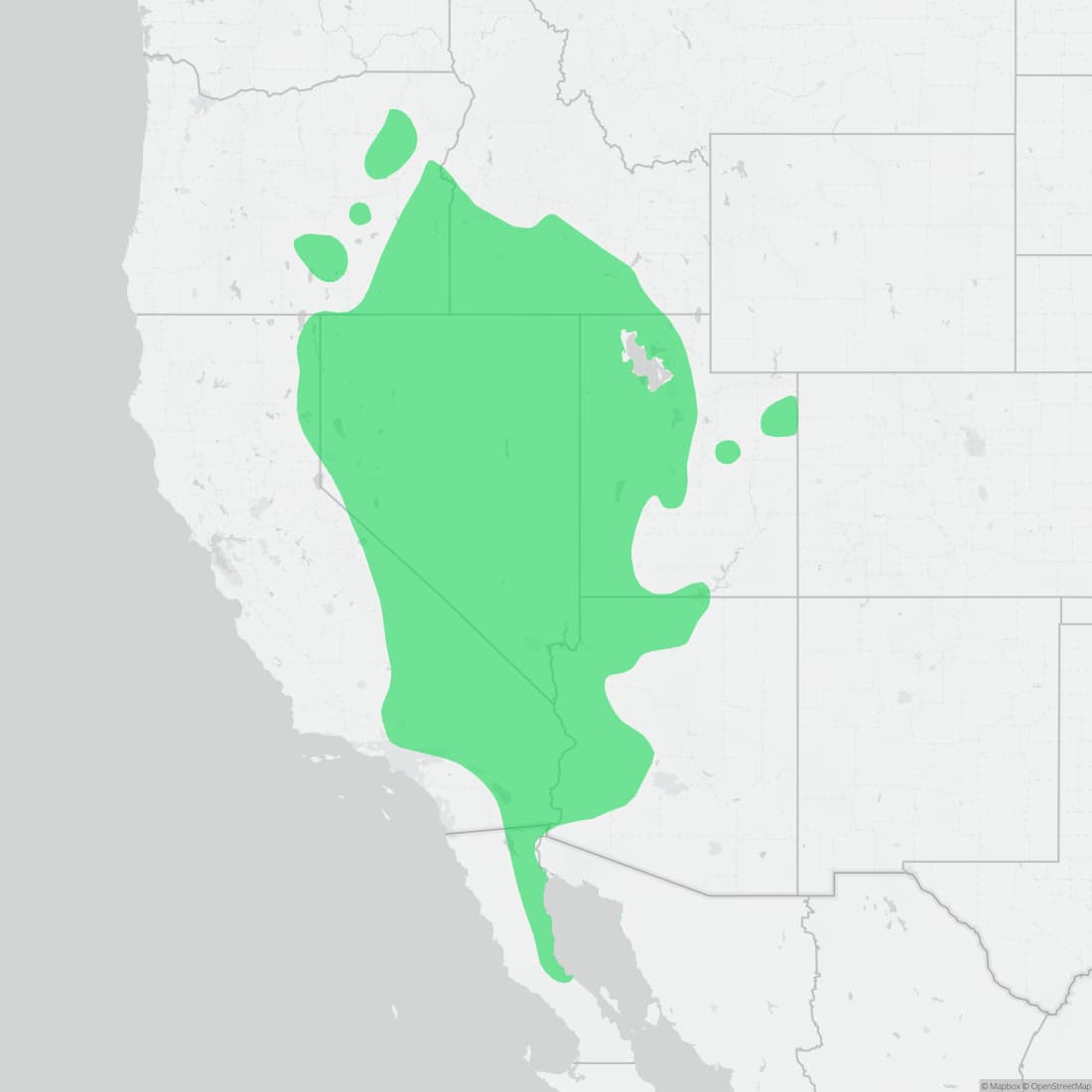
Approximate range. © Mapbox © OpenStreetMap