Sonoran Horned Lizard
Phrynosoma goodei
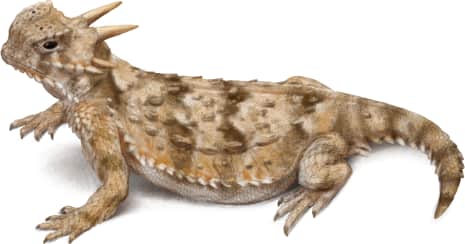
The goode's horned lizard is exceptionally flat and wide with a length of 3.75 inches. A notable feature are the thick spear-like horns projecting from the back of the he…
How to identify
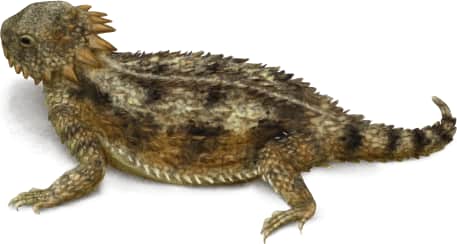
The goode's horned lizard is exceptionally flat and wide with a length of 3.75 inches. A notable feature are the thick spear-like horns projecting from the back of the head with the two central spikes (occipital horns) more obvious and back and upward-pointing than the others. The occipital horns are disjointed at the base as well as several isolated pointy scales. Pointy scales edge each lower side of its body. The base coloration is gray, tan or brown, matching the color of the soil it dwells on. There are blemishes of black outlined with white or cream on the back and neck. Dark flecks mark the dorsal region and are more prominent in the throat area.
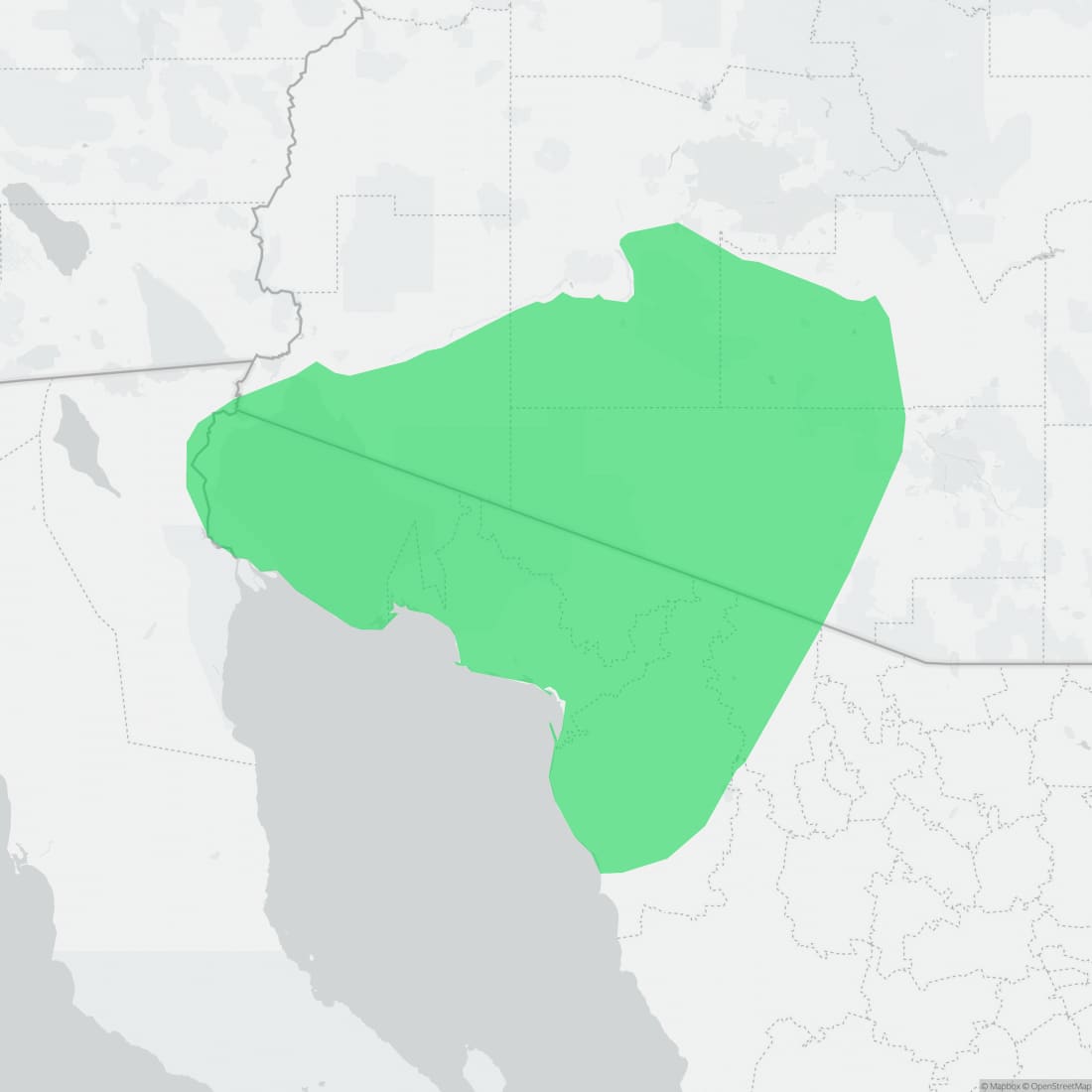
Range
The goode's horned lizard is endemic to Arizona.
Habitat
The goode's horned lizard can be found in open flat areas with a loose soil substrate. The diurnal crepuscular creature hides from the midday sun under the soil or in existing burrows. Unlike other horned lizards, it runs swiftly when encountered stopping under the closest bush. It feeds on insects such as ants, beetles as well as the larvae of butterflies and moths. The goode's horned lizard also feeds on some plant materials. It is oviparous laying not more than 2 clutches of eggs which range from 2 to 16 in spring and summer.
Similar species
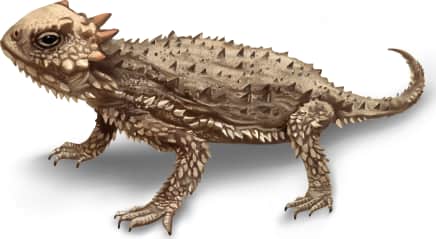
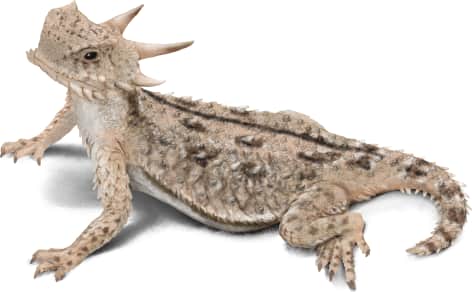
The Desert Horned lizard (Phrynosoma platyrhinos) has dark spots on its entire dorsal region and its occipital horns point straight backwards. A dark dorsal longitudinal stripe separates the Goode's Horned Lizard from the Flat-tailed Horned Lizard (Phrynosoma mcallii). While the similar-looking Regal Horned Lizard (Phrynosoma solare) has occipital horns connected at the base.
Name and etymology
Genus
Phrynosoma
Greek for toad (phrynos) body (soma).
Origin
Sources
- Wiegmann, 1828. Isis von Oken, Vol. 21, p. 367 ↗
Phrynosoma. Wiegmann, 1828 - Isis von Oken, Vol. 21, p. 367
Species epithet
goodei
Honoring George Brown Goode
Origin
Honors
Sources
- Wikipedia: Phrynosoma goodei ↗
“Phrynosoma goodei.” Wikipedia. https://en.wikipedia.org/wiki/Sonoran_horned_lizard
Explore more names in the etymology index.
At a glance
Range
The goode's horned lizard is endemic to Arizona.
Habitat
The goode's horned lizard can be found in open flat areas with a loose soil substrate. The diurnal crepuscular creature hides…
Guide
Reptiles and Amphibians of North America
Range map
Approximate range. © Mapbox © OpenStreetMap