American Bison
Bison bison
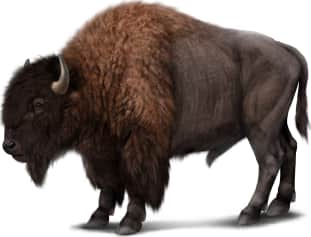
B. bison is a massive, heavily built ungulate characterized by a dark brown, shaggy coat, which is particularly long and dense on the head, forequarters, and legs. They p…
How to identify
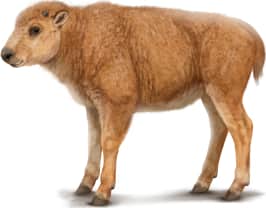
B. bison is a massive, heavily built ungulate characterized by a dark brown, shaggy coat, which is particularly long and dense on the head, forequarters, and legs. They possess a distinctive high hump at the shoulders, sloping downwards to the hindquarters. Both males and females have relatively short, curved, black horns that are widest at the base and taper to a point. The head is large and broad with a heavy beard or 'goatee' of long hair on the chin. Calves are born with a lighter, reddish-brown coat which darkens as they mature. Adult males (bulls) are significantly larger than females (cows), further aiding in identification in mixed herds.
Range
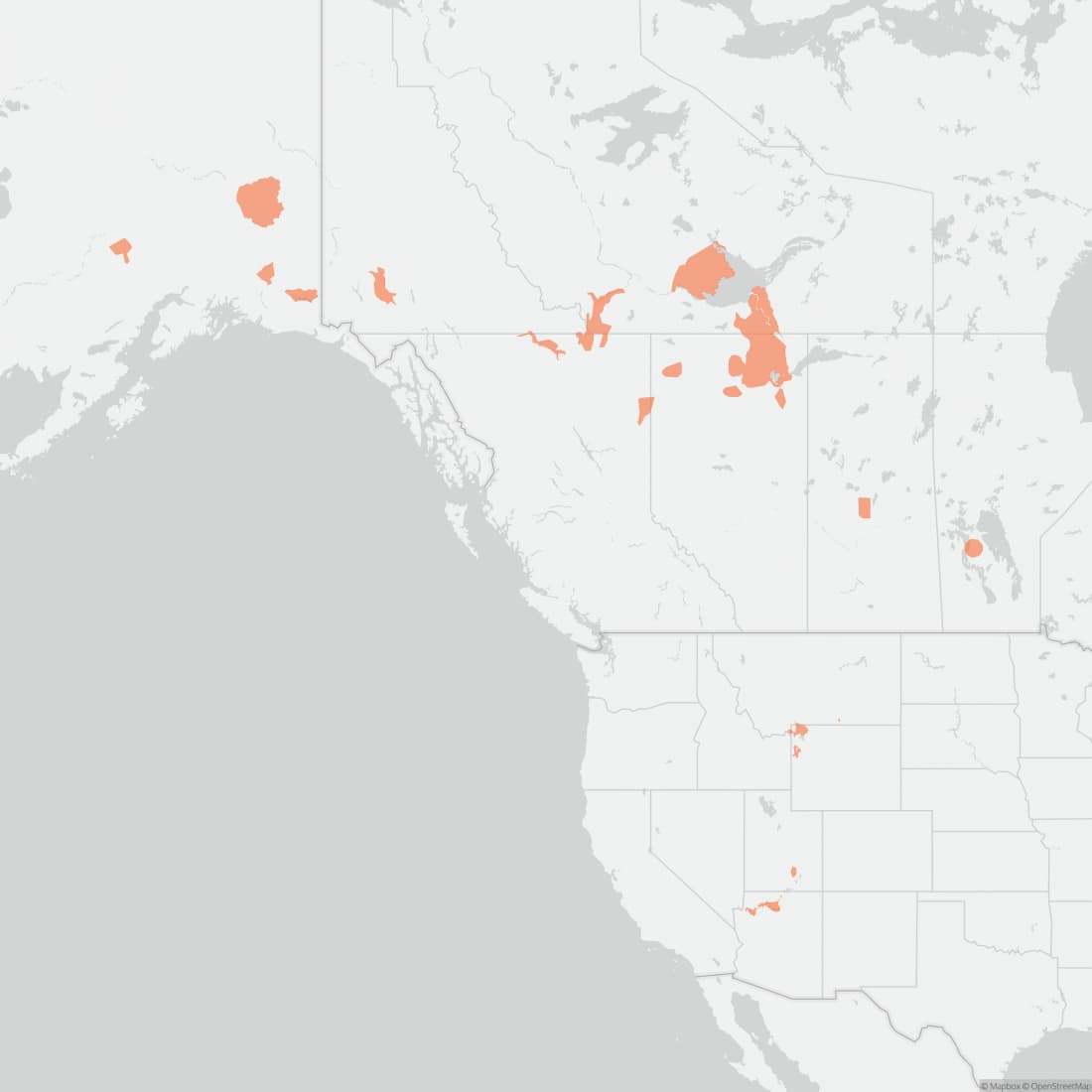
B. bison historically ranged across the vast grasslands of North America, from Canada south into Mexico, and from the eastern forests westward to the Rocky Mountains. European colonization and westward expansion severely reduced their range, leading to near extinction by the late 19th century. Today, B. bison populations are concentrated in protected areas, national parks, and wildlife refuges, primarily in the western United States and Canada. Notable populations exist in Yellowstone National Park, Wind Cave National Park, Badlands National Park, and various state and provincial parks and reserves. While their range is a fraction of its former extent, conservation efforts have been crucial in preventing extinction and facilitating the recovery of herds in specific regions of their historical distribution.
Habitat
B. bison are adapted to a variety of open and semi-open habitats, primarily grasslands and prairies. They thrive in plains environments characterized by grasses, forbs, and shrubs, which provide their primary food sources. They also utilize meadows, river valleys, and open woodlands or parklands. Historically, they occupied both shortgrass and tallgrass prairies, as well as parkland regions. Access to water is important, and they are often found near rivers, streams, or watering holes. The key habitat characteristic is the presence of abundant grazing forage and relatively open terrain, although they can utilize wooded areas for shelter.
Similar species
Within North America, adult B. bison are unlikely to be confused with other native species due to their immense size and distinctive hump. However, juvenile B. bison might be confused with domestic cattle,
Name and etymology
Genus
Bison
Latin for wild ox
Origin
Sources
- Palmer, Index Generum Mammalium (1904) ↗
Palmer, T. S. 1904. Index Generum Mammalium: a list of the genera and families of mammals. North American Fauna 23. Government Printing Office, Washington. https://doi.org/10.5962/bhl.title.39809
Species epithet
bison
Latin for wild ox
Origin
Sources
- Wikipedia: Bison bison ↗
“Bison bison.” Wikipedia. https://en.wikipedia.org/wiki/American_bison
Explore more names in the etymology index.
More illustrations
Calf
At a glance
Range
B. bison historically ranged across the vast grasslands of North America, from Canada south into Mexico, and from the eastern…
Habitat
B. bison are adapted to a variety of open and semi-open habitats, primarily grasslands and prairies. They thrive in plains en…
Guide
Mammals of North America
Range map
Approximate range. © Mapbox © OpenStreetMap