Western Black-headed Snake
Tantilla planiceps
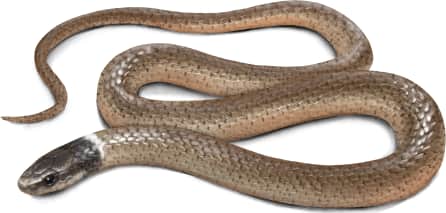
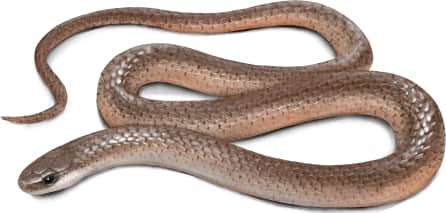
It is slender and small, with flattened head and smooth shiny body. It is brownish and olive-gray with a black head rounded by a white collar. The belly is whitish with a…
How to identify
It is slender and small, with flattened head and smooth shiny body. It is brownish and olive-gray with a black head rounded by a white collar. The belly is whitish with a reddish stripe that doesn't extend all round. It can attain maximum length of about 16 inches.
Range
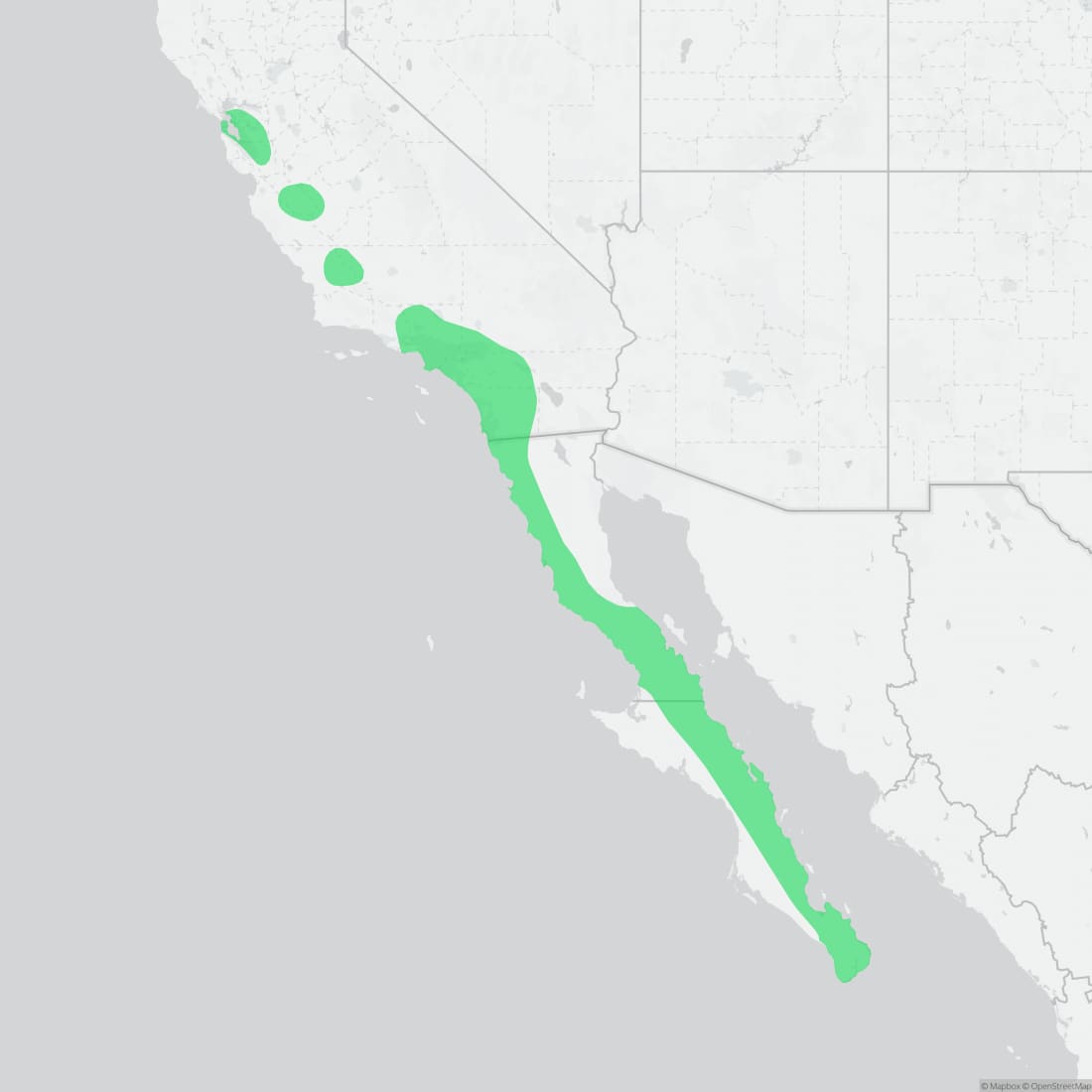
It occupies the Southwestern parts of California.
Habitat
They inhabit the moist areas of dry lands, although they spend most of their lives underground. They are found around woodland areas, desert areas and grassland. They feed on arthropods, especially centipedes and beetle larvaes including spiders, insects, slugs and earthworms. They are very discreet creatures and are rarely seen due to the amount of time they spend under objects. They are not venomous and lay a clutch of 1-3eggs from May to June. The young are hatched in late Summer.
Similar species
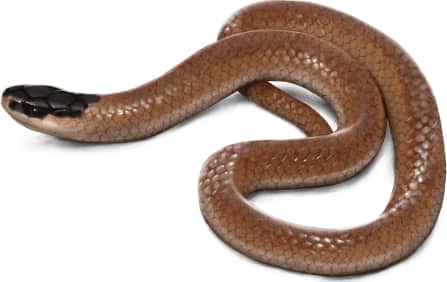
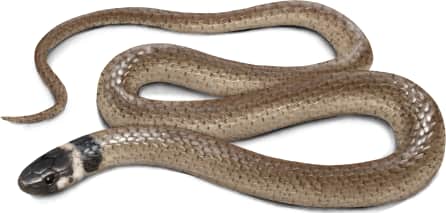
Tantilla nigriceps can attain a maximum length of about 15inches. They are slender and cream colored with a black head cap. Tantilla hobartsmithi (Smith's black-headed snake) are slender and light brown with a black head cap. They attain a maximum length of about 12inches. Tantilla gracillis (Flat head snake) can attain a maximum length of about 8.5inches. They are brown colored with a black head cap.
Name and etymology
Genus
Tantilla
Latin for something small and insignificant.
Origin
Sources
- Baird and Girard, 1853. Cat. N. Amer. Rept., Pt. 1, p. 131 ↗
Tantilla. Baird and Girard, 1853 - Cat. N. Amer. Rept., Pt. 1, p. 131
Species epithet
planiceps
Latin for flat (planus) head (ceps).
Origin
Sources
- (Blainville, 1835). Nouv. Ann. Mus. Hist. Nat. Paris, Vol. 4, p. 294, pl. 27, figs. 3-3b ↗
Tantilla planiceps. (Blainville, 1835) - Nouv. Ann. Mus. Hist. Nat. Paris, Vol. 4, p. 294, pl. 27, figs. 3-3b
Explore more names in the etymology index.
At a glance
Range
It occupies the Southwestern parts of California.
Habitat
They inhabit the moist areas of dry lands, although they spend most of their lives underground. They are found around woodlan…
Guide
Reptiles and Amphibians of North America
Range map
Approximate range. © Mapbox © OpenStreetMap