Baja California Coachwhip
Masticophis fuliginosus
Adults are averagely 24- 52 inches long. It is a nonlethal slender fast-moving snake with smooth scales. It has a large head and a pair of large eyes to match, a slim nec…
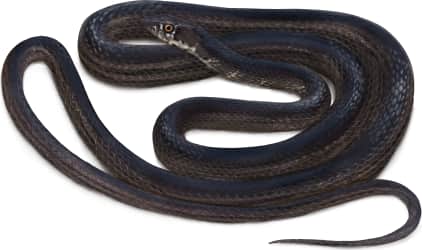
How to identify
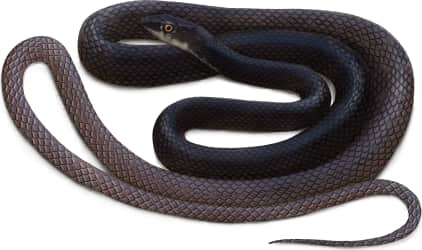
Adults are averagely 24- 52 inches long. It is a nonlethal slender fast-moving snake with smooth scales. It has a large head and a pair of large eyes to match, a slim neck and a long thin tail. It has earned its name from the braided appearance of the scales on the tail. It has relatively larger scales just above the eyes and 17 rows of scales at the mid-body. This coachwhip has two color phases. In its dark phase, it is dark gray or dark brown to even black. In its light phase, it may appear in tan, pale yellow, light gray with zigzag patterned cross bands on the body but with broader dark bands on the neck area.
Range
This species has a large range that spreads from the Atlantic coast to the Pacific coast of the United States. This includes Nevada, Utah, Colorada, Nebraska, Missouri, Kentucky, and North Carolina. Further south, the range reaches Baja California, Sinaloa, Queretaro – Mexico, the Gulf Coast of the United States and southern parts of Florida.
Habitat
In Baja California, you can find them in dunes at the coast, scrub, marshlands, sandy flats, rocky arroyos and thorn forests. In California, they are found in more open areas like grassland, but still can be found at coastal dunes. They eat small mammals; bats, birds, lizards, snakes, amphibians and carrion. Juveniles would also eat large invertebrates.
Similar species
Red Racer or Coluber flagellum piceus is very similar especially when it occurs in darker colors. However, the red racer is usually light brown, pink or reddish. The red racer is often larger at 36 – 66 in. San Joaquin Coachwhip or Coluber flagellum Ruddock while very similar occurs in brighter colors – olive-brown or yellowish-brown. Although it lacks the dark head and neckbands that are often used to identify subspecies of the Coluber across California. Desert Patch-nosed Snake or Salvadora hexalepis hexalepis is often found at similar habitats. However, the desert patch-nosed snake is harder to spot since it’s well-camouflaged and is pale gray. It has 9 upper labial scales with one reaching the eyes.
Name and etymology
Genus
Masticophis
Greek for whip (mastix) snake (ophis).
Origin
Sources
- Baird and Girard, 1853. Cat. N. Amer. Rept., Pt. 1, p. 98 ↗
Masticophis. Baird and Girard, 1853 - Cat. N. Amer. Rept., Pt. 1, p. 98
Species epithet
fuliginosus
Latin for full of (-osus) black, soot (fuligo).
Origin
Sources
- (Cope, 1895). Amer. Nat., Vol. 29, p. 679 ↗
Masticophis flagellum fuliginosus. (Cope, 1895) - Amer. Nat., Vol. 29, p. 679
Explore more names in the etymology index.
At a glance
Range
This species has a large range that spreads from the Atlantic coast to the Pacific coast of the United States. This includes…
Habitat
In Baja California, you can find them in dunes at the coast, scrub, marshlands, sandy flats, rocky arroyos and thorn forests.…
Guide
Reptiles and Amphibians of North America
Range map
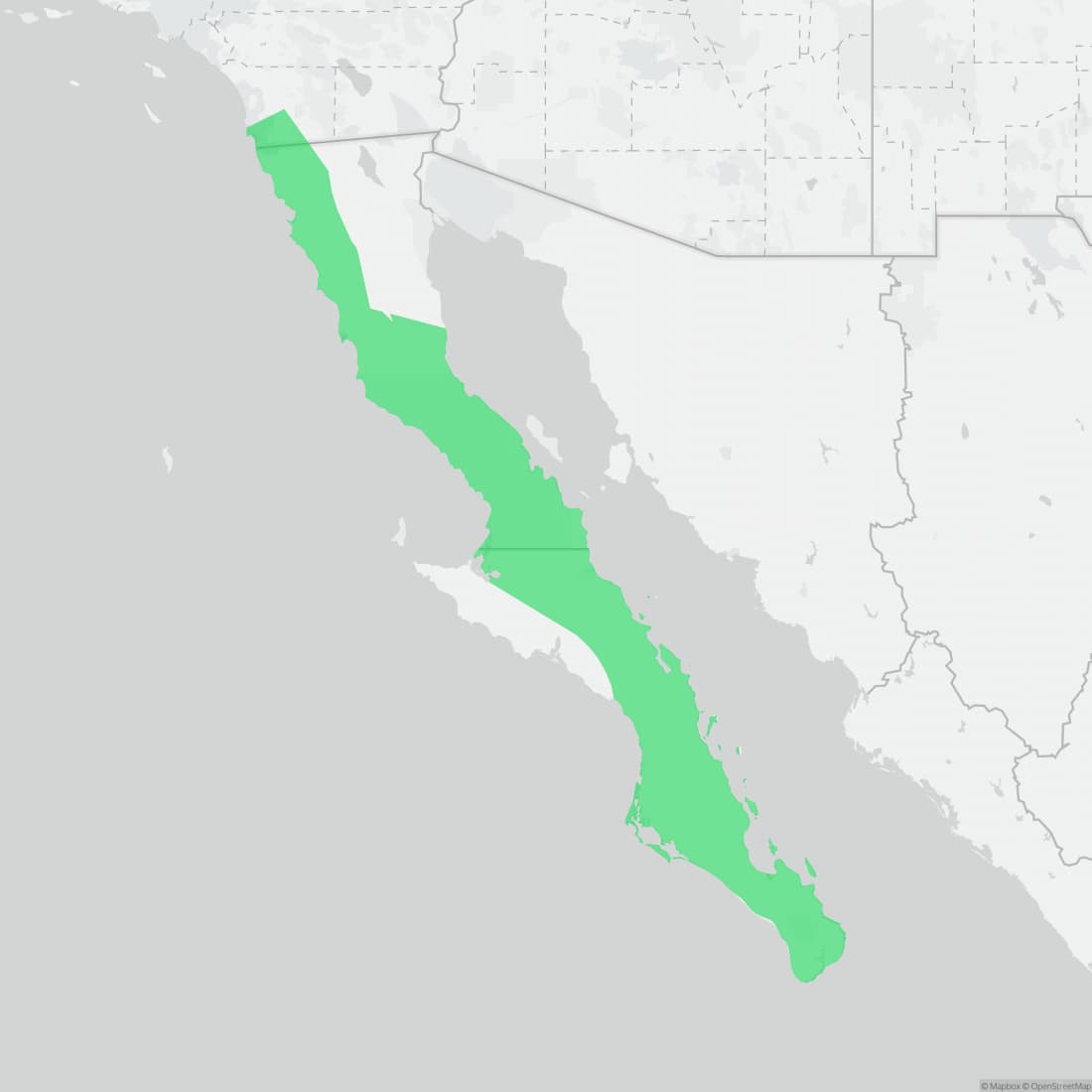
Approximate range. © Mapbox © OpenStreetMap