Coachwhip
Masticophis flagellum
A long, thin snake with smooth scales and a narrow pointed face. It has large eyes with round pupils, and a conspicuously long, tapered tail that resembles a whip. It com…
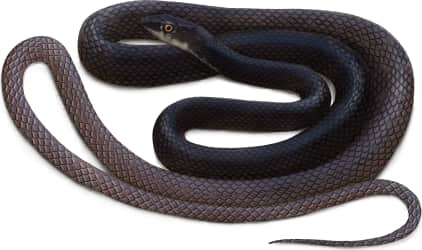
How to identify
A long, thin snake with smooth scales and a narrow pointed face. It has large eyes with round pupils, and a conspicuously long, tapered tail that resembles a whip. It comes in a variety of colors to match the environment in which it lives, but is generally darker or more patterned at the front of its body, with a lighter tail. The pattern of the scales often creates a braided appearance. There are 6 subspecies and some have overlapping ranges. They range in size from 50-100 inches when full grown, and can weigh 2.5-4 pounds.
Range
Extensive range throughout most of the southern half of the United States, and down to central Mexico.
Habitat
This species prefers open areas such as fields, prairies, sparse pine forests, and sand dunes.
Variations
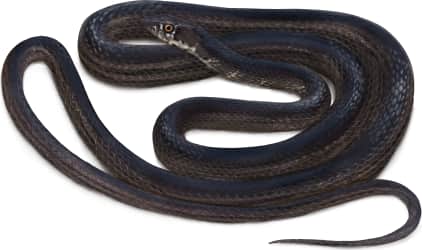
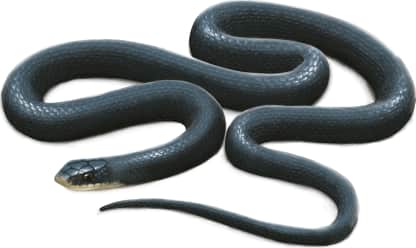
Depending on where they live, coachwhips can be shades of tan, brown, pink, red, or black. They can display solid coloration, or have blotchy or zigzag patterning.
Similar species
Most likely to be confused with the Baja California coachwhip (*Masticophis fuliginosus*) which is not a subspecies of *Masticophis flagellum*, and would only be found from San Diego down through the Baja Peninsula. Coachwhips could also be mistaken for the North American racer (*Coluber constrictor*), which shares much of the same range, or the Neotropical whipsnake (*Masticophis mentovarius*) which would only have the potential to overlap in Mexico.
Name and etymology
Genus
Masticophis
Greek for whip (mastix) snake (ophis).
Origin
Sources
- Baird and Girard, 1853. Cat. N. Amer. Rept., Pt. 1, p. 98 ↗
Masticophis. Baird and Girard, 1853 - Cat. N. Amer. Rept., Pt. 1, p. 98
Species epithet
flagellum
Latin for whip (flagellum).
Origin
Sources
- (Shaw, 1802). Gen. Zool., Vol. 3, p. 475 ↗
Masticophis flagellum. (Shaw, 1802) - Gen. Zool., Vol. 3, p. 475
Explore more names in the etymology index.
More illustrations
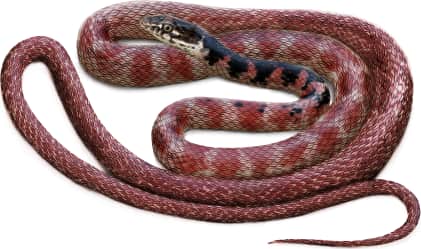
Red racer
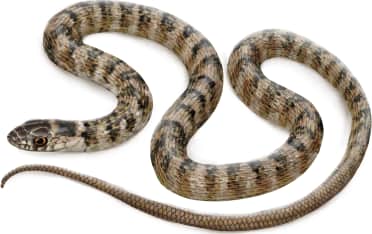
Juvenile
At a glance
Range
Extensive range throughout most of the southern half of the United States, and down to central Mexico.
Habitat
This species prefers open areas such as fields, prairies, sparse pine forests, and sand dunes.
Guide
Reptiles and Amphibians of North America
Range map
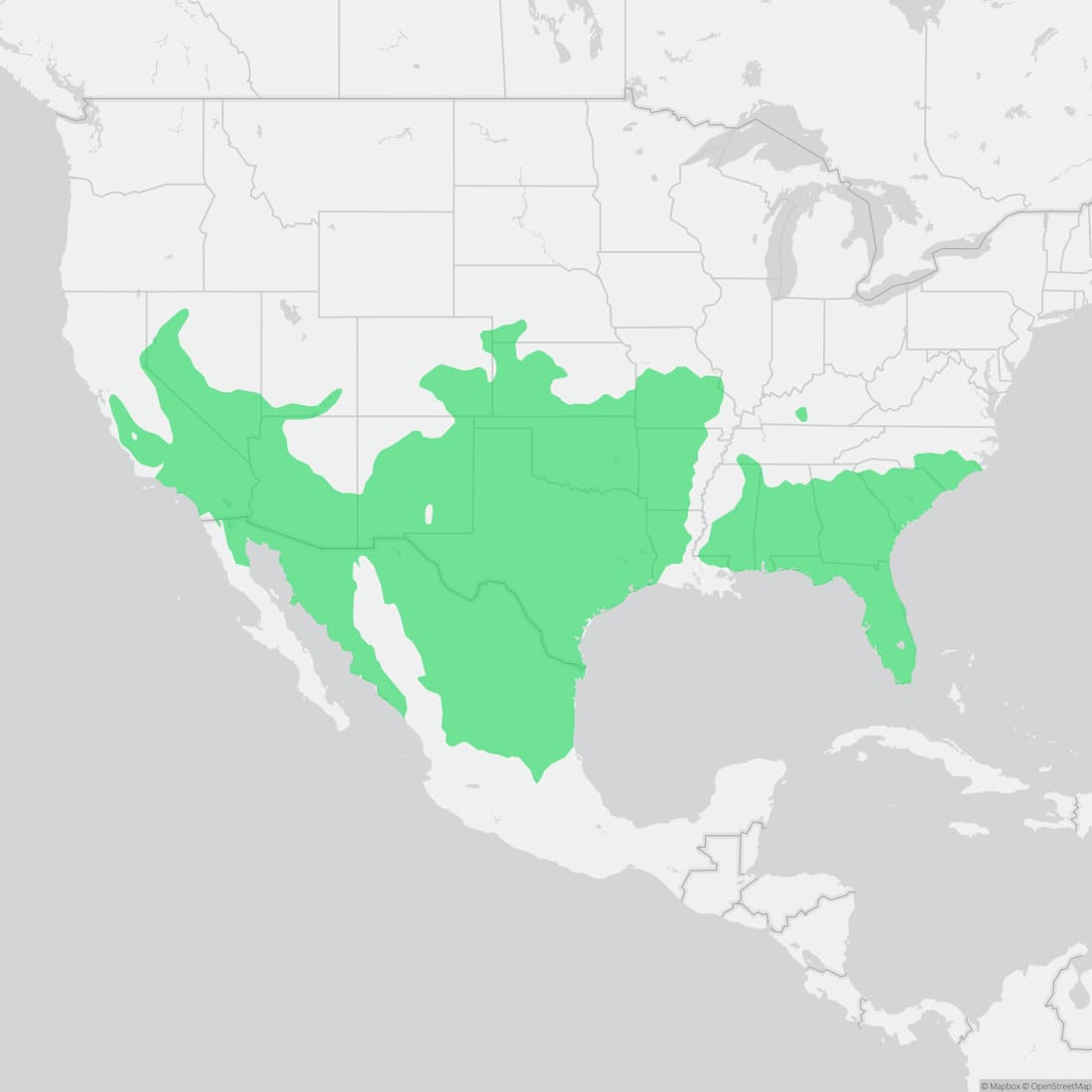
Approximate range. © Mapbox © OpenStreetMap