Trans-pecos Ratsnake
Bogertophis subocularis
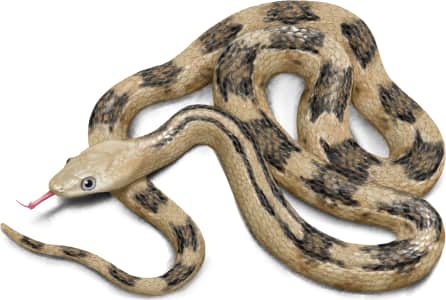
Dorsum either orange, yellow, or light olive. Head usually resembles dorsum base color. Dark brown blotches resembling an "H" shape run down back. Belly is cream colored.…
How to identify
Dorsum either orange, yellow, or light olive. Head usually resembles dorsum base color. Dark brown blotches resembling an "H" shape run down back. Belly is cream colored. Possesses weakly keeled dorsal scales and divided anal scale. Adult length ranges from 76-140 cm (30-55 in). Eggs hatch 9 to 15 weeks after mating; average clutch size is between 3 and 11 eggs.
Range
South Central United States and Northern Mexico from southern New Mexico and southwestern Texas through Chihuahua, Coahuila, Durango and Nuevo Leon.
Habitat
Prefers rocky, dry areas ranging from basins to valleys to woodland. During the day, will stay in crevasses in rocks or underground.
Variations
Some individuals exhibit light stripes instead of solid white or cream color under tail.
Similar species
Name and etymology
Genus
Bogertophis
Honoring Charles M. Bogert.
Origin
Honors
Sources
- Dowling and Price, 1988. The Snake, Vol. 20, p. 52
Bogertophis. Dowling and Price, 1988 - The Snake, Vol. 20, p. 52
Species epithet
subocularis
Latin for below (sub) the eye (oculus), referencing the lorilabial scales below each eye.
Origin
Sources
- (Brown, 1901). Proc. Acad. Nat. Sci. Philadelphia, Vol. 53, p. 492 ↗
Bogertophis subocularis. (Brown, 1901) - Proc. Acad. Nat. Sci. Philadelphia, Vol. 53, p. 492
Explore more names in the etymology index.
At a glance
Range
South Central United States and Northern Mexico from southern New Mexico and southwestern Texas through Chihuahua, Coahuila,…
Habitat
Prefers rocky, dry areas ranging from basins to valleys to woodland. During the day, will stay in crevasses in rocks or under…
Guide
Reptiles and Amphibians of North America
Range map
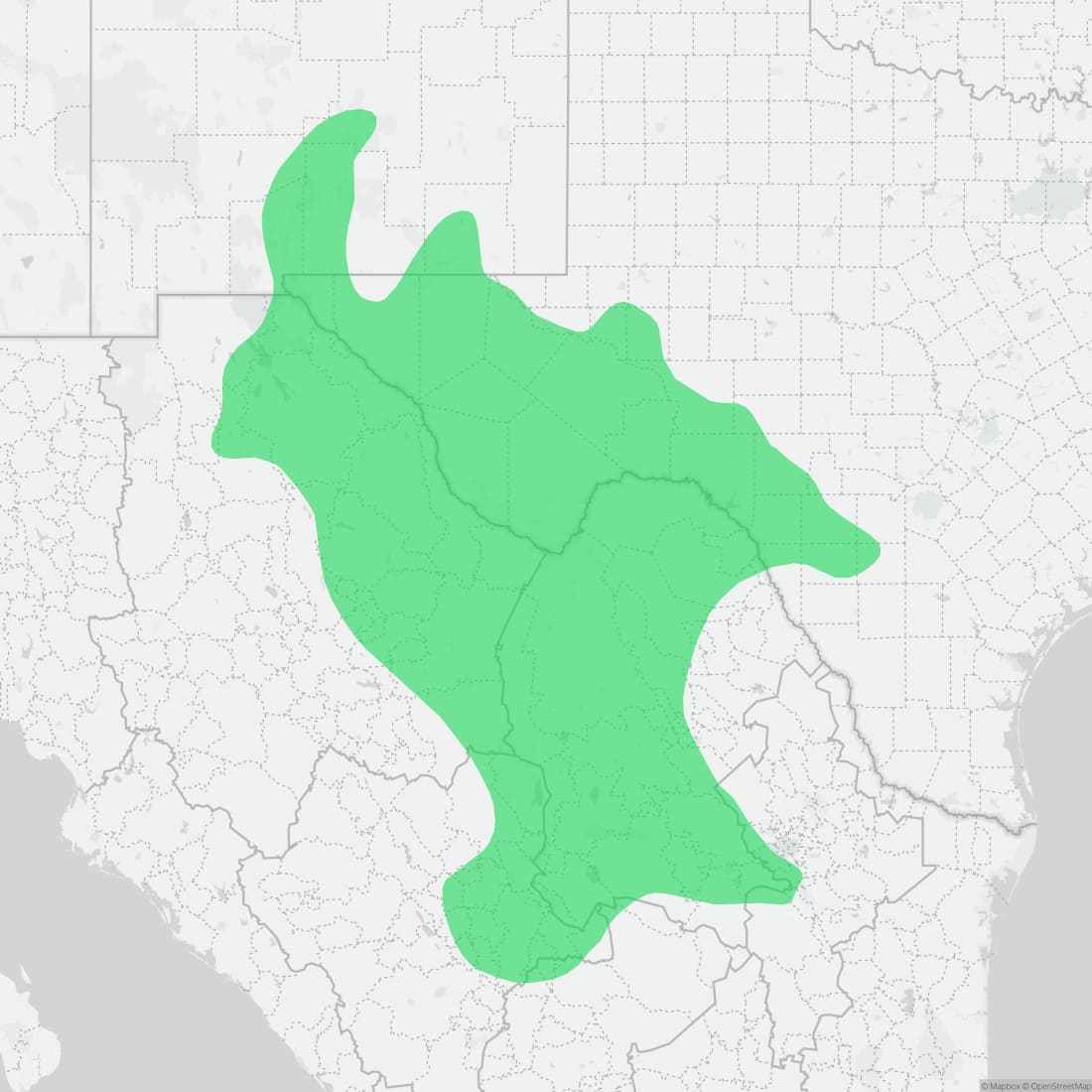
Approximate range. © Mapbox © OpenStreetMap