Big Bend Patch-nosed Snake
Salvadora deserticola
The patchnose snake is a non-venomous, medium-sized snake with an average length range of 24-32 inches. The dorsal background coloration is yellow or tan with two dark la…
How to identify
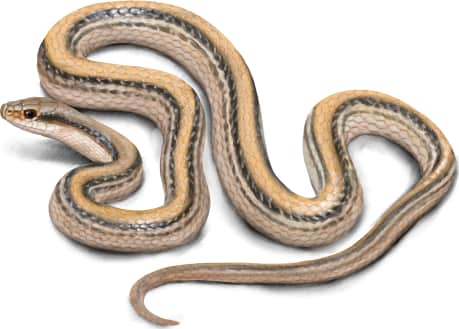
The patchnose snake is a non-venomous, medium-sized snake with an average length range of 24-32 inches. The dorsal background coloration is yellow or tan with two dark lateral lines down the length of the body. Consequently, there is also a tan-colored stripe in between the two lateral lines. The ventral scales are typically peach-colored and free of any dark pigment. The scales are smooth with the occasional specimen having keeled scales.
Range
This snake is endemic to middle North America, and south into Mexico. In the USA, its range spreads from the southeastern parts of Arizona into southwestern New Mexico, and then western Texas. In Mexico, the patchnose snake can be found in eastern Sonora, to Chihuahua, and Sinaloa.
Habitat
They thrive in desert habitats with areas of loose, sandy soil, from dry wash beds to rocky foothills. They are often seen active in the early daylight hours. Breeding occurs in April and May while the eggs are laid from May to August. The Big Bend patchnose snake feeds on smaller reptiles like lizards, snakes, reptile eggs, small mammals, and insects.
Similar species
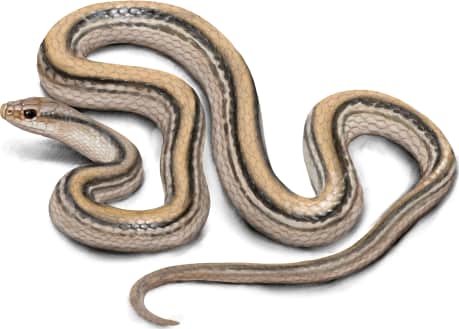
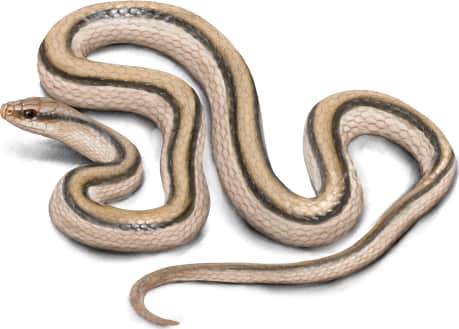
Eastern Patchnose Snake (Salvadora grahamiae) is roughly similar in size with similar dark lateral lines and tan dorsal background coloration. The scale on the snout of this snake is enlarged, triangular and protrudes on the side. It has a pale cream belly with a similar peach tint under its tail. The major difference is the straight-edges of its dorsal stripes and its lack of side stripes. Western Patchnose Snake (Salvadora hexalepis) is also roughly similar in size. It has dorsal stripes that are often marked with light flecks. It does have a similar background color of yellow, or tan but its major difference is the irregular edges of its dorsal stripes. A further difference lies in the presence of side-stripes. Black-backed Snake (Erythrolamprus melanotus) is much smaller than the Big Bend patchnose snake (17 inches). It has a one wide, dark dorsal stripe. The top of its head is olive and a dark stripe crosses the eye perpendicularly.
Name and etymology
Genus
Salvadora
Latin for whole (salvus) skin (dura).
Origin
Sources
- Baird and Girard, 1853. Cat. N. Amer. Rept., Pt. 1, p. 104 ↗
Salvadora. Baird and Girard, 1853 - Cat. N. Amer. Rept., Pt. 1, p. 104
Species epithet
deserticola
Latin for desert dweller (-icola)
Origin
Sources
- Schmidt, 1940. Field Mus. Nat. Hist. Zool. Series, Vol. 24, No. 12, p. 146, fig. 14
Salvadora deserticola. Schmidt, 1940 - Field Mus. Nat. Hist. Zool. Series, Vol. 24, No. 12, p. 146, fig. 14
Explore more names in the etymology index.
At a glance
Range
This snake is endemic to middle North America, and south into Mexico. In the USA, its range spreads from the southeastern par…
Habitat
They thrive in desert habitats with areas of loose, sandy soil, from dry wash beds to rocky foothills. They are often seen ac…
Guide
Reptiles and Amphibians of North America
Range map
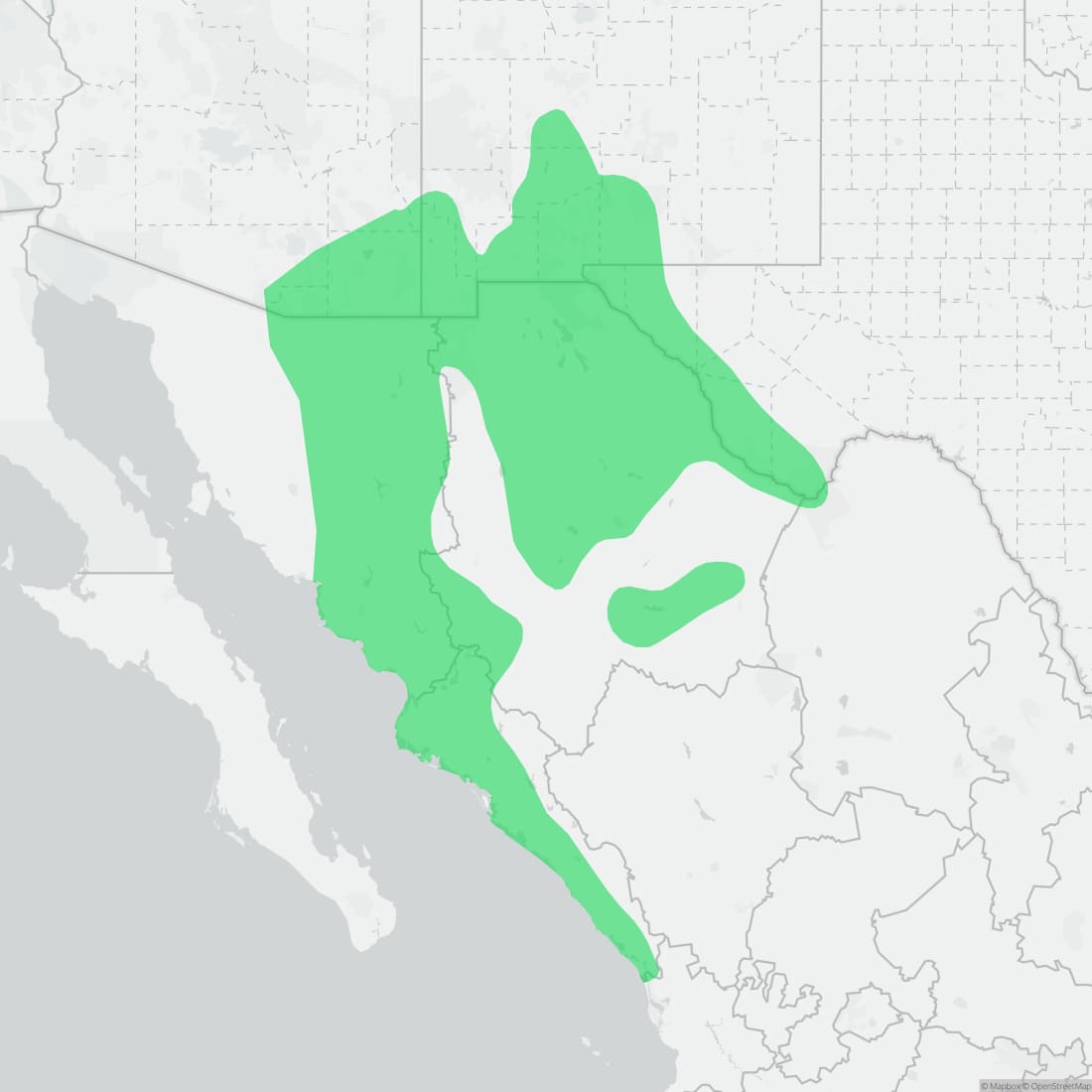
Approximate range. © Mapbox © OpenStreetMap