Eastern Patch-nosed Snake
Salvadora grahamiae
Dorsum is cream or tan and exhibits two black or brown stripes running down back. Venter usually cream but can show faint pink under tail. Eyes are especially large with…
How to identify
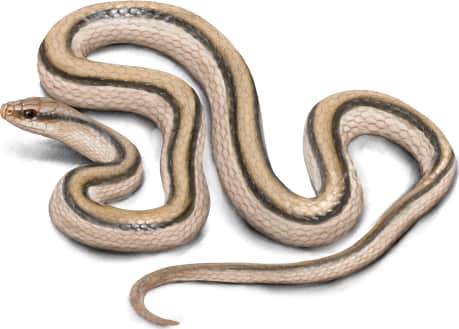
Dorsum is cream or tan and exhibits two black or brown stripes running down back. Venter usually cream but can show faint pink under tail. Eyes are especially large with round pupils. Average length under 900 mm or 36 inches. Body scales are smooth and snout scale is enlarged and triangular in shape. Females and males usually mate in the spring; females lay eggs in August. Clutch size ranges from 5 to 10 eggs.
Range
Southern United States and Northern Mexico starting in southeastern Arizona, New Mexico, and central Texas southward through Mexico to Hidalgo.
Habitat
Found in pine forests, canyons, slopes, open woodland, prairies, savannas, and shrublands. Diet includes reptile eggs, small mammals, small snakes, and lizards.
Variations
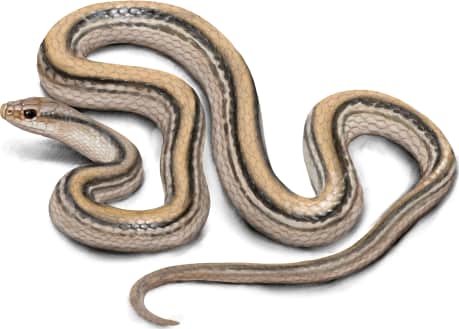
Subspecies, Mountain Patchnose Snake, or *salvadora grahamiae grahamiae*, is usually found in mountainous or hilly areas including coniferous and evergreen woodland.
Similar species
Name and etymology
Genus
Salvadora
Latin for whole (salvus) skin (dura).
Origin
Sources
- Baird and Girard, 1853. Cat. N. Amer. Rept., Pt. 1, p. 104 ↗
Salvadora. Baird and Girard, 1853 - Cat. N. Amer. Rept., Pt. 1, p. 104
Species epithet
grahamiae
Honoring James D. Graham
Origin
Honors
Sources
- Baird and Girard, 1853. Cat. N. Amer. Rept., Pt. 1, p. 104 ↗
Salvadora. Baird and Girard, 1853 - Cat. N. Amer. Rept., Pt. 1, p. 104
Explore more names in the etymology index.
At a glance
Range
Southern United States and Northern Mexico starting in southeastern Arizona, New Mexico, and central Texas southward through…
Habitat
Found in pine forests, canyons, slopes, open woodland, prairies, savannas, and shrublands. Diet includes reptile eggs, small…
Guide
Reptiles and Amphibians of North America
Range map
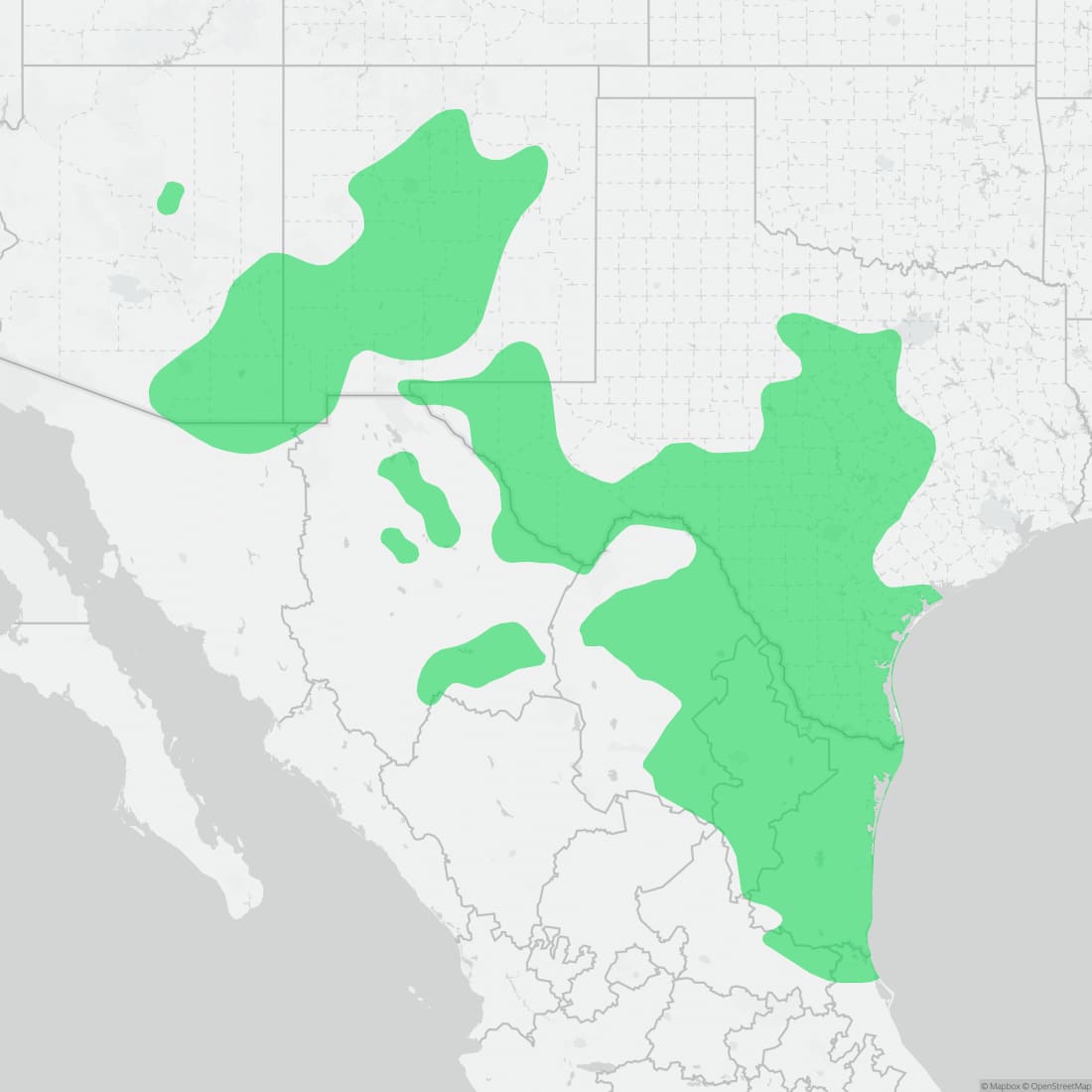
Approximate range. © Mapbox © OpenStreetMap