Texas Patch-nosed Snake
Salvadora lineata
Salvadora lineata has a well-developed rostral scale, elongated and with free edges; 8 or 9 supralabials, fourth and fifth in contact with the eye; 9 to 11 infrala…
How to identify
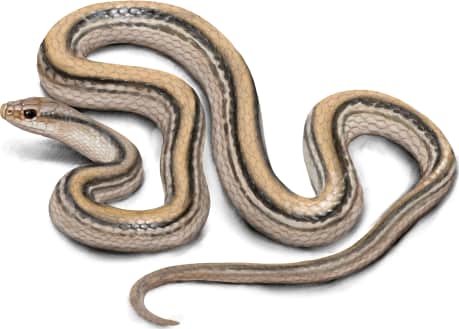
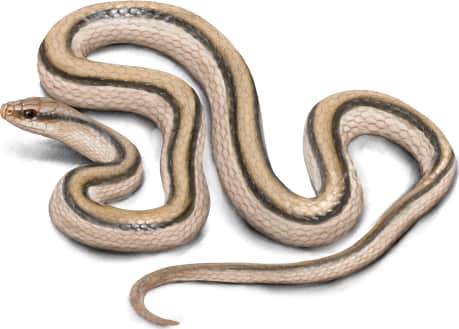
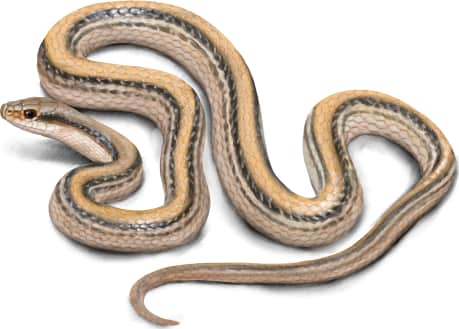
Salvadora lineata has a well-developed rostral scale, elongated and with free edges; 8 or 9 supralabials, fourth and fifth in contact with the eye; 9 to 11 infralabials; preocular divided; a single loreal scale; prenasal scale in contact with or separated from the second supralabial; a second pair of chinshields in contact with each other or separated by a row of scales; 179–202 ventral scales; 81–107 subcaudal scales; maxillary teeth normally 10 + 3. Color pattern consists of a pale vertebral line reaching the top of the head, three to five rows of scales wide on the first third of the body and only three posteriorly; head bordered by a pair of continuous dorsolateral lines from the loreal region across the body, dark line on the sixth and seventh dorsal scales; lateral line paler than the well-developed dorsolateral line on the third row of dorsal scales.
Range
Salvadora lineata ranges central to south Texas extending into northern Mexico.
Habitat
Found in pine forests, canyons, slopes, open woodland, prairies, savannas, and shrublands. Diet includes reptile eggs, small mammals, small snakes, and lizards.
Similar species
A distinctive feature of this species compared to S. grahamiae is the presence of two clear lateral lines on the dorsal scales of the third row. These lines run from the anterior third of the body to the cloacal opening.
Name and etymology
Genus
Salvadora
Latin for whole (salvus) skin (dura).
Origin
Sources
- Baird and Girard, 1853. Cat. N. Amer. Rept., Pt. 1, p. 104 ↗
Salvadora. Baird and Girard, 1853 - Cat. N. Amer. Rept., Pt. 1, p. 104
Species epithet
lineata
Latin for line (linea), referring to its lateral lines.
Origin
Sources
- Schmidt, 1940. Field Mus. Nat. Hist. Zool. Series, Vol. 24, No. 12, p. 148, fig. 15
Salvadora grahamiae lineata. Schmidt, 1940 - Field Mus. Nat. Hist. Zool. Series, Vol. 24, No. 12, p. 148, fig. 15
Explore more names in the etymology index.
At a glance
Range
Salvadora lineata ranges central to south Texas extending into northern Mexico.
Habitat
Found in pine forests, canyons, slopes, open woodland, prairies, savannas, and shrublands. Diet includes reptile eggs, small…
Guide
Reptiles and Amphibians of North America
Range map
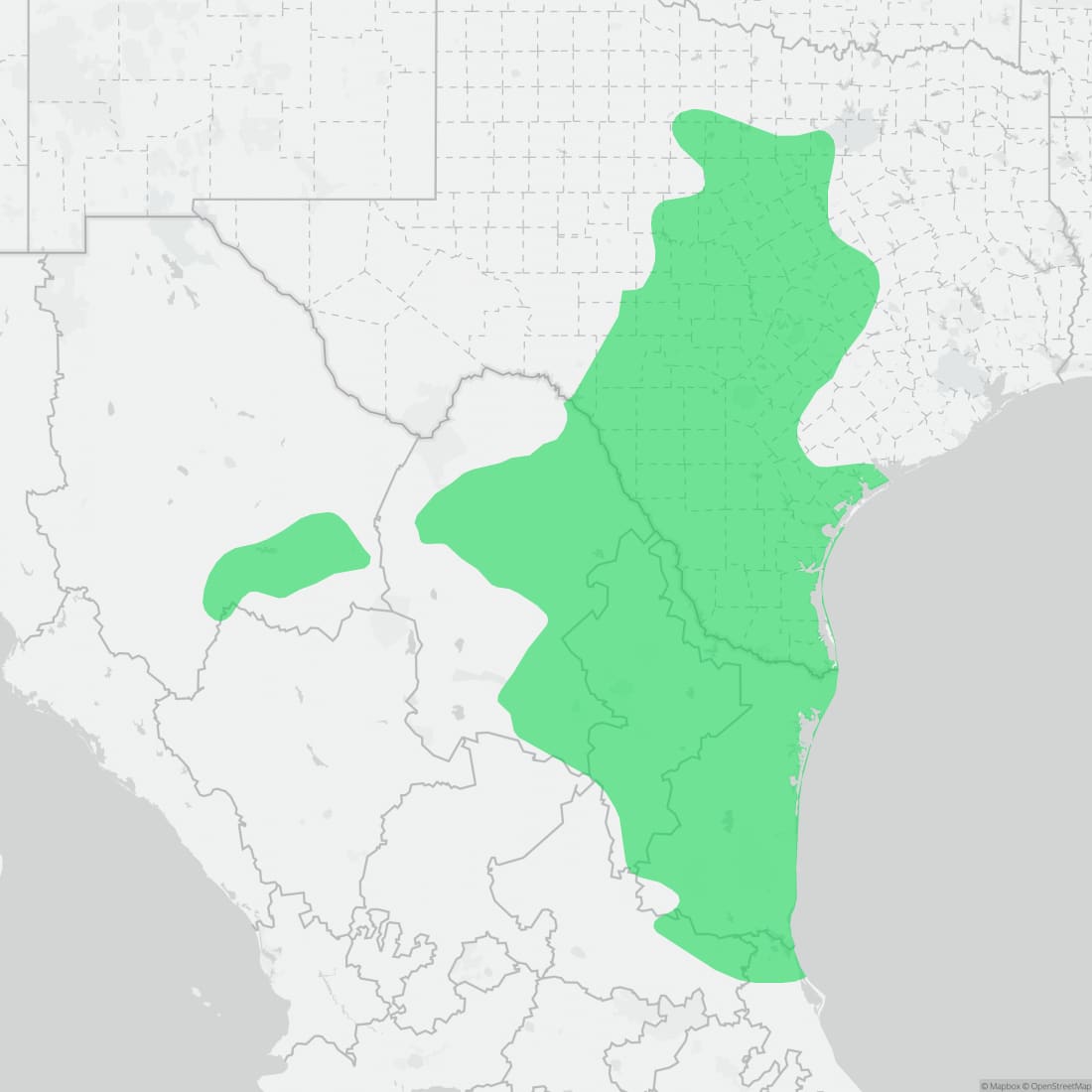
Approximate range. © Mapbox © OpenStreetMap