Southern Dwarf Siren
Pseudobranchus axanthus
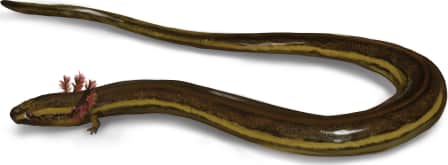
This is a slender, aquatic salamander without hind limbs. They reach an average total length of about 10 inches but its tail constitutes 2/5 of this length. This missing…
How to identify
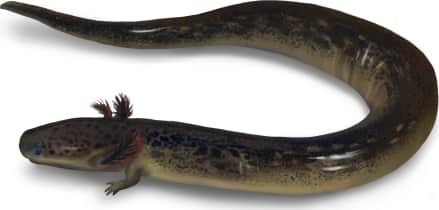
This is a slender, aquatic salamander without hind limbs. They reach an average total length of about 10 inches but its tail constitutes 2/5 of this length. This missing hind limb is a key characteristic of sirens and dwarf sirens. The eyelids are also lacking and they have a ridged beak on the jaws and only one gill slit. The front limbs have three toes which are greatly reduced and may be difficult to see. There are 29-37 costal grooves. The sexual dimorphism in this species allow females be about 28% larger than the males. The adults have a background color of brownish-black to light grey with parallel dorsal and side stripes of tan or yellow. Hatchlings are about 0.4 inches in snout-to-vent length and juveniles have a dorsal fin that runs from the head to the end of the tail.
Range
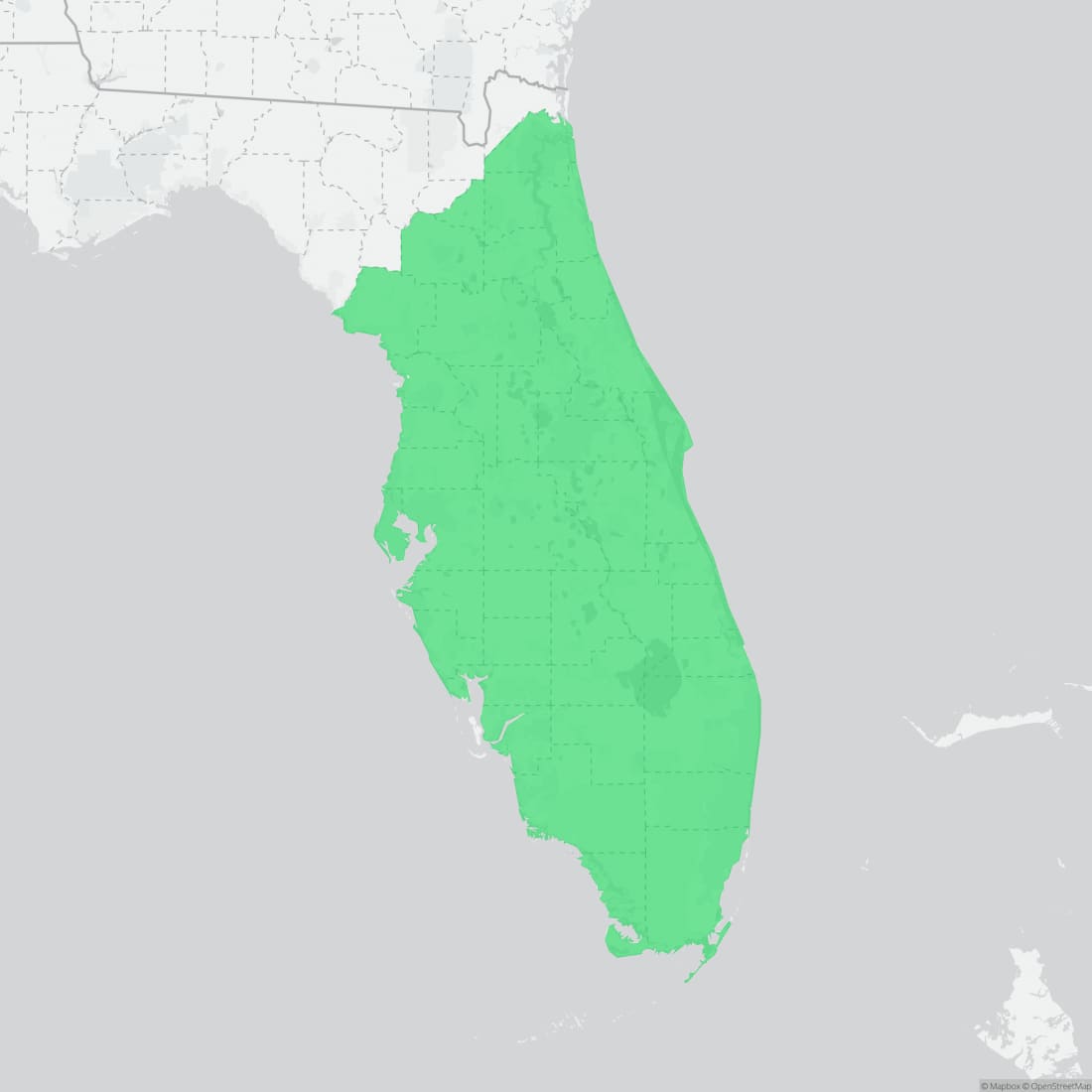
The southern dwarf siren can be found through most of eastern peninsular Florida. Subspecies, Pseudobranchus axanthus belli is found in the southern part of the range while Pseudobranchus axanthus axanthus is found in the northern regions.
Habitat
These salamanders thrive in cypress ponds, swamps, marshes, shallow lakes, ditches, and various (semi)aquatic habitats. They are associated with water hyacinth. The reproduction is aquatic and live and breed in the same location. Females lay eggs in or among the aquatic vegetation in spring. They feed on amphipods, chironomid larvae, ostracods, and aquatic oligochaetes.
Variations
Pseudobranchus axanthus belli or the Everglades dwarf siren typically has 29-33 costal grooves and three lines in the mid-dorsal stripes and yellowish-beige bands at the sides. Pseudobranchus axanthus axanthus has 34-37 costal groves and has a gray background color and poorly defined light stripes and gray lateral stripes.
Similar species
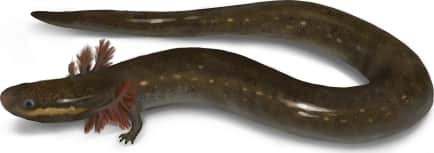
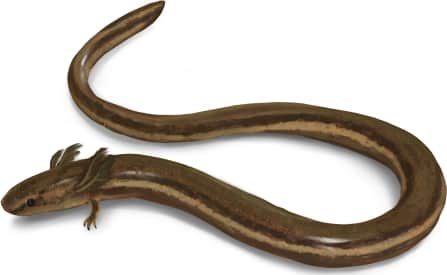
The Northern Dwarf Siren (Pseudobranchus striatus) shares general dwarf salamander characteristics such as a long tail and the lack of a hind limb and missing eyelids. The bush external gills on this salamander may sometimes hide its front limbs. The total length is averagely between 3.9-8.7 inches. The mid-dorsal stripe is brown to black and there is a yellow line extending down the middle. Greater Siren (Siren lacertina) reaches lengths between 7-38 inches, they lack hind legs, a pelvic girdle and eyelids. It possesses external gills and small lungs. Coloration varies but they can be found with olive or gray coloration and small yellow or green spots on the sides. They have 36-40 costal grooves. Lesser Siren (Siren intermedia) reaches lengths between 7-27 inches, they lack hind limbs and possess only two limbs. The juveniles have red to yellow bands on the head and stripes that extend along the length of the body. The adults have a plainer coloration. However, the dorsal side is generally an olive green to vlue-gray or black.
Name and etymology
Genus
Pseudobranchus
Greek for false (pseudes) gills (branchos).
Origin
Sources
- Gray, 1825. Ann. Philos, Ser. 2, Vol. 10, p. 216
Pseudobranchus. Gray, 1825 - Ann. Philos, Ser. 2, Vol. 10, p. 216
Species epithet
axanthus
Greek for without (a) yellow (xanthos)
Origin
Sources
- Netting and Goin, 1942. Ann. Carnegie Mus., Vol. 29, Art. 6, p. 183, pl. 1, figs. 1 and 2 ↗
Pseudobranchus axanthus. Netting and Goin, 1942 - Ann. Carnegie Mus., Vol. 29, Art. 6, p. 183, pl. 1, figs. 1 and 2
Explore more names in the etymology index.
At a glance
Range
The southern dwarf siren can be found through most of eastern peninsular Florida. Subspecies, Pseudobranchus axanthus belli i…
Habitat
These salamanders thrive in cypress ponds, swamps, marshes, shallow lakes, ditches, and various (semi)aquatic habitats. They…
Guide
Reptiles and Amphibians of North America
Range map
Approximate range. © Mapbox © OpenStreetMap