
Greater Siren
Siren lacertina
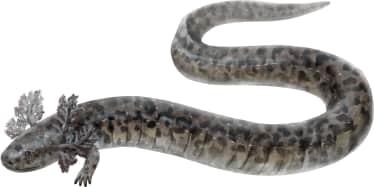
These are large eel-like salamanders that possess external gills, two reduced forelimbs (containing four toes each), no hind limbs and a flattened tail. The average salam…
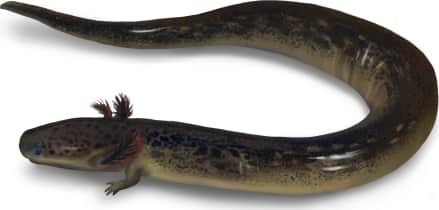
How to identify
These are large eel-like salamanders that possess external gills, two reduced forelimbs (containing four toes each), no hind limbs and a flattened tail. The average salamander length range is between 24.40 -27.56 inches. They are generally olive-green or grayish-brown with black speckles yellow or green spots along their sides and back but coloration varies widely within this range. Greater sirens typically have 36-40 costal grooves. Hatchlings have stripes and a yellow or red triangular marking on the snout.
Range
The range of this salamander extends from the Atlantic and Gulf Coastal Plains – from Washington, D.C., to Virginia on south to Florida then west to the eastern parts of Alabama. There are further reports of a disjunctive population in the Rio Grande.
Habitat
These salamanders do not have a terrestrial development cycle and can only be found in aquatic environments throughout their lives. The salamanders thrive in swamps ditches and ponds with dense vegetation. Although not exclusively, as they can also be found in lakes and streams. Females find shallow water to lay eggs and the hatchlings live among the vegetation then migrate to deeper water as they age. The adults can be found at the bottom of aquatic pools; plant roots, under sunken branches and sunken logs. The greater sirens are carnivorous and are active at night. They feed on insects, crustaceans, gastropods, spiders, mollusks, crayfish, and small fish. Although, there are reports of algae in their digestive tracts. This causes leading researchers to believe that they are omnivorous. Breeding season occurs from February to March, and they breed only once a year. Females produce an average of 500 offspring per year
Similar species
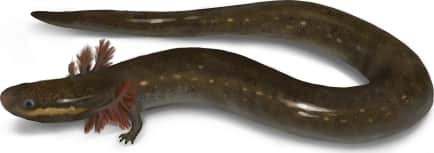
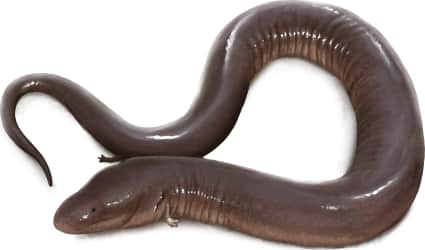
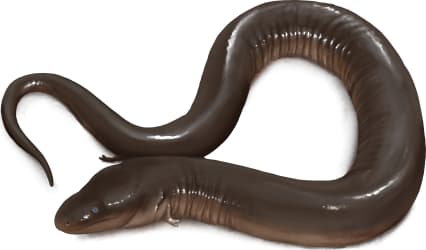
Lesser Siren or Siren intermedia is almost indistinguishable from the greater siren. But one way to distinguish them is by counting the costal grooves. Lesser sirens have 31-35 costal grooves. In terms of coloration, the lesser sirens have a more uniformly dark, more slender and sharper tails. Hatchlings also differ because the lesser siren hatchlings lack the stripes and snout markings present in the greater. The Amphiuma is seemingly similar in appearance but can be distinguished by their round tail, and non-existent external gills. The three-toed Amphiuma or Amphiuma tridactylum are further set apart by the three toes that they have on each forelimb. And the Two-toed Amphiuma or Amphiuma means has two toes on each forelimb.
Name and etymology
Genus
Siren
Referencing the Sirens of Greek mythology.
Origin
Sources
- Linnaeus, 1766. Syst. Nat., 12th ed., Vol. 1, Pt. 2, sign. Rrrr 5, Addenda (not paged) ↗
Siren. Linnaeus, 1766 - Syst. Nat., 12th ed., Vol. 1, Pt. 2, sign. Rrrr 5, Addenda (not paged)
Species epithet
lacertina
Lating for pertaining to a lizard (lacerta).
Sources
- Linnaeus, 1766. Syst. Nat., 12th ed., Vol. 1, Pt. 2, sign. Rrrr 5, Addenda (not paged) ↗
Siren. Linnaeus, 1766 - Syst. Nat., 12th ed., Vol. 1, Pt. 2, sign. Rrrr 5, Addenda (not paged)
Explore more names in the etymology index.
At a glance
Size
49 to 97 cm
Range
The range of this salamander extends from the Atlantic and Gulf Coastal Plains – from Washington, D.C., to Virginia on south…
Habitat
These salamanders do not have a terrestrial development cycle and can only be found in aquatic environments throughout their…
Range map
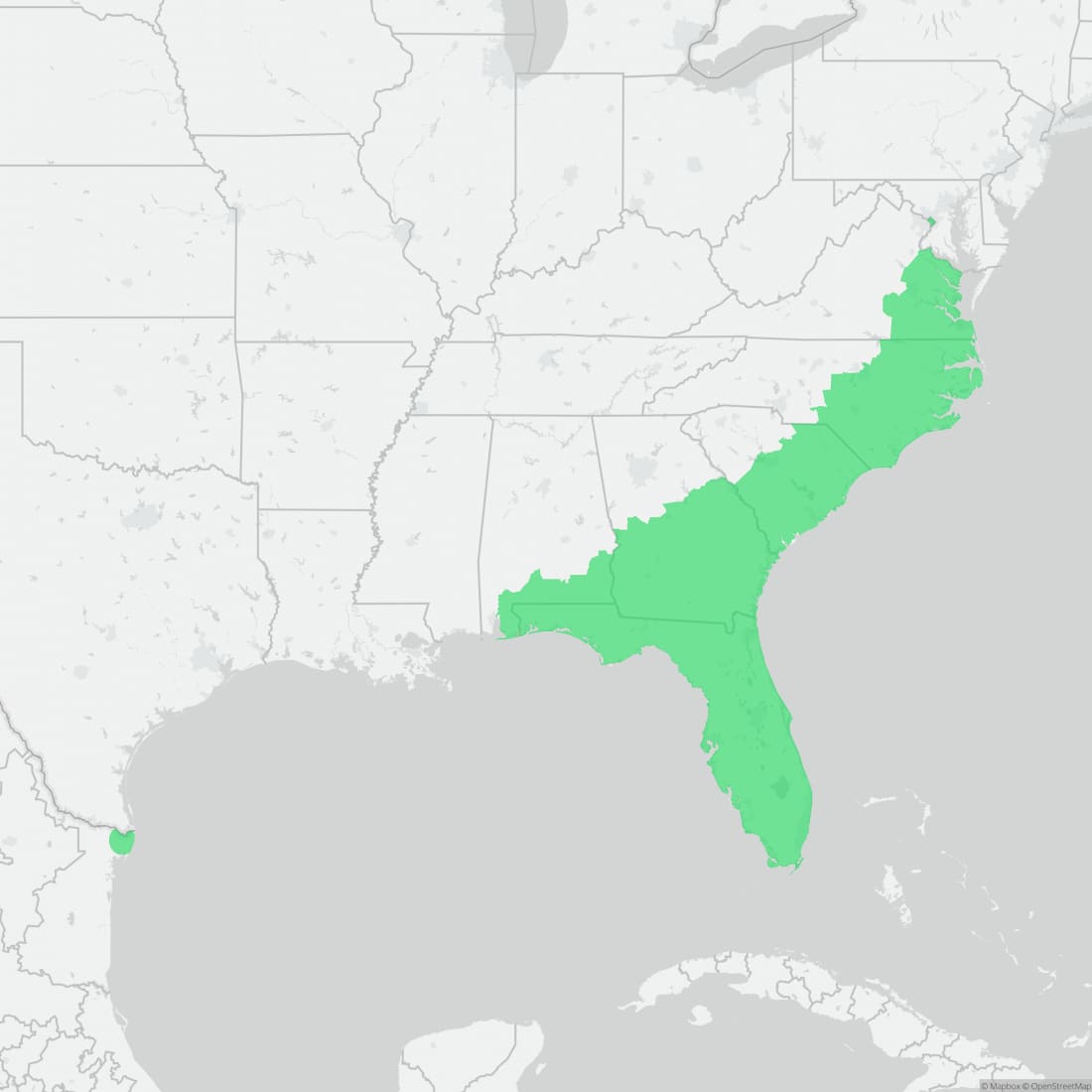
Approximate range. © Mapbox © OpenStreetMap