Columbia Basin Pygmy Rabbit
Sylvilagus idahoensis
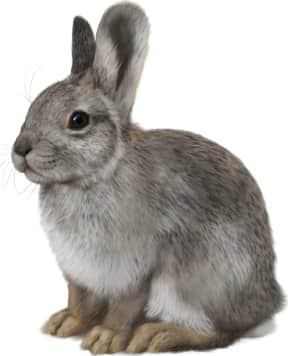
S. idahoensis is the smallest cottontail in North America. They have grayish fur with a white underside and a small, grayish tail. Their small size and preference for sag…
How to identify
S. idahoensis is the smallest cottontail in North America. They have grayish fur with a white underside and a small, grayish tail. Their small size and preference for sagebrush habitat are key identifying features.
Range
S. idahoensis is found in the Great Basin region of the western United States, including parts of Idaho, Oregon, Nevada, California, Utah, and Wyoming.
Habitat
S. idahoensis is strongly associated with dense stands of big sagebrush (Artemisia tridentata). They are the only rabbit in North America that digs its own burrows, although they frequently use burrows made by other animals.
Similar species
S. holzneri (Idaho Rabbit) overlaps in a small portion of its range. S. idahoensis is smaller and uniquely uses burrows created by badgers or other animals.
Name and etymology
Genus
Sylvilagus
Latin for forest (silva) and Greek for hare (lagos_
Origin
Sources
- Palmer, Index Generum Mammalium (1904) ↗
Palmer, T. S. 1904. Index Generum Mammalium: a list of the genera and families of mammals. North American Fauna 23. Government Printing Office, Washington. https://doi.org/10.5962/bhl.title.39809
Species epithet
idahoensis
Latin for of Idaho
Origin
Sources
- Wikipedia: Thomomys idahoensis ↗
“Thomomys idahoensis.” Wikipedia. https://en.wikipedia.org/wiki/Idaho_pocket_gopher
- Wikipedia: Sylvilagus idahoensis ↗
“Sylvilagus idahoensis.” Wikipedia. https://en.wikipedia.org/wiki/Pygmy_rabbit
Explore more names in the etymology index.
At a glance
Range
S. idahoensis is found in the Great Basin region of the western United States, including parts of Idaho, Oregon, Nevada, Cali…
Habitat
S. idahoensis is strongly associated with dense stands of big sagebrush (Artemisia tridentata). They are the only rabbit in N…
Guide
Mammals of North America
Range map
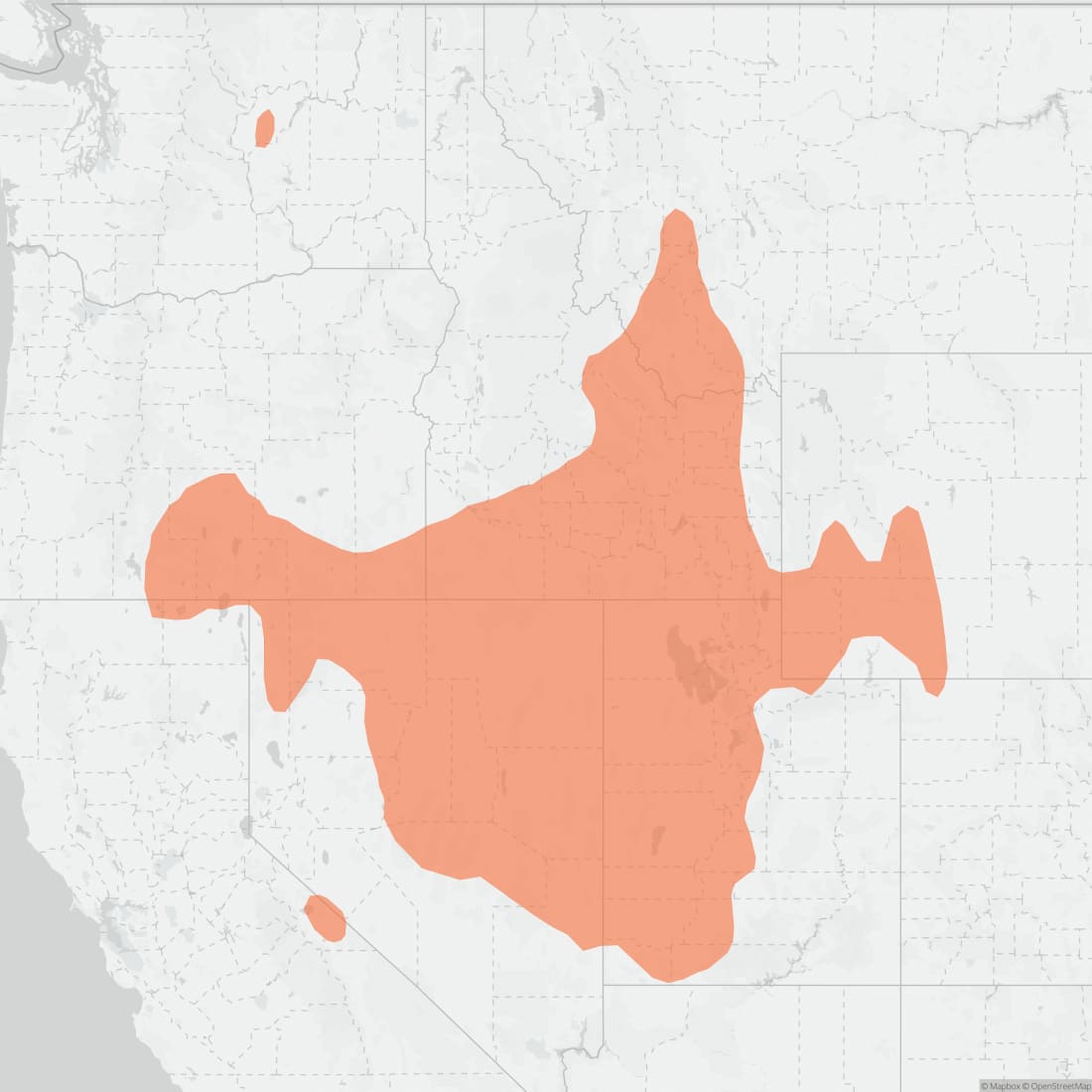
Approximate range. © Mapbox © OpenStreetMap