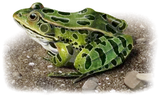
Bog Dwarf Salamander
Eurycea sphagnicola
The genus of this salamander points them out as brook salamanders. They are slender with correspondingly slender limbs each with three numbers. These salamanders are tiny…
How to identify
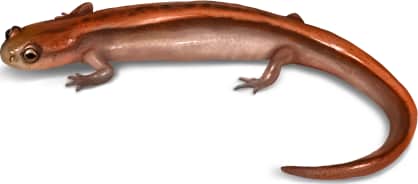
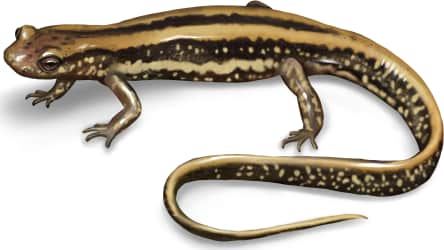
The genus of this salamander points them out as brook salamanders. They are slender with correspondingly slender limbs each with three numbers. These salamanders are tiny with a total length of approximately 4.5 in (including tail). It lacks a pronounced neck and its body tapers into its long tail. The tail is easily more than the length of its entire body. It has bulbous eyes on its blunted head. Their general colors are often dark honey-brown to light brown. Some specimens display a long dotted dorsal line that stops where the tail starts with darker color bands running from its mouth on either side to the end of its tail.
Range
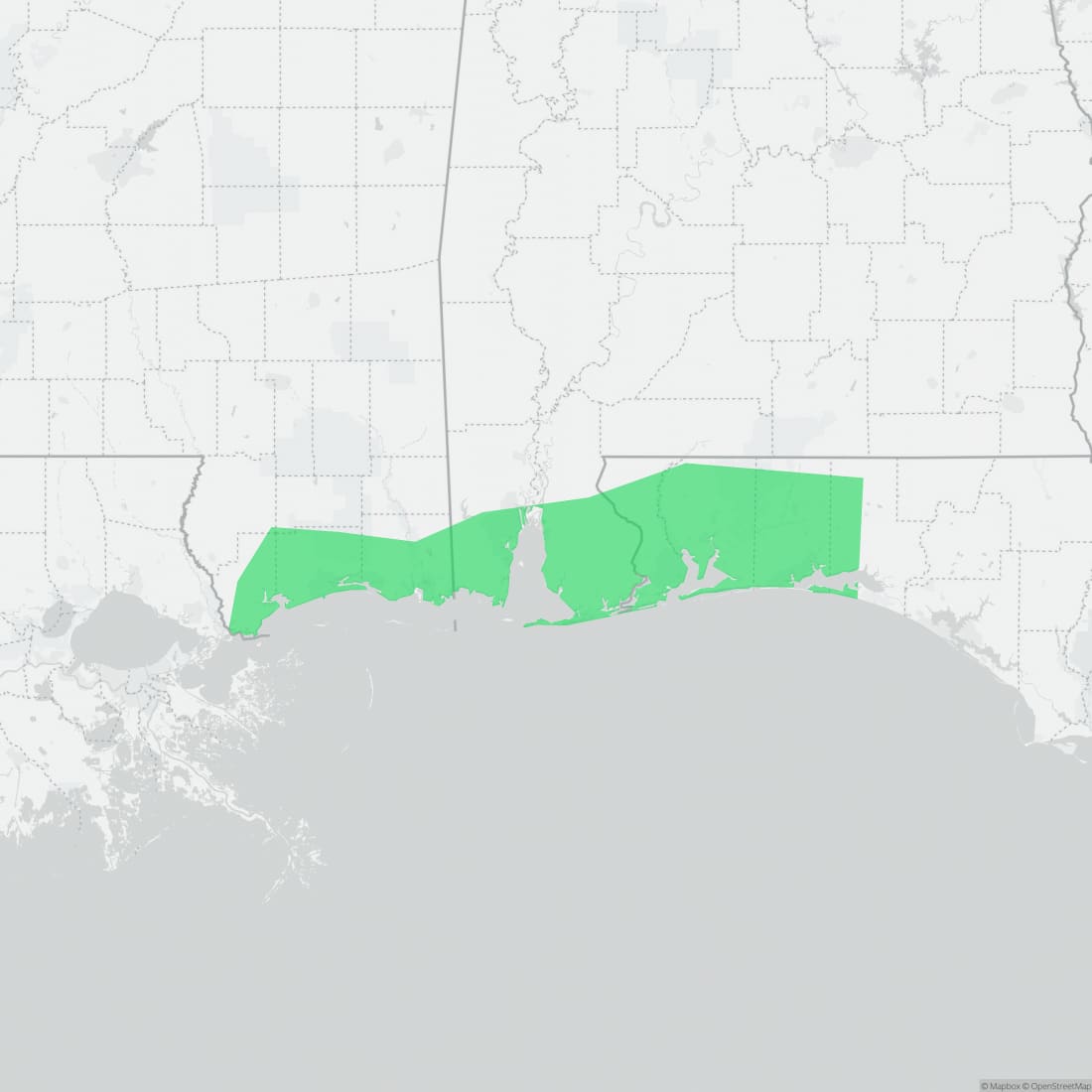
These species can be found in the range of the Gulf Coast in Mississippi, Alabama and also in the western regions of the Florida Panhandle. It occurs in close proximity with E. quadrigitata, reports have claimed to have spotted the two species on the same hillside in different microhabitats on Eglin Air force Base in Santa Rosa and Okaloosa counties.
Habitat
They are brook salamanders and can be found in freshwater springs and brooks. The Bog Dwarf Salamander can be found at the sphagnum covered floor of a steephead seepage. Like others of their genus, they feed on small arthropods such as spiders, Armadillidiidae, and insects. Larvae also eat these invertebrates.
Similar species
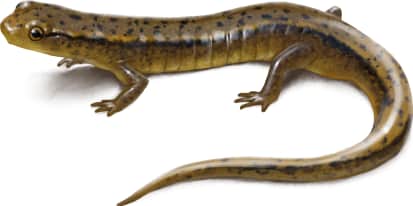
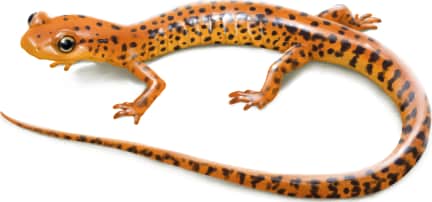
Northern Two-lined Salamander or Eurycea bislineata is a bigger species of salamander. The major difference lies in distinguishing two stripes that run down the back and ends at the base of the tail. Long-tailed Salamander or Eurycea longicauda has a long tail as well and bulbous eyes. Even with its similar size, the color and pattern betrays the E. longicauda. Body-color can vary from yellow to orange-red to red with distinct black spots. Three-lined Salamander or Eurycea guttolineata three distinctive lines that run the middle of its back and the sides of its body.
Name and etymology
Genus
Eurycea
Probably honoring Eurydice the wife of Orpheus in Greek mythology. Although Rafinesque, who named the genus, only wrote "mythological"
Origin
Honors
Sources
- Rafinesque, 1822. Kentucky Gazette, Lexington, N. S., Vol. 1, No. 9, Feb. 28, p. 3, column 6
Eurycea. Rafinesque, 1822 - Kentucky Gazette, Lexington, N. S., Vol. 1, No. 9, Feb. 28, p. 3, column 6
Species epithet
sphagnicola
Latin for inhabiting (-cola) sphagnum (Peat moss).
Origin
Sources
- Wikipedia: Siren sphagnicola ↗
“Siren sphagnicola.” Wikipedia. https://en.wikipedia.org/wiki/Seepage_siren
- Wikipedia: Eurycea sphagnicola ↗
“Eurycea sphagnicola.” Wikipedia. https://en.wikipedia.org/wiki/Bog_dwarf_salamander
Explore more names in the etymology index.
At a glance
Range
These species can be found in the range of the Gulf Coast in Mississippi, Alabama and also in the western regions of the Flor…
Habitat
They are brook salamanders and can be found in freshwater springs and brooks. The Bog Dwarf Salamander can be found at the sp…
Guide
Reptiles and Amphibians of North America
Range map
Approximate range. © Mapbox © OpenStreetMap