
Collared Peccary
Pecari tajacu
Pecari tajacu are medium-sized, pig-like mammals. They are characterized by their coarse, bristly hair that is typically grayish-brown to black. A distinctive feature is…
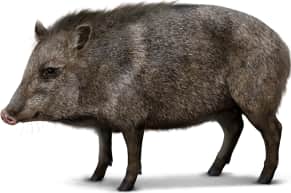
How to identify
Pecari tajacu are medium-sized, pig-like mammals. They are characterized by their coarse, bristly hair that is typically grayish-brown to black. A distinctive feature is the lighter band of yellowish or whitish hair that circles their neck, resembling a collar. They have a long, pig-like snout, small ears, and a vestigial tail that is usually hidden by their fur. Unlike true pigs, peccaries have only three toes on their hind feet. They also possess a scent gland on their back near the base of the tail, which they use for marking territory and recognizing other members of their group.
Range
Pecari tajacu is found in the southwestern United States (Arizona, New Mexico, Texas), Mexico, Central America, and South America as far south as northern Argentina.
Habitat
Pecari tajacu are adaptable and inhabit a variety of habitats, including deserts, grasslands, subtropical scrublands, and tropical forests. They prefer areas with dense vegetation for cover and forage. They are often found near water sources.
Similar species
Within their North American range, Pecari tajacu are quite distinct. Feral pigs (Sus scrofa) have been introduced to various parts of North America, including some areas where peccaries occur. Feral pigs are generally larger, have a more robust build, longer snouts, and lack the distinct collar. True pigs also have four toes on their hind feet.
Name and etymology
Genus
Pecari
Caribbean for pig-like
Origin
Sources
- Palmer, Index Generum Mammalium (1904) ↗
Palmer, T. S. 1904. Index Generum Mammalium: a list of the genera and families of mammals. North American Fauna 23. Government Printing Office, Washington. https://doi.org/10.5962/bhl.title.39809
Species epithet
tajacu
From Tupi (Indigenous language in Brazil) for peccary.
Origin
Sources
- Wikipedia: Pecari tajacu ↗
“Pecari tajacu.” Wikipedia. https://en.wikipedia.org/wiki/Collared_peccary
Explore more names in the etymology index.
More illustrations
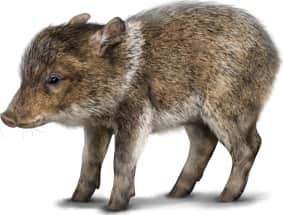
Young
At a glance
Range
Pecari tajacu is found in the southwestern United States (Arizona, New Mexico, Texas), Mexico, Central America, and South Ame…
Habitat
Pecari tajacu are adaptable and inhabit a variety of habitats, including deserts, grasslands, subtropical scrublands, and tro…
Guide
Mammals of North America
Range map
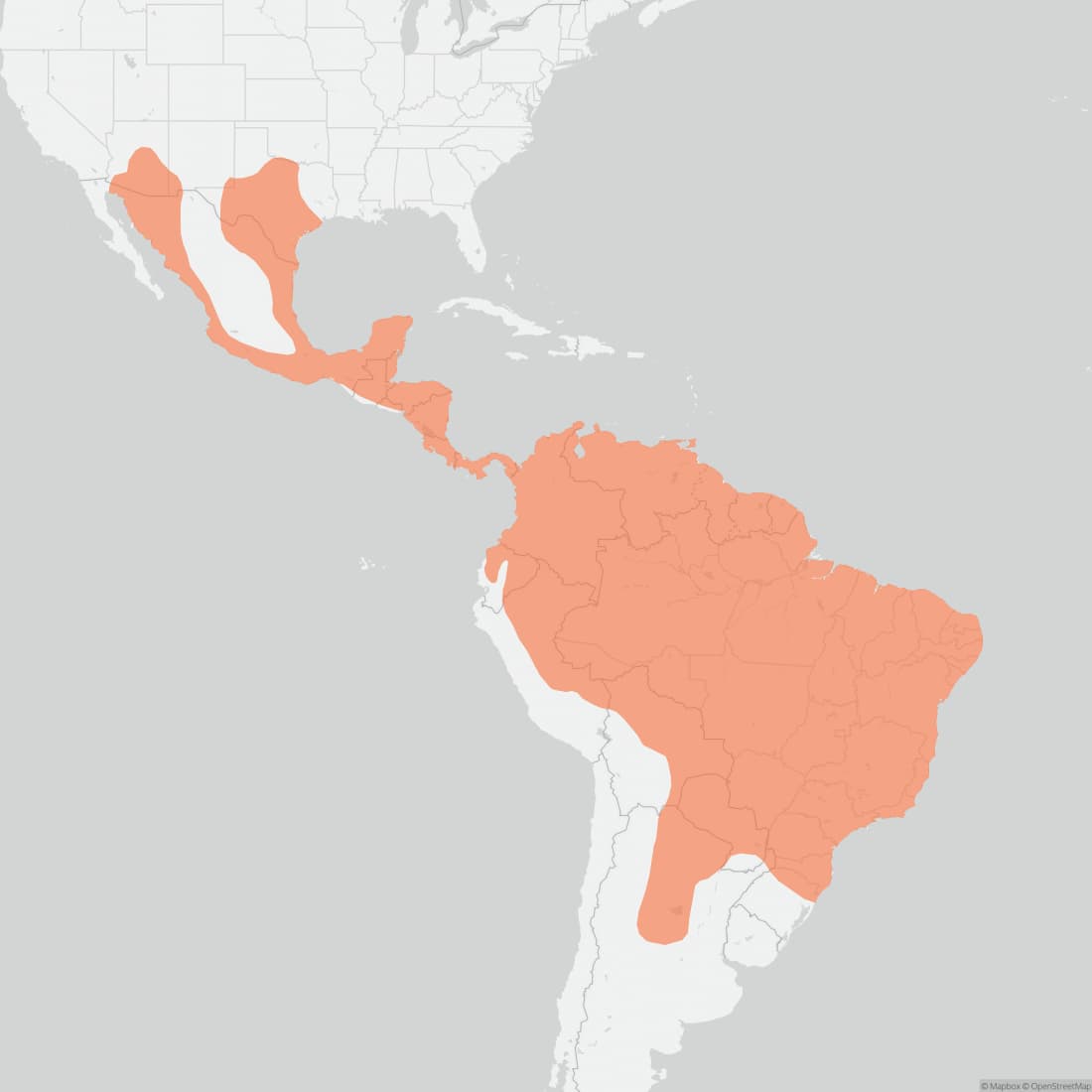
Approximate range. © Mapbox © OpenStreetMap