Cagle's Map Turtle
Graptemys caglei
This small species of map turtle is sexually dimorphic. Straight carapace length in males is only 4 inches, while females measure 7 inches or more. The caudal edge of the…
How to identify
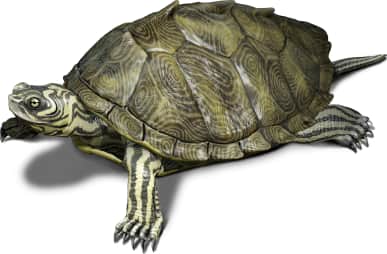
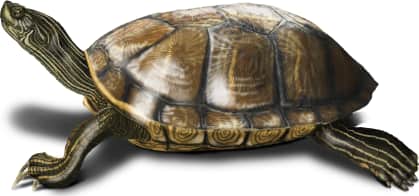
This small species of map turtle is sexually dimorphic. Straight carapace length in males is only 4 inches, while females measure 7 inches or more. The caudal edge of their carapace is serrated, and the central row of carapace scutes have raised peaks running down the middle of the turtle's back. Their skin is intricately patterned with yellow stripes on a dark grey background. Eyes are light yellow with a horizontal dark line through the center.
Range
This endangered species is only found in Texas, north and east of the greater San Antonio area along the San Marcos, Guadalupe, and San Antonio rivers.
Habitat
Lives in and around slow moving freshwater rivers and ponds. Can often be seen basking on exposed logs and rocks.
Variations
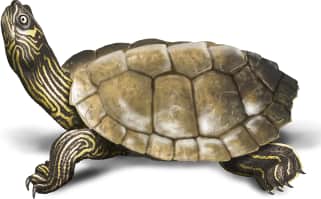
The adult's shell is a rather dull solid grey color, while juveniles display faded green and yellow swirl and stripe patterns on their carapace, similar to the skin coloration.
Similar species
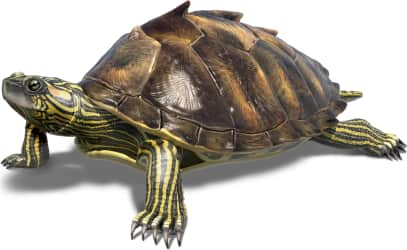
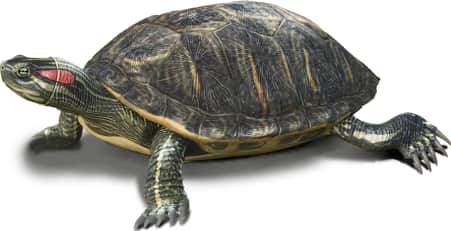
The Cagle's map turtle could be confused with several species, including the false map turtle (*Graptemys pseudogeographica*), Texas map turtle (*Graptemys versa*), Texas cooter (*Pseudemys texana*), and pond slider (*Trachemys scripta*). All of these species have noticeably different skin patterns and colorations when compared. It most closely resembles the false map turtle, but the Cagle's has more distinct stripes in a more irregular pattern.
Name and etymology
Genus
Graptemys
Greek for written (graptos) turtle (emys).
Origin
Sources
- Agassiz, 1857. Contr. Nat. Hist. U. S., Vol. 1, p. 436 ↗
Graptemys. Agassiz, 1857 - Contr. Nat. Hist. U. S., Vol. 1, p. 436
Species epithet
caglei
Honoring Fred Ray Cagle.
Origin
Honors
Sources
- Haynes and McKown, 1974. Tulane Stud. Zool. Bot., Vol. 18, No. 4, p. 143
Graptemys caglei. Haynes and McKown, 1974 - Tulane Stud. Zool. Bot., Vol. 18, No. 4, p. 143
Explore more names in the etymology index.
At a glance
Range
This endangered species is only found in Texas, north and east of the greater San Antonio area along the San Marcos, Guadalup…
Habitat
Lives in and around slow moving freshwater rivers and ponds. Can often be seen basking on exposed logs and rocks.
Guide
Reptiles and Amphibians of North America
Range map
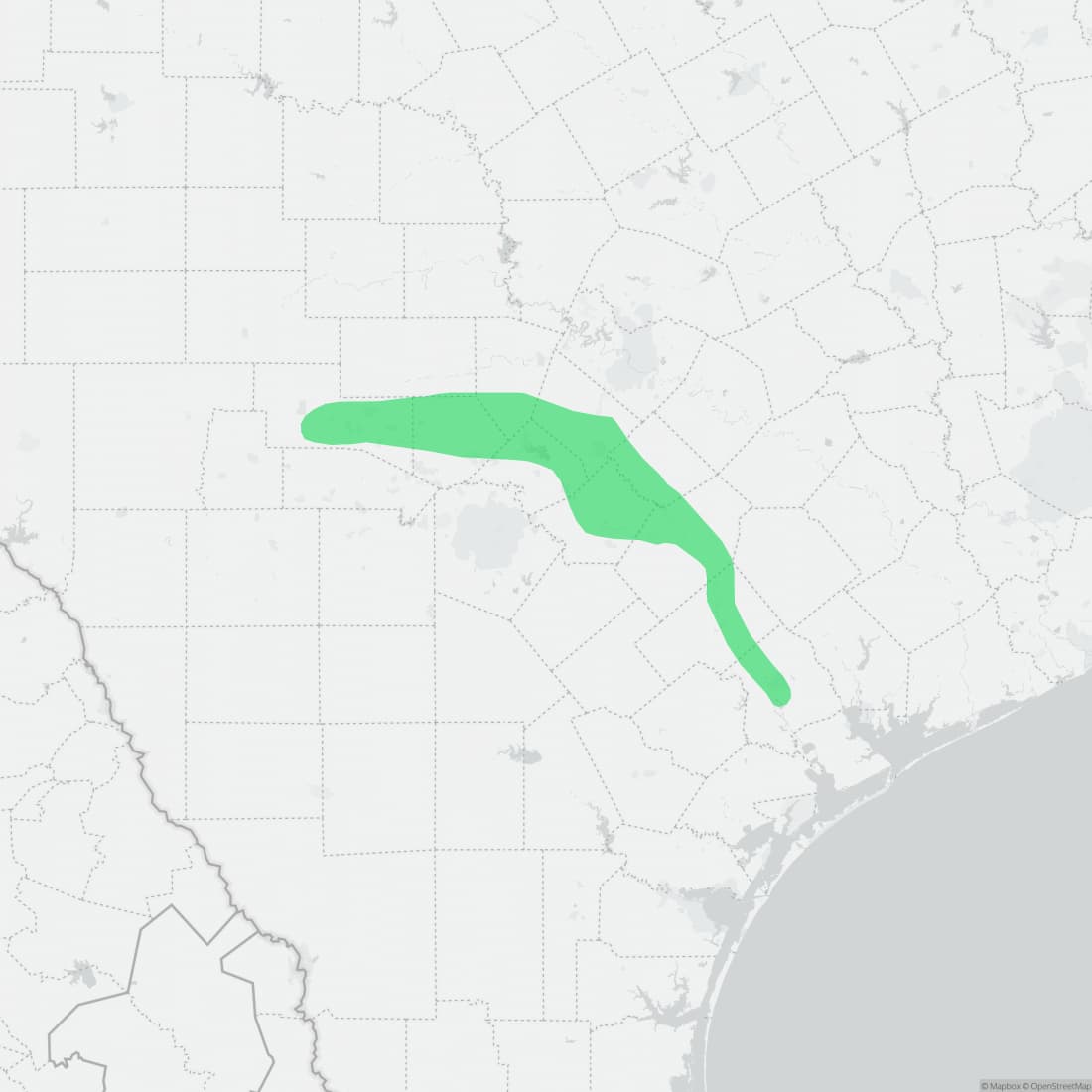
Approximate range. © Mapbox © OpenStreetMap