Spectacled Caiman
Caiman crocodilus
It is a small to average-sized crocodilian with length range of 1500 mm to 2200 mm from its head to its tail. Of course, the females are generally less in size than the m…
How to identify
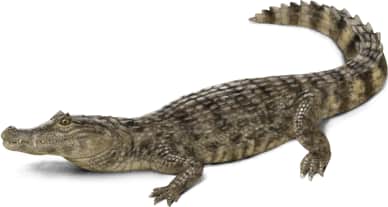
It is a small to average-sized crocodilian with length range of 1500 mm to 2200 mm from its head to its tail. Of course, the females are generally less in size than the males. On its head, just right between both bulging eyeballs is a bony infraorbital bridge which gives it a look of someone/some creature wearing reading spectacles. This feature largely contributes to its general name, the Spectacled Caiman. It has a long nozzle and lack the usually present protrusive fourth mandibular teeth. This teeth is not seen when its jaws are shut. It is a bilaterally symmetric creature. Dentition is ranged from about 72 to 78 powerful teeth that grow bigger as it ages. Color ranges from a dull yellow-green to dark with yellowish or dark bands patterning it.
Range
This species of crocodile can be found almost everywhere in South America especially in the Northern parts. In places like Brazil, Colombia, Costa Rica, Ecuador and El Salvador, they are regarded natives. Recent conservative practices has seen them introduced into favorable habitats in Florida, USA and Cuba. Parts where they are also regarded as natives is Central America's Mexico.
Habitat
The highest altitude a crocodile of this species is expected to be found is 2625 feet. Its habitat regions include tropical, terrestrial, saltwater and freshwater habitats. Stagnant water is not an option for this species but it preferably opts for slow moving rivers or streams that are deep enough to enable full immersion of its large body. It water habitations is usually murky and serve as good camouflage for the Spectacled Caiman. The peak of breeding season is around May-August, and mating between a male and female gives a product of about 20-30 eggs. These eggs are deposited in a pre-constructed mound nest that was made from dirt and dried flora. A nest by guarded by parents acting as intermittent sentries in order to protect their eggs from getting poached by wild animals like foxes and tegu species. After 65-104 days of incubation under the ground, juveniles emerge into the world. Juveniles can stay with their parents for about a year and half for extra safety and then either venture off after that or maintain their predecessors niche. Smaller crocodiles will eat invertebrates found around their aquatic habitat while the adults diet range from fish, birds and even wild hogs or other large vertebrates that may come to the water hole for a drink. It is said that caimans have a sweet tooth for piranhas.
Variations
Rio Apaporis Caiman (Caiman crocodilus apaporiensis) It looks just like its subspecies the Spectacled Caiman but its nozzle is narrower and its skin color appears more brilliant. It still maintains its regular teeth count of 84-86 teeth in adulthood. Brown Caiman (Caiman crocodilus fuscus) Its predominant color is brown, hugely suggested by its specific name “fuscus”, a Latin word for brown. It can reach 2000 mm in absolute length. Its teeth count reaches a maximum of 84 teeth.
Similar species
Broad-snouted Caiman (Caiman latirostris) shows sexual dimorphism in sizes with the male growing to become larger, in length of about 3000 mm than the female whose absolute span caps at 2000-2500 mm. Weight is ranged from 30-60 kg. Its color is uniformly light olive green color and not without spotted patterns on face and head. It has a broad snout. Yacare Caiman (Caiman yacare). Until recently, it was formerly a subspecies of the Caiman crocodilus. An adult male is longer than the female, observations have pegged males in the range of 2500-3000 mm in overall length and the females at about 1500 mm. The color of an adult is brown. The skin is marked with few black blemishes all over. Black Caiman (Melanosuchus niger) is a large crocodilian species which can grow up to 5000 mm, and may even reach 6000 mm when measured from the snout to the tip of the tail, they are that large. Color may look more dark than black, and slight blemishes of brown and gray can be seen around the mandible. There is presence of a bony rigde.
Name and etymology
Genus
Caiman
Spanish for crocodile.
Origin
Sources
- Wikipedia: Caiman ↗
“Caiman.” Wikipedia. https://en.wikipedia.org/wiki/Caiman
Species epithet
crocodilus
Latin for crocodile.
Origin
Sources
- Wikipedia: Caiman crocodilus ↗
“Caiman crocodilus.” Wikipedia. https://en.wikipedia.org/wiki/Spectacled_caiman
Explore more names in the etymology index.
At a glance
Size
1.5 to 3 m
Range
This species of crocodile can be found almost everywhere in South America especially in the Northern parts. In places like Br…
Habitat
The highest altitude a crocodile of this species is expected to be found is 2625 feet. Its habitat regions include tropical,…
Range map
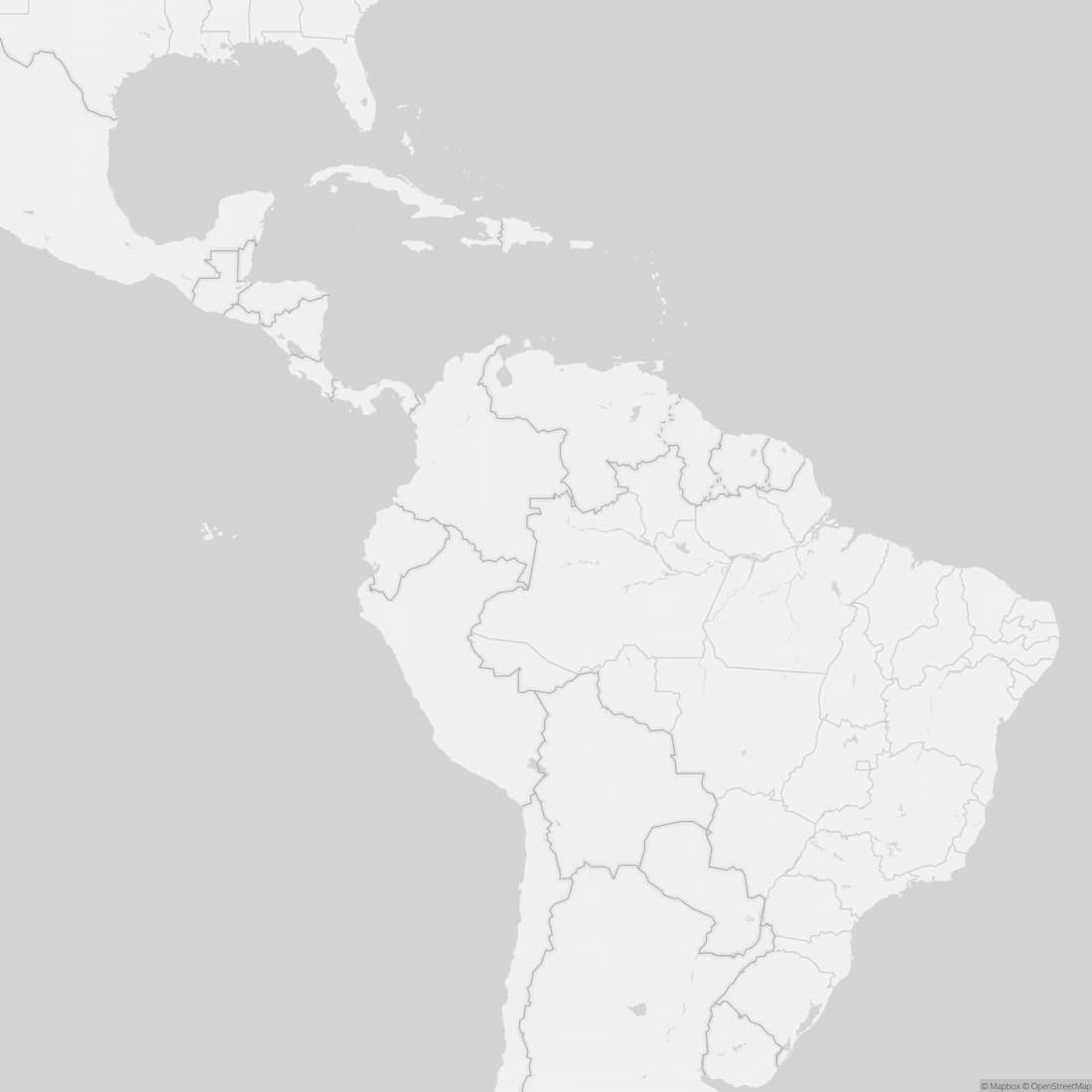
Approximate range. © Mapbox © OpenStreetMap