
Illinois Chorus Frog
Pseudacris illinoensis
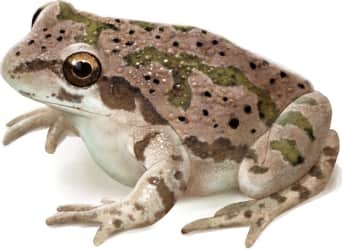
The Illinois Chorus frog has a body size length of 1 to 1.5 inches. It is tan to tannish grey with a white belly and many dark or gray irregularly shaped markings. The fr…
How to identify
The Illinois Chorus frog has a body size length of 1 to 1.5 inches. It is tan to tannish grey with a white belly and many dark or gray irregularly shaped markings. The frog has a distinctive V-shaped marking between the eyes, a dark stripe from snout to shoulder, and a dark spot below each eye. Juveniles are dull gray and have conspicuous body markings. The skin of the Illinois Chorus Frog has a rough texture. The large and Muscular forearms of this frog are used to dig the burrows where it spends much of the year.
Range
This organism can be found in three main regions. They include the West-central and Southwestern Illinois, Southeastern Missouri and Northeastern Arkansas.
Habitat
They are known to inhabit Sand prairies and remnants such as sandy agricultural fields and waste area. However, its habitat changes as a result of channelization due to burrows in sand. They emerge after heavy, early spring rains to breed in nearby flooded fields, ditches and other vernal ponds.
Similar species
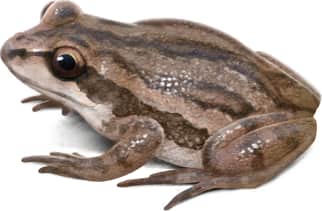
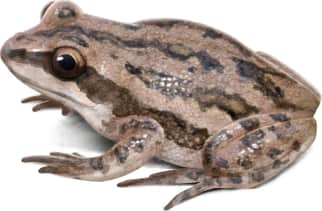
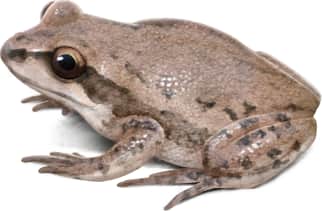
The Upland Chorus Frog or the Pseudacris Feriarum: It is a small gray or tan frog with Dark dorsal stripes that are narrow or broken into a series of dashes or spots. A gray irregular stripe extends from the snout through the eye down each side to the groin. Boreal Chorus Frog or the Pseudacris Masculata: It was formerly called the Western Chorus Frog with size length of three-quarter and one and a half inches. It has three wide, dark stripes or a series of spots down the back, and a wide, dark stripe passing through the eyes and extending along the sides.
Name and etymology
Genus
Pseudacris
Greek for false(pseudes) locus(akris) referencing genus Acris.
Origin
Sources
- Fitzinger, 1843. Syst. Rept., p. 31 ↗
Pseudacris. Fitzinger, 1843 - Syst. Rept., p. 31
Species epithet
illinoensis
Belonging to Illinois.
Origin
Sources
- Smith, 1951. Bull. Chicago Acad. Sci., Vol. 9, p. 191 ↗
Pseudacris illinoensis. Smith, 1951 - Bull. Chicago Acad. Sci., Vol. 9, p. 191
Explore more names in the etymology index.
At a glance
Range
This organism can be found in three main regions. They include the West-central and Southwestern Illinois, Southeastern Misso…
Habitat
They are known to inhabit Sand prairies and remnants such as sandy agricultural fields and waste area. However, its habitat c…
Guide
Reptiles and Amphibians of North America
Range map
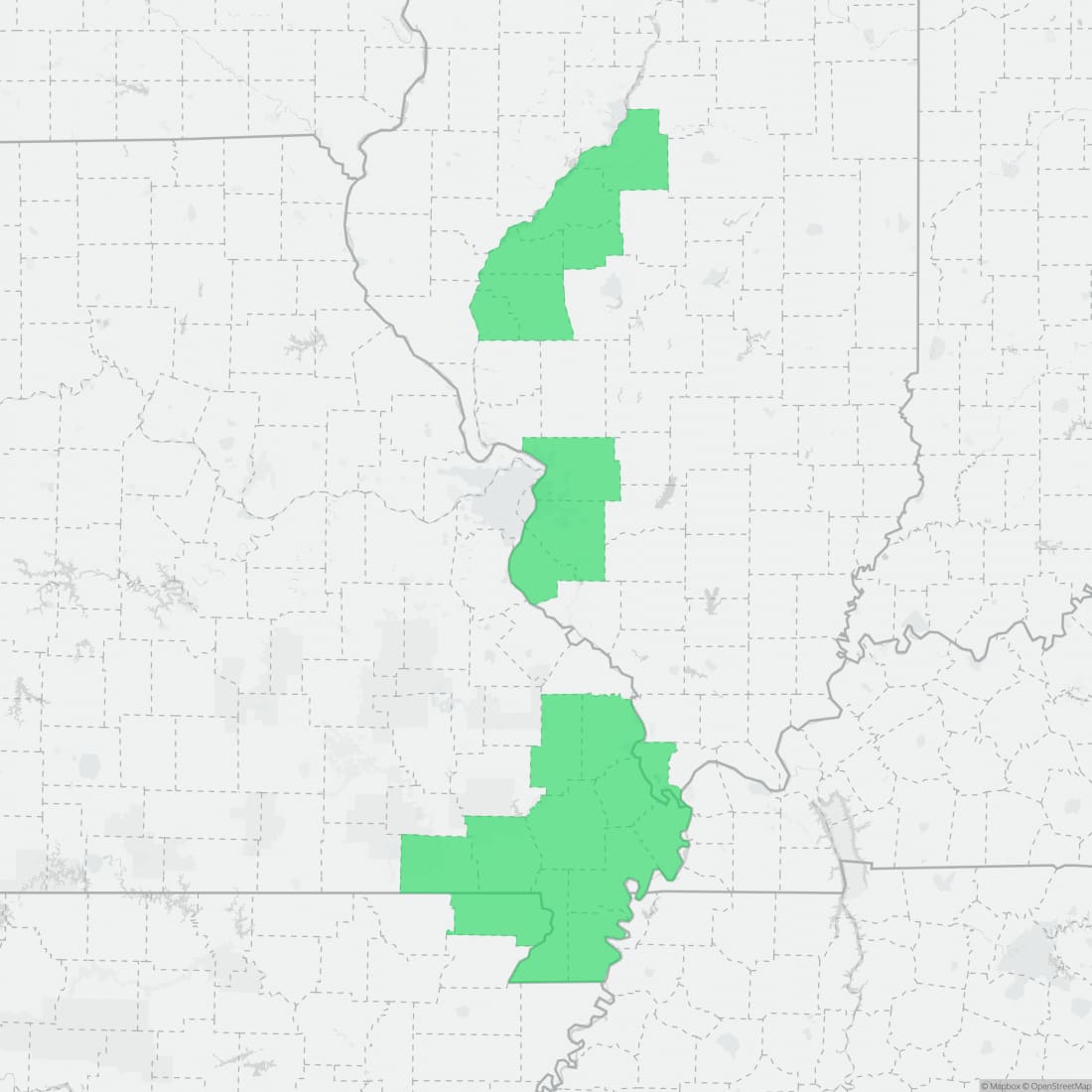
Approximate range. © Mapbox © OpenStreetMap