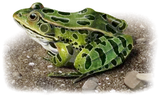
Upland Chorus Frog
Pseudacris feriarum
The upland chorus frog is small and can grow from 1 to about 1.5 inches. This frog may be seen to have variations in pattern and color. It may be gray, green or reddish b…
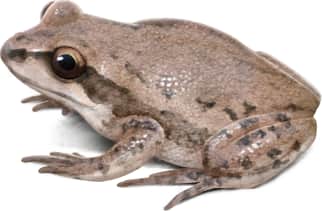
How to identify
The upland chorus frog is small and can grow from 1 to about 1.5 inches. This frog may be seen to have variations in pattern and color. It may be gray, green or reddish brown. Their belly is usually cream colored and their chests may be spotted. Three stripes typically run through their backs. These stripes are seen to be broken into dashes or small spots. As common to chorus frogs, this frog spots a white line on its lips. Between its eyes, there are dark triangular blotches.
Range
This species is endemic to the United States. It may be found in Oklahoma, New Jersey and Western Texas.
Habitat
Usually nocturnal, this specie can be found in wetlands, woodlands, vegetation, grassy as well as humid areas. They mostly feed on insects such as beetles, snails as well as spiders. These frogs become sexually mature at about one year. After rainfalls, males call to the females. This happens in winter too. Reproduction typically takes during cooler climes. Eggs are deposited in their thousands. This eggs metamorphose into tadpoles. This process takes a period of about twelve weeks.
Similar species
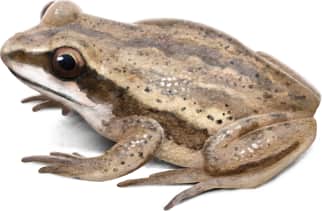
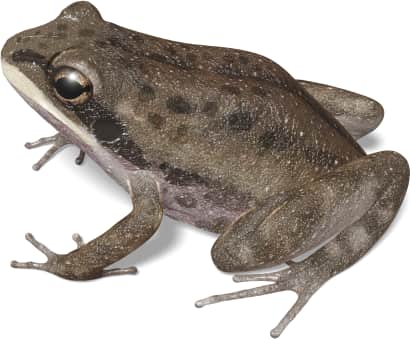
Brimley tree frog (pseudacris brimleyi) is small. Three faint stripes may be seen at its back. A dark brown or black stripe runs on each side of its body. It has dark triangular spots in the middle of its eyes. Its undersides are pale yellow. It can grow to about 3 cm. Seirran chorus frog (pseudacris sierra) can be seen to spot colors ranging from green to brown to black gray to olive. It is small sized. It has black or dark brown stripes that runs down each eye. It can grow to about 30 mm. The dorsum may be mottled. Southern chorus frog (pseudacris nigrita) may be grayish, greenish or brown. It is usually small. There is no triangular spot atop its eyes. On each side of its body, stripes are present. Three rows of dark spots can be seen. Growth can be up to about 1.5 inches.
Name and etymology
Genus
Pseudacris
Greek for false(pseudes) locus(akris) referencing genus Acris.
Origin
Sources
- Fitzinger, 1843. Syst. Rept., p. 31 ↗
Pseudacris. Fitzinger, 1843 - Syst. Rept., p. 31
Species epithet
feriarum
Latin for holiday.
Origin
Sources
- (Baird, 1854). Proc. Acad. Nat. Sci. Philadelphia, Vol. 7, p. 60 ↗
Pseudacris feriarum. (Baird, 1854) - Proc. Acad. Nat. Sci. Philadelphia, Vol. 7, p. 60
Explore more names in the etymology index.
At a glance
Range
This species is endemic to the United States. It may be found in Oklahoma, New Jersey and Western Texas.
Habitat
Usually nocturnal, this specie can be found in wetlands, woodlands, vegetation, grassy as well as humid areas. They mostly fe…
Guide
Reptiles and Amphibians of North America
Range map
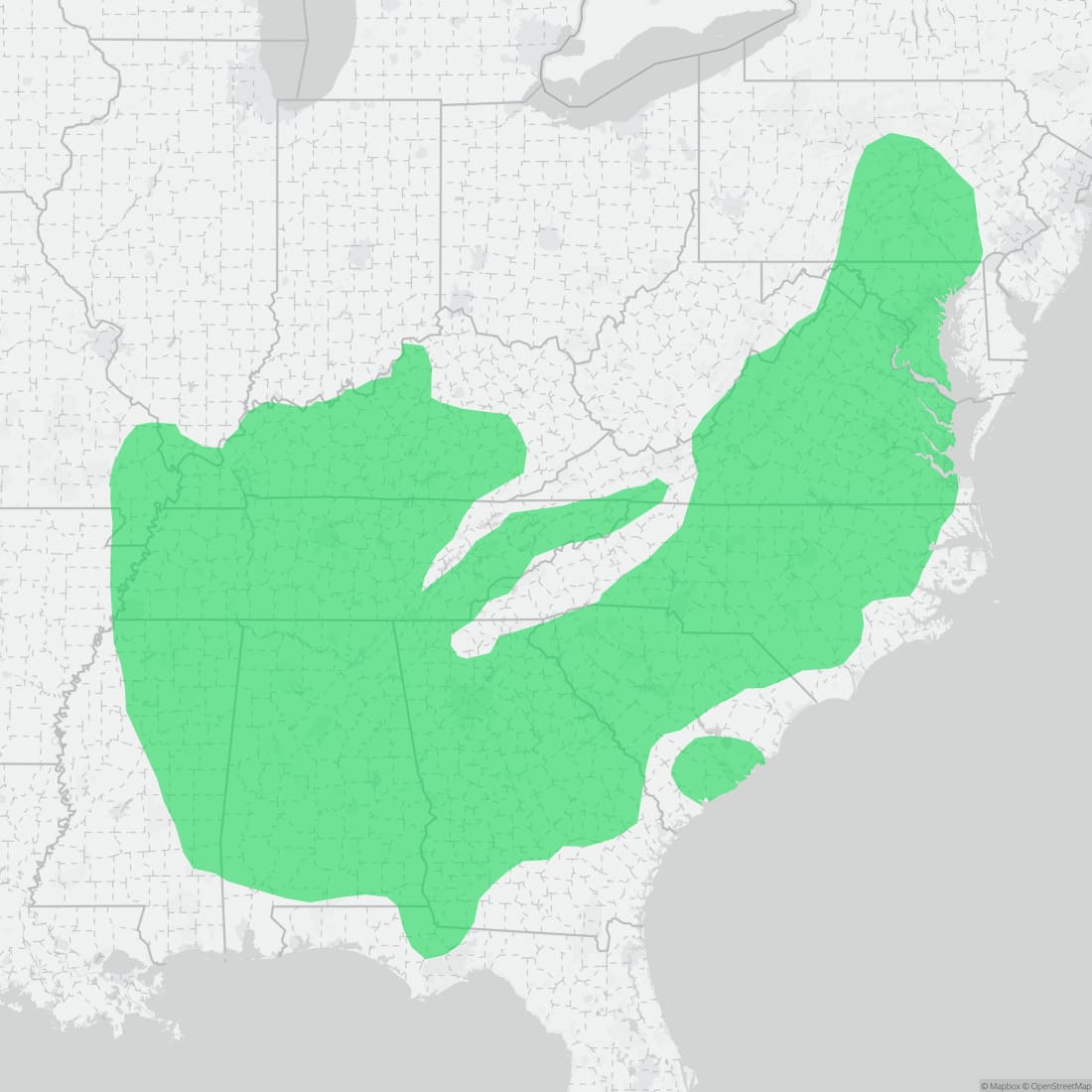
Approximate range. © Mapbox © OpenStreetMap