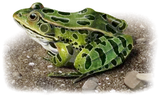
Brimley's Chorus Frog
Pseudacris brimleyi
The Brimley’s chorus frog has a length that ranges from 25-32 mm, with 3 dorsal brown stripes on an often yellowish-brown dorsal surface and a yellow Ventrum with brown s…
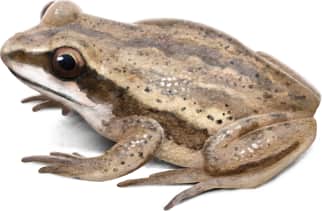
How to identify
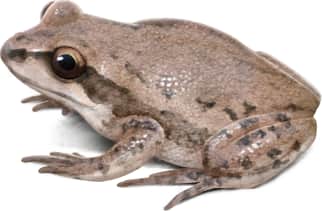
The Brimley’s chorus frog has a length that ranges from 25-32 mm, with 3 dorsal brown stripes on an often yellowish-brown dorsal surface and a yellow Ventrum with brown spots. It has a dark brown or black stripe that runs down both sides of the nostrils from the eyes to the groin. Its legs are marked with dark longitudinal stripes.
Range
The Brimley’s chorus frog is mainly found at lowland regions, swamps and marshes that spread across the Atlantic coastal plain from North-eastern Georgia to the Southern Caroline county, Virginia.
Habitat
The Brimley’s chorus frog naturally adapts to low, riverine wetlands, breeding in shallow ponds, swamps, woodland pools, shrub thickets, ditches and others. Its exact feeding pattern hasn’t been ascertained but it has been reported to feed on insects, spiders and debris. The Brimley’s chorus frog does not migrate and it remains active during winter seasons. Males often call beneath vegetation and it begins around February or March. Females begin to lay eggs from March to April.
Similar species
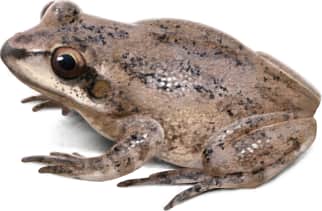
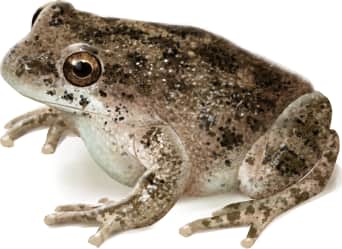
The mountain chorus frog (pseudacris brachyphona) has a skin coloration of different shades of grey or brown. The adults grow a length ranging from 25-36 mm. unlike the brimley’s chorus frog, it has a triangle between the eyes. The California tree frog (pseudacris cadaverina) has dark blotches on its light brown or grey dorsum, with its legs, lower abdomen and groin all yellowish. Also, it has toe webbings and pads with a rough dorsal skin. The upland chorus frog (pseudacris feriarum) has a skin coloration of different brown shades, with a length of 0.75-1.5 inches.
Name and etymology
Genus
Pseudacris
Greek for false(pseudes) locus(akris) referencing genus Acris.
Origin
Sources
- Fitzinger, 1843. Syst. Rept., p. 31 ↗
Pseudacris. Fitzinger, 1843 - Syst. Rept., p. 31
Species epithet
brimleyi
Honoring Clement Samuel Brimley.
Origin
Honors
Sources
- Brandt and Walker, 1933. Occ. Papers Mus. Zool. Univ. Michigan, No. 272, p. 2 ↗
Pseudacris brimleyi. Brandt and Walker, 1933 - Occ. Papers Mus. Zool. Univ. Michigan, No. 272, p. 2
Explore more names in the etymology index.
At a glance
Range
The Brimley’s chorus frog is mainly found at lowland regions, swamps and marshes that spread across the Atlantic coastal plai…
Habitat
The Brimley’s chorus frog naturally adapts to low, riverine wetlands, breeding in shallow ponds, swamps, woodland pools, shru…
Guide
Reptiles and Amphibians of North America
Range map
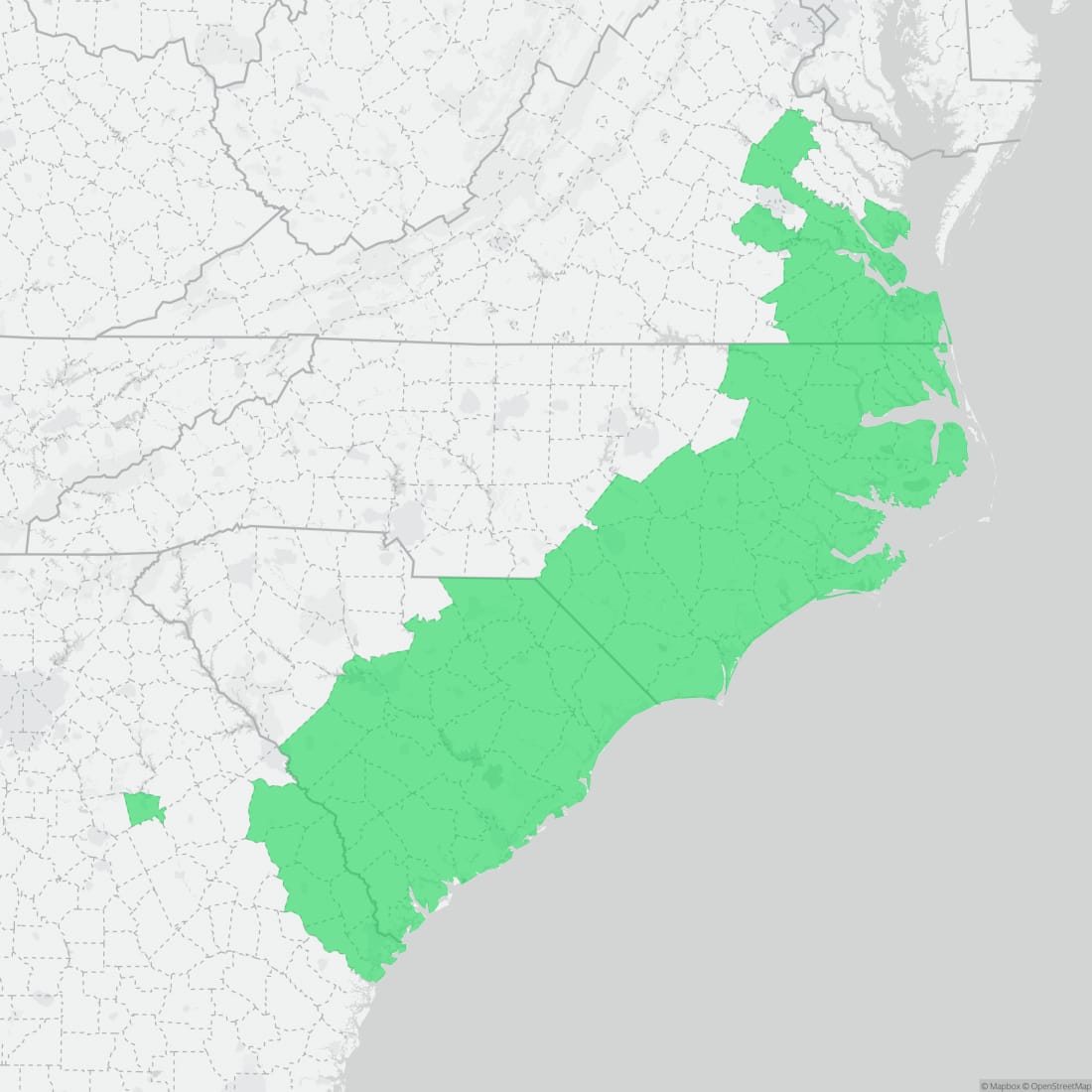
Approximate range. © Mapbox © OpenStreetMap