
Plateau Earless Lizard
Holbrookia lacerata
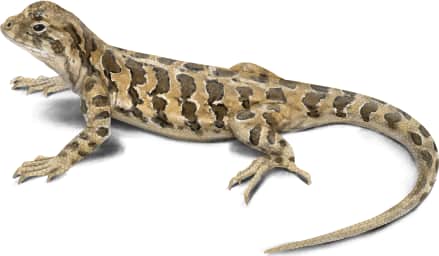
The Plateau Earless Lizard are small lizards that grow no more than 4.5 to 6 inches, tail length included. They have a slightly flattened body. Their base coloration is t…
How to identify
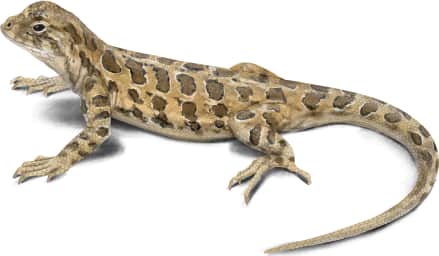
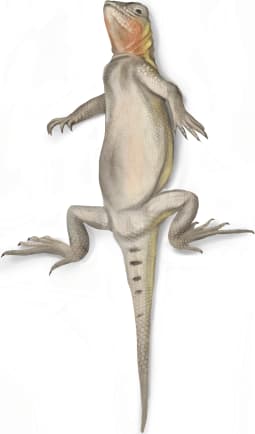
The Plateau Earless Lizard are small lizards that grow no more than 4.5 to 6 inches, tail length included. They have a slightly flattened body. Their base coloration is tan to gray with round bold spots on the dorsum. A thick pale line runs through the center of its back down to its tail from its neck. Its limbs are slender and have the spots on them. Its underbelly is whitish to pale. Its eyes are centrally located on the head with no visible ear opening. During breeding, the females turn light green on the back and neck.
Range
The Plateau earless lizard is endemic to central Texas in the United States
Habitat
They occur in dry subhumid flatlands and low hills with dark loamy clay soil and sparse vegetation such as mesquite trees and small patches of grass. They are diurnal running away quickly from a threatening situation. They are insectivorous and reproduction is oviparous.
Similar species
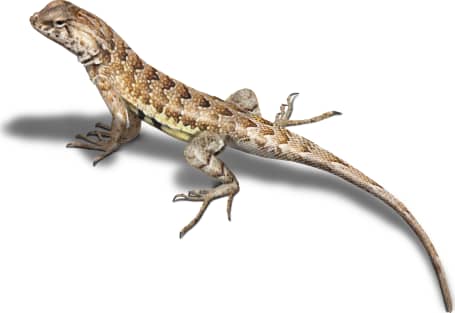
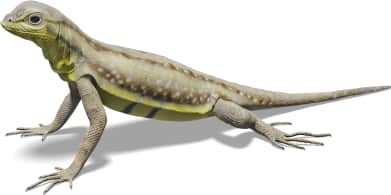
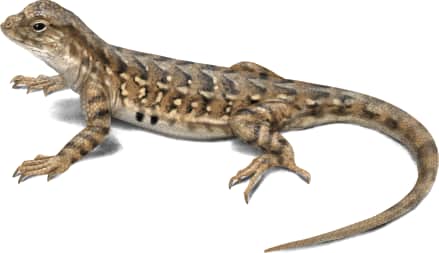
The elegant earless lizard or Holbrookia elegans are small lizards growing no more than 3 inches. They are tan to gray and the tail is visibly longer than its body. The lesser earless lizard or Holbrookia maculata is tan to gray with multiple pale lines along its dorsum. In between these lines or patterned bold black spots. The keeled earless lizard or Holbrookia propinqua gets its name from its keeled dorsal scales. They are small lizards growing no more than 2 1/2 inches.
Name and etymology
Genus
Holbrookia
Honoring John Edward Holbrook
Origin
Honors
Sources
- Girard, 1851. Proc. Amer. Assoc. Adv. Sci., New Haven, Vol. 4, p. 200
Holbrookia. Girard, 1851 - Proc. Amer. Assoc. Adv. Sci., New Haven, Vol. 4, p. 200
Species epithet
lacerata
Latin for torn or mangle
Origin
Sources
- Cope, 1880. Bull. U.S. Natl. Mus., No. 17, p. 15 ↗
Holbrookia lacerata. Cope, 1880 - Bull. U.S. Natl. Mus., No. 17, p. 15
Explore more names in the etymology index.
More illustrations
At a glance
Range
The Plateau earless lizard is endemic to central Texas in the United States
Habitat
They occur in dry subhumid flatlands and low hills with dark loamy clay soil and sparse vegetation such as mesquite trees and…
Guide
Reptiles and Amphibians of North America
Range map
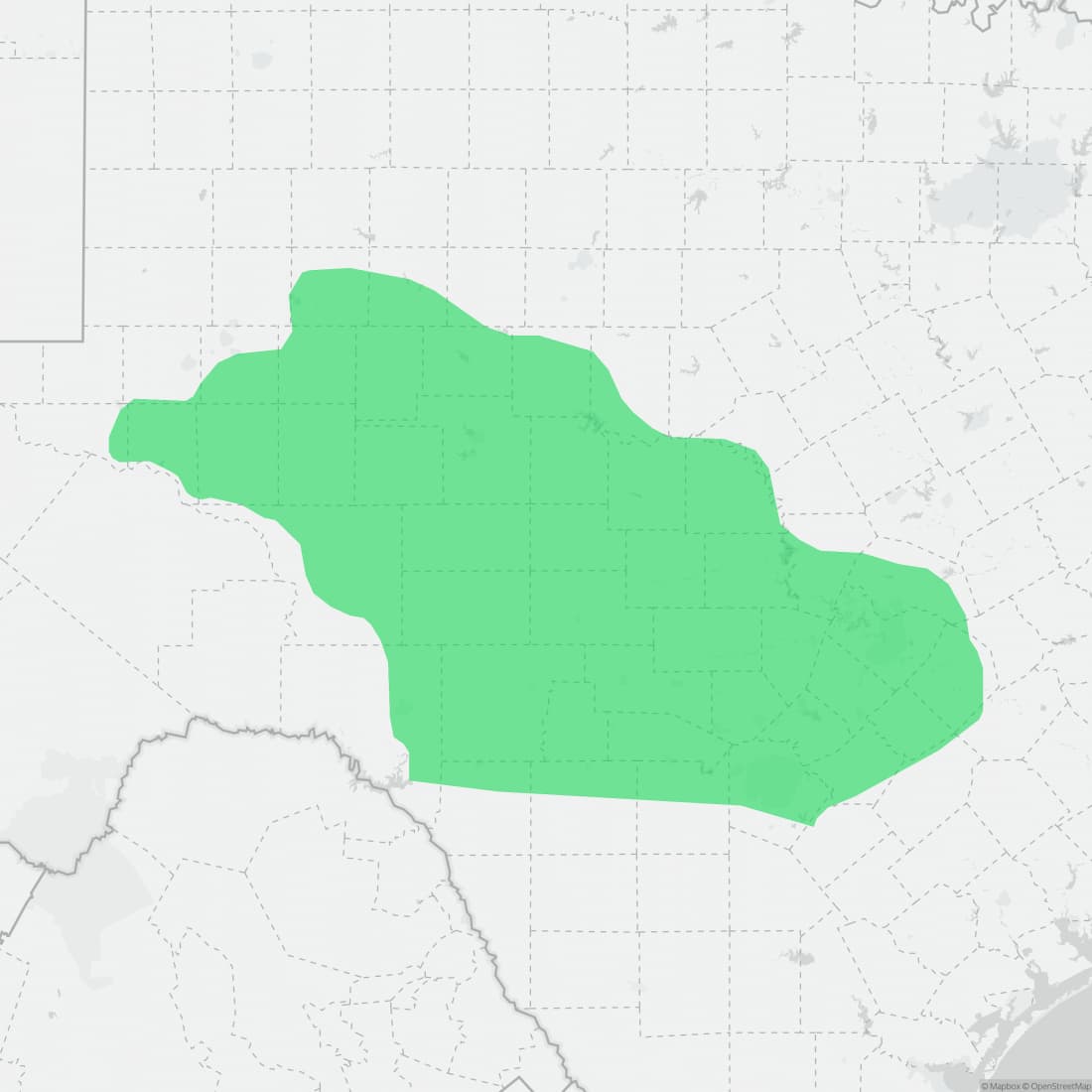
Approximate range. © Mapbox © OpenStreetMap