Blue Ridge Gray-cheeked Salamander
Plethodon amplus
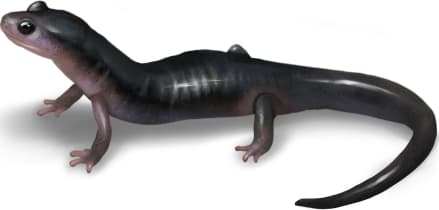
It is slender with thin limbs and a thick tail. Length can range between 3 – 6 inches. They are characterized by their skin pigment of dark gray with a light gray cheek p…
How to identify
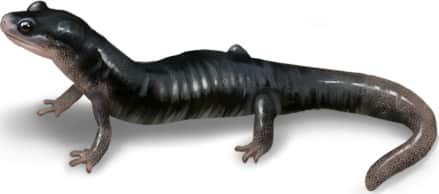
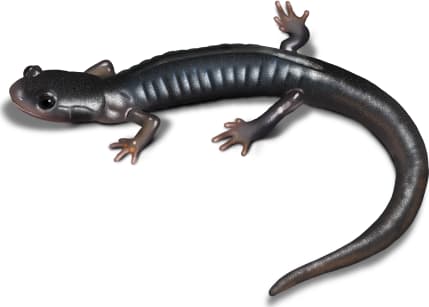
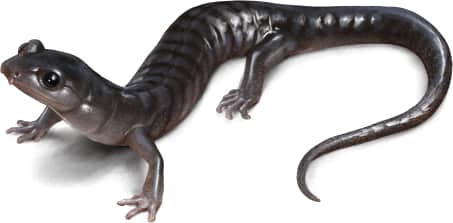
It is slender with thin limbs and a thick tail. Length can range between 3 – 6 inches. They are characterized by their skin pigment of dark gray with a light gray cheek patch. It has a sleek body with bulbous black eyes. No white or red markings present anywhere like other members of this genus.
Range
It is endemic solely to the Blue Ridge Mountains in North Carolina, USA.
Habitat
Forests or mountain terrains – even rock crevices are where you can find the grey-cheeked salamander. They can be found under logs, debris, rocks or roaming the forest floor due to their highly terrestrial nature. It is easier to catch the salamander wander the forest floor at night in wet conditions hunting for food. Food for these salamanders consists of small forest floor invertebrates. Eggs might be laid in underground cavities between spring and summer. The young are hatched looking like miniature replicas of the adults (live-bearing) and do not go through any aquatic larval stage. When threatened, they grey-cheeked salamander will release a noxious, sticky secretion that is useful to deter predators.
Similar species
The South Mountain gray-cheeked salamander (Plethodon meridianus), the southern gray-cheeked salamander (Plethodon metcalfi) and the northern gray-cheeked salamander (Plethodon montanus) share the same species complex. All of the four species of gray-cheeked salamanders are dark gray with light gray cheek patches. White or red markings are absent on all four of these salamanders as well. They are almost completely identical and are better differentiated and identified by location. Southern and northern gray-cheeked salamanders have the widest range of the four and are separated by the French Broad River. The Blue Ridge gray-cheeked salamander can be found east of where the southern gray-cheeked salamander thrives. The southern gray-cheeked salamanders occur solely in the South Mountains, in just two counties of North Carolina.
Name and etymology
Genus
Plethodon
Greek for full of (plethore) teeth (odon).
Origin
Sources
- Tschudi, "1838" 1839. reprinted in Classif. Batr., Mem. Soc. Sci. Nat. Neuchatel, p. 92 ↗
Plethodon. Tschudi, "1838" 1839 - reprinted in Classif. Batr., Mem. Soc. Sci. Nat. Neuchatel, p. 92
Species epithet
amplus
Latin for large body.
Origin
Sources
- Highton and Peabody, 2000
Plethodon montanus. Highton and Peabody, 2000
Explore more names in the etymology index.
At a glance
Range
It is endemic solely to the Blue Ridge Mountains in North Carolina, USA.
Habitat
Forests or mountain terrains – even rock crevices are where you can find the grey-cheeked salamander. They can be found under…
Guide
Reptiles and Amphibians of North America
Range map
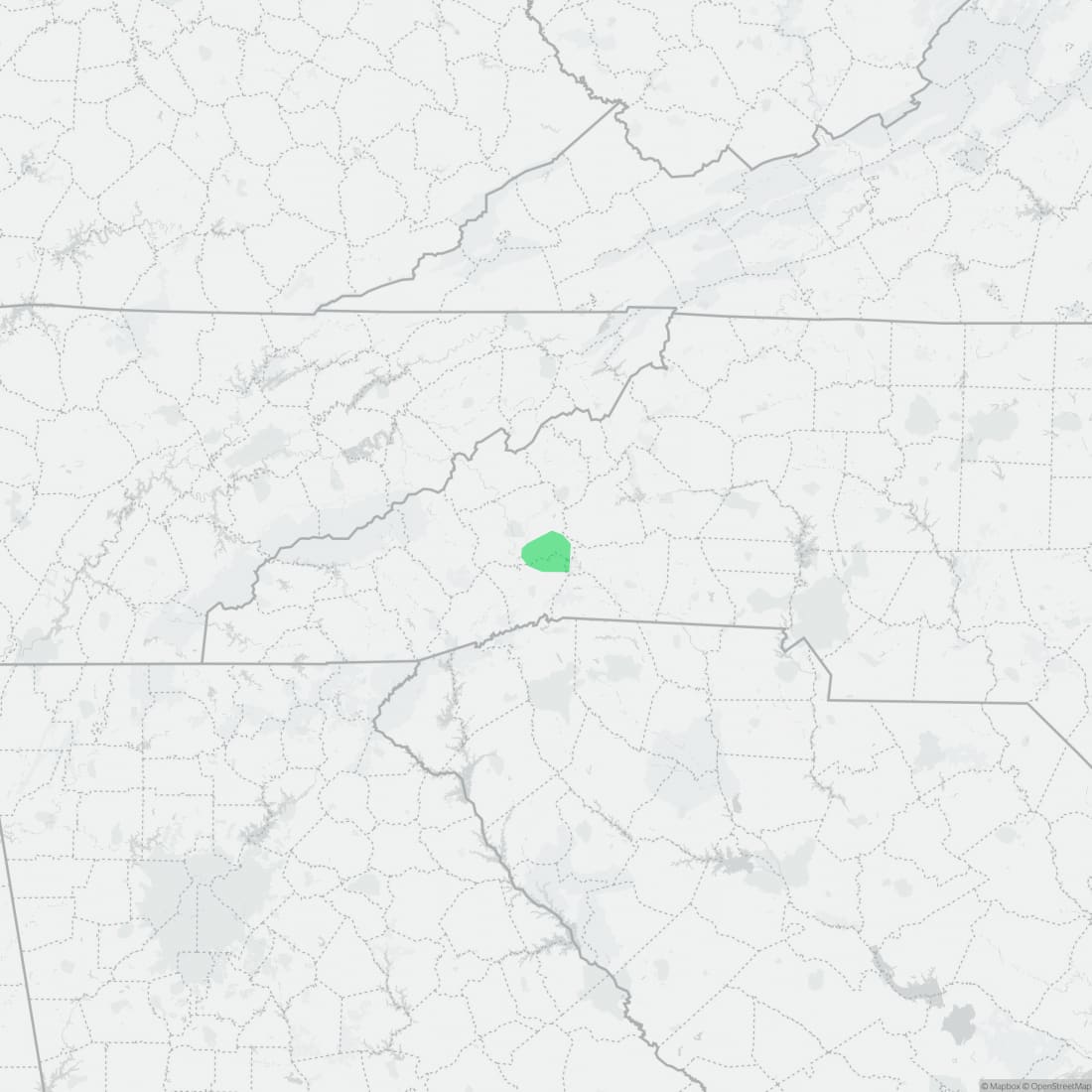
Approximate range. © Mapbox © OpenStreetMap