Big Levels Salamander
Plethodon sherando
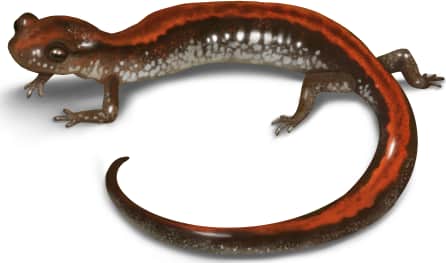
Averagely 4 inches (3.7 – 4.1 in.), the Big Levels salamander has a long head, longer than it is wide. The belly area is white and gray. It has a red stripe that runs on…
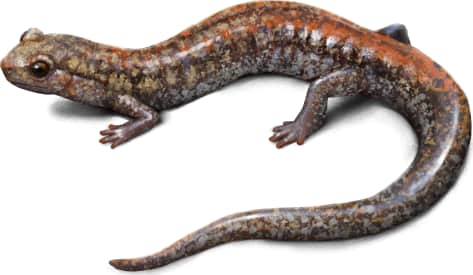
How to identify
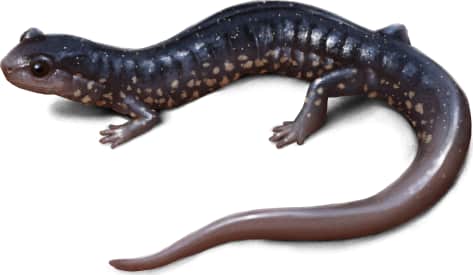
Averagely 4 inches (3.7 – 4.1 in.), the Big Levels salamander has a long head, longer than it is wide. The belly area is white and gray. It has a red stripe that runs on its back from its head to its tail. Sometimes the stripe may appear as orange. A part of the chin has yellow coloring and it has brown flecks and spots on the top of its head, legs, eyelids and further brass-brown flecks on the upper part of the legs. As for eye color, the upper iris has a brass color as well. They breed by direct development, so the young are very similar to adults with more or less only size to tell the difference.
Range
The salamander is endemic to Blue Ridge Mountains, Augusta County, Virginia only. Can be found at elevations between 579m above sea level (Lake Sherando) and 1091m above sea level (summit of Bald Mountain)
Habitat
You can find this salamander in areas with heavy forests with a lot of rainfall and near freshwater sources. You can find them in habitats with warm air temperatures and cool soil temperatures. They can found in small crevices within rocks from substrates that reach below the ground. They feed on many types of invertebrates including many types of insects, spiders, snails, and even earthworms.
Similar species
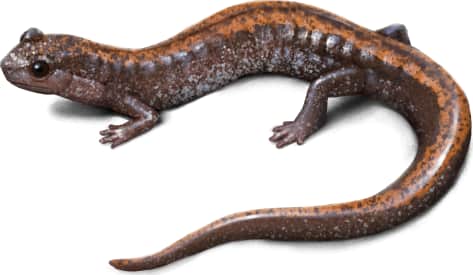
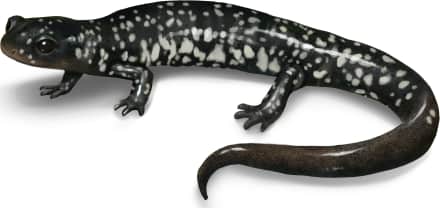
The Eastern Red-backed Salamander (Plethodon cinereus) and the Southern Red-backed Salamander (Plethodon serratus). All of them share almost exact features, except that the Big Levels Salamander has more white pigmentation than gray on its belly area. The Big Levels salamander also has a less intense red stripe than its plethodon cousins. The Northern Slimy Salamander or Plethodon glutinosus is distinguishable by its black color and gold or silver spots across its back. This salamander, on the other hand, is bigger averaging about 5 in. but can grow up to 8 in.
Name and etymology
Genus
Plethodon
Greek for full of (plethore) teeth (odon).
Origin
Sources
- Tschudi, "1838" 1839. reprinted in Classif. Batr., Mem. Soc. Sci. Nat. Neuchatel, p. 92 ↗
Plethodon. Tschudi, "1838" 1839 - reprinted in Classif. Batr., Mem. Soc. Sci. Nat. Neuchatel, p. 92
Species epithet
sherando
Belonging to Sherando, Virginia
Origin
Sources
- Wikipedia: Plethodon sherando ↗
“Plethodon sherando.” Wikipedia. https://en.wikipedia.org/wiki/Big_Levels_salamander
Explore more names in the etymology index.
At a glance
Range
The salamander is endemic to Blue Ridge Mountains, Augusta County, Virginia only. Can be found at elevations between 579m abo…
Habitat
You can find this salamander in areas with heavy forests with a lot of rainfall and near freshwater sources. You can find the…
Guide
Reptiles and Amphibians of North America
Range map
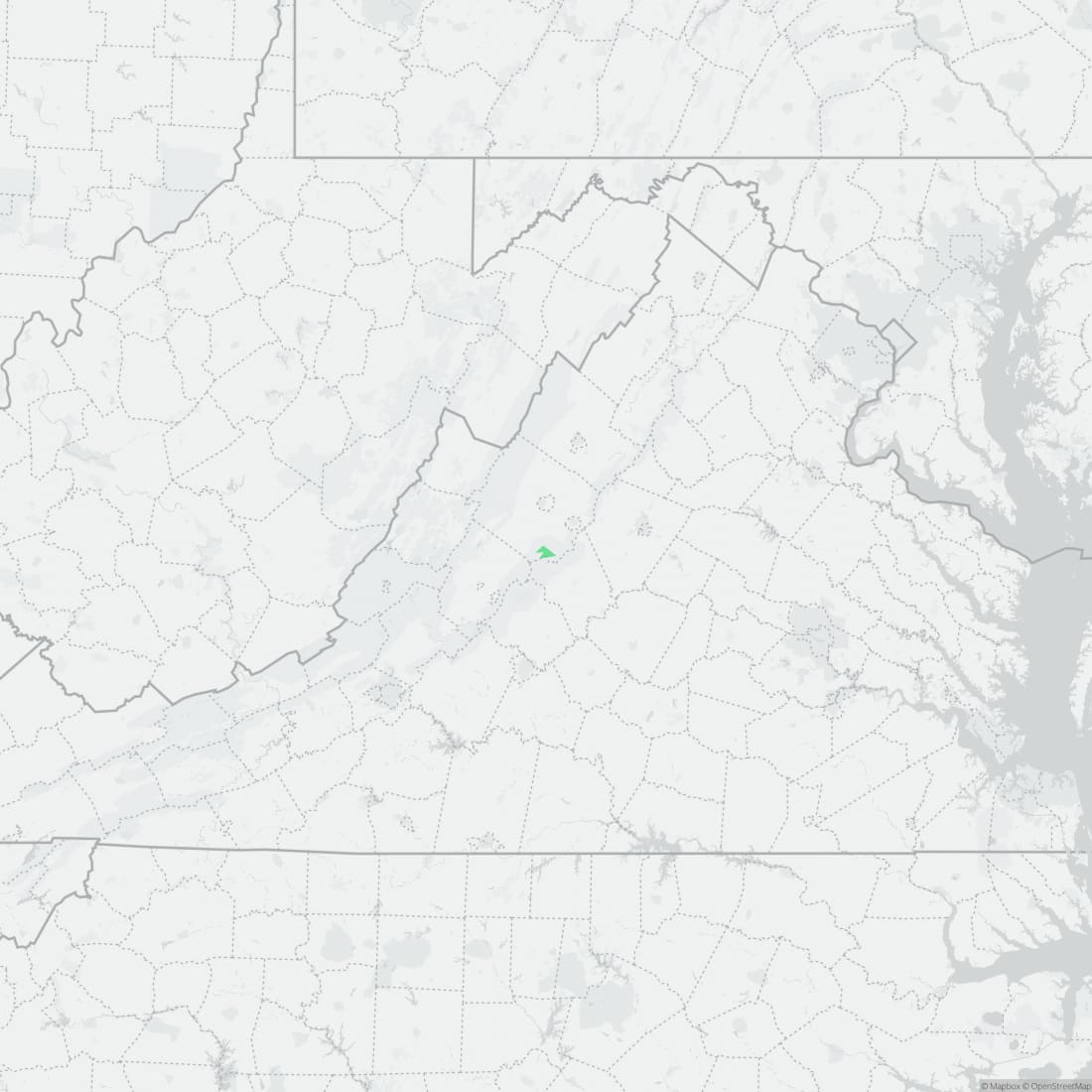
Approximate range. © Mapbox © OpenStreetMap