Ocoee Salamander
Desmognathus ocoee
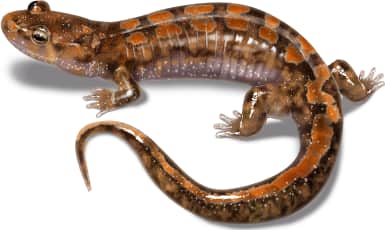
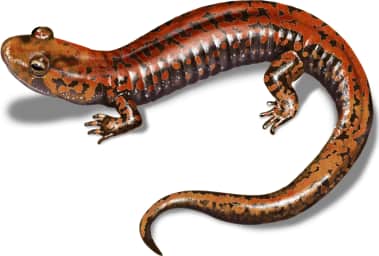
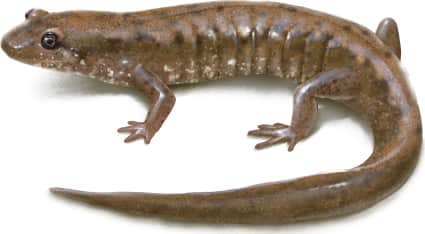
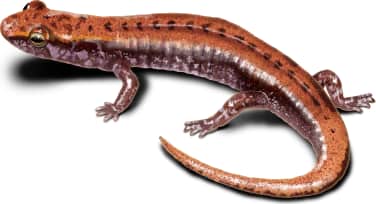
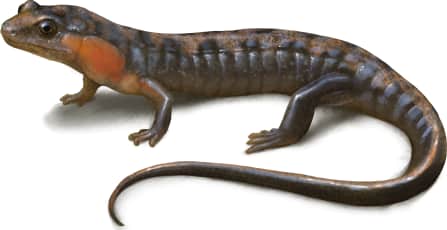
The color and pattern of this species is extremely variable. In general, it is a small salamander with a stocky body, well-developed legs, long toes, and a tail that's sh…
How to identify
The color and pattern of this species is extremely variable. In general, it is a small salamander with a stocky body, well-developed legs, long toes, and a tail that's shorter or equal in length to its body. It averages 3 cm in snout to vent length.
Range
There are 2 distinct populations of this species. The larger range is centered around the southwestern corner of North Carolina, and adjacent corners of Tennessee, Georgia, and South Carolina in the Blue Ridge Mountains. The smaller range is located in the northeastern corner of Alabama and adjacent southern Tennessee, in the Appalachian Plateau.
Habitat
This species can be found at a range of altitudes. At lower elevations, it tends to be more aquatic, and at higher elevations more terrestrial. It is most often found on wet rock faces, stream beds, seepage areas, and moist forest floors. The Appalachian population prefers mature hardwood forests.
Variations
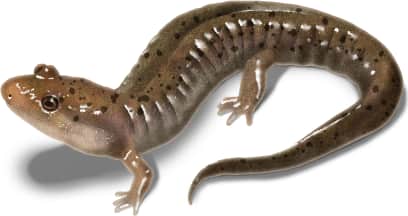
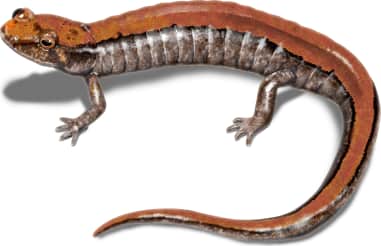
This species comes in virtually every color and pattern. It can be solid, speckled, or spotted. It can have a solid, straight-edged dorsal stripe, or the stripe can be zigzagged or a series of diamonds. Some have a solid dark body with brightly colored legs, while others have brightly colored cheek patches. Their colors include many combinations of black, grey, brown, tan, red, orange, yellow, gold, and white.
Similar species
Due to is extreme variation in appearance, this species is easy to misidentify. It is often confused with the seal salamander (*Desmognathus monticola*), Carolina Mountain dusky salamander (*Desmognathus carolinensis*), northern dusky salamander (*Desmognathus fuscus*), Blue Ridge dusky salamander (*Desmognathus orestes*), pygmy salamander (*Desmognathus wrighti*), and imitator salamander (*Desmognathus imitator*), among others.
Name and etymology
Genus
Desmognathus
Greek for jaw (gnathos) ligament (desmos).
Origin
Sources
- Baird, 1850. Journ. Acad. Nat. Sci. Philadelphia, Ser. 2, Vol. 1, p. 282 and p. 285 ↗
Desmognathus. Baird, 1850 - Journ. Acad. Nat. Sci. Philadelphia, Ser. 2, Vol. 1, p. 282 and p. 285
Species epithet
ocoee
Of Ocoee Gorge Tennesse.
Sources
- Nicholls, 1949. Jour. Tenn. Acad. Sci 24:127
Desmognathus ocoee. Nicholls, 1949 - Jour. Tenn. Acad. Sci 24:127
Explore more names in the etymology index.
At a glance
Range
There are 2 distinct populations of this species. The larger range is centered around the southwestern corner of North Caroli…
Habitat
This species can be found at a range of altitudes. At lower elevations, it tends to be more aquatic, and at higher elevations…
Guide
Reptiles and Amphibians of North America
Range map
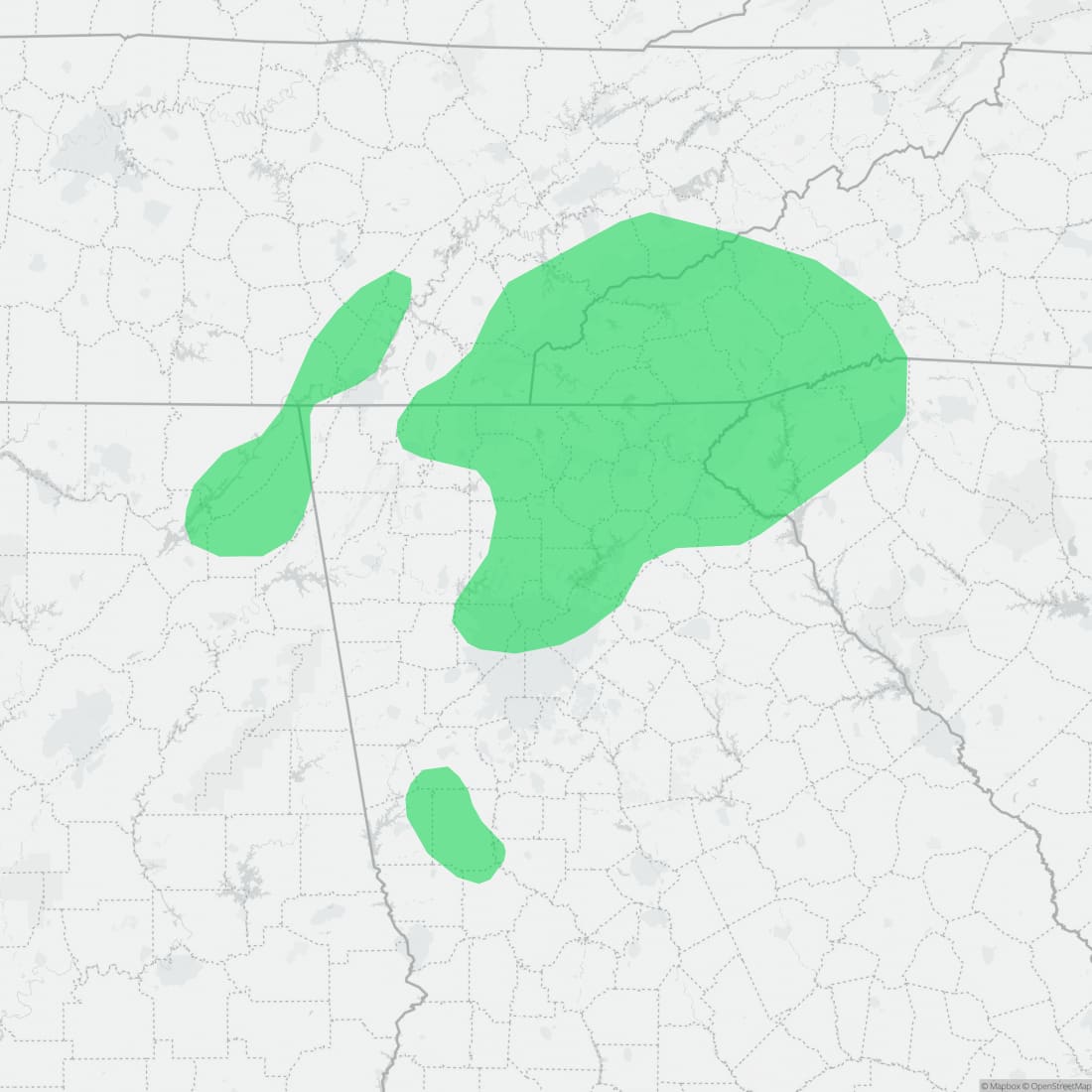
Approximate range. © Mapbox © OpenStreetMap