Pygmy Salamander
Desmognathus wrighti
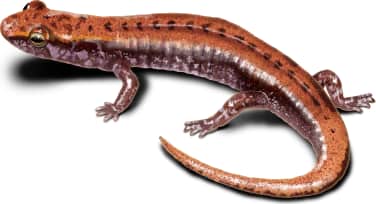
The adult salamanders range between 1.2-2.0 inches. They have a coppery red stripe that runs down their body and ends at the rounded tail. The tail is half of the total b…
How to identify
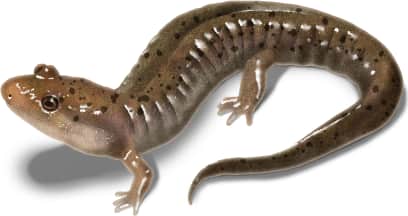
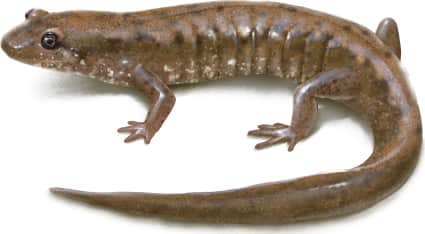
The adult salamanders range between 1.2-2.0 inches. They have a coppery red stripe that runs down their body and ends at the rounded tail. The tail is half of the total body length and its eyelids are also copper-colored. They are typically light brown but they coloration can range from red to yellow. They also have a rounded snout. Female pygmy salamanders tend to be larger than males at sexual maturity. Hatchling salamanders are very similar to adults.
Range
They are endemic to the United States and can be found in the mountainous areas, from the Great Smoky Mountains in the east to the Blue Ridge Mountains. Pygmy salamanders are frequently found in the southwestern areas of Virginia to the Georgia state line in southwestern North Carolina.
Habitat
They are generally found in forested areas with high humidity. They thrive under mosses and rotten logs. Larger populations may be found in highly elevated spruce-fir forests. Breeding occurs in late fall and late spring. Females lay eggs in late summer near a lake or a stream or moist ground. The pygmy salamanders feed mostly at night and prey on arthropods in the soil and leaf litter.
Similar species
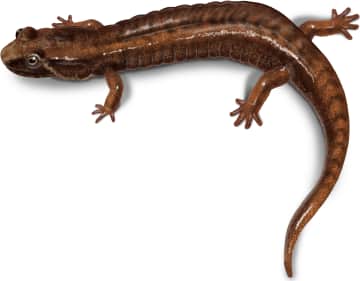
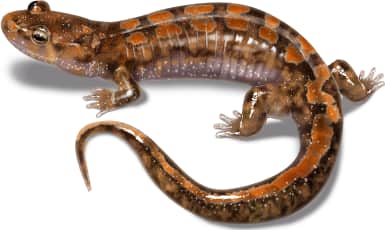
Northern Pygmy Salamander (Desmognathus organi) is roughly the same size as the pygmy salamander (although minutely bigger). It shares the copper-colored eyelid and the herringbone pattern on the dorsal side. However, dorsal coloration varies from dark reddish-brown to light brown. It has hindlimbs that are longer and more robust than the forelimbs. Ocoee Salamander (Desmognathus ocoee) has a copper band that starts at the snout and runs to its tail upon a dark brown background. Seal Salamander (Desmognathus monticola) is a species of lungless salamander that might be similar but is different because it has, amongst other features, translucent skin, sometimes spotted with dark flecks that dot its back and fade into the tail.
Name and etymology
Genus
Desmognathus
Greek for jaw (gnathos) ligament (desmos).
Origin
Sources
- Baird, 1850. Journ. Acad. Nat. Sci. Philadelphia, Ser. 2, Vol. 1, p. 282 and p. 285 ↗
Desmognathus. Baird, 1850 - Journ. Acad. Nat. Sci. Philadelphia, Ser. 2, Vol. 1, p. 282 and p. 285
Species epithet
wrighti
Honoring George M. Wright.
Origin
Honors
Sources
- King, 1936. Herpetologica, Vol. 1, p. 57, pl. 5
Desmognathus wrighti. King, 1936 - Herpetologica, Vol. 1, p. 57, pl. 5
Explore more names in the etymology index.
At a glance
Size
30 to 51 mm
Range
They are endemic to the United States and can be found in the mountainous areas, from the Great Smoky Mountains in the east t…
Habitat
They are generally found in forested areas with high humidity. They thrive under mosses and rotten logs. Larger populations m…
Range map
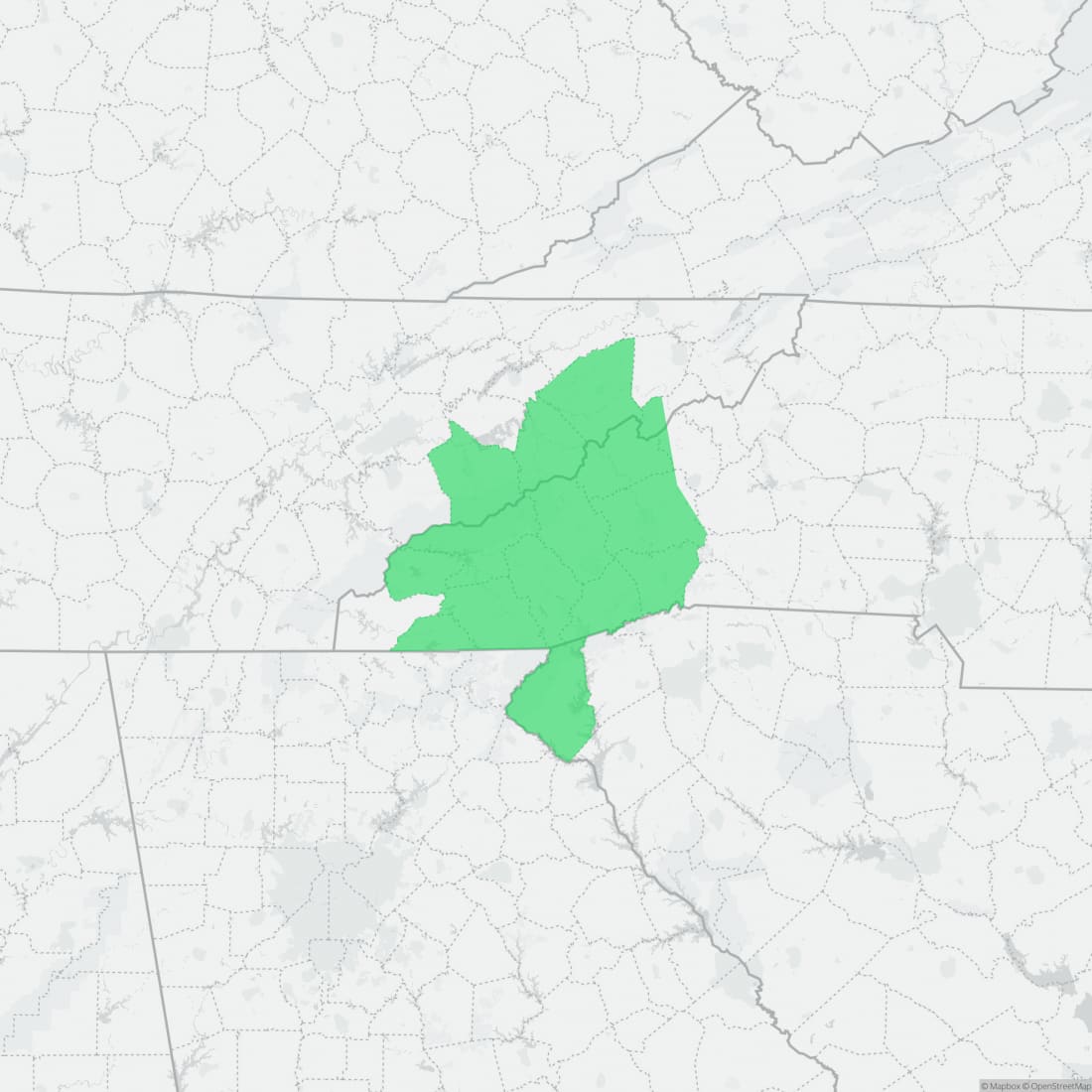
Approximate range. © Mapbox © OpenStreetMap