Northern Pygmy Salamander
Desmognathus organi
One of the smallest salamanders in North America, this species only reaches 4-6 cm in total length. It has a relatively large head with a blunt pointed snout, and lateral…
How to identify
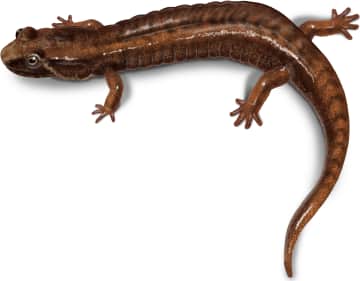
One of the smallest salamanders in North America, this species only reaches 4-6 cm in total length. It has a relatively large head with a blunt pointed snout, and laterally positioned eyes that are only mildly bulging. It has a stout body with well-developed legs and long, non-webbed toes. Its tail is shorter than its body, and round in cross-section. Its back is typically adorned with a unique herringbone pattern, and it can be shades of orange, red, or brown. Most individuals have a dark lateral stripe on each side of the face, running through the eye.
Range
Narrow range in the Appalachian Mountains along the northern border of Tennessee and North Carolina, and a small area in adjacent Virginia.
Habitat
Typically found at elevations above 4900 feet in spruce-fir and hardwood forests. It is a highly terrestrial species that can often be found away from water sources, and is known to climb trees up to 2 meters high. It often hides under small pieces of wood debris, moss, leaf litter, or small stones.
Variations
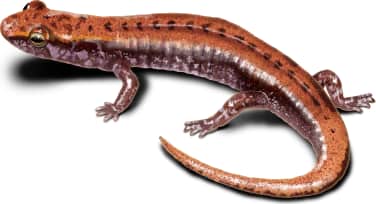
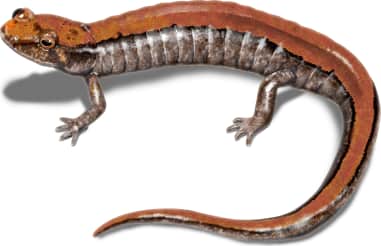
Some lack the herringbone pattern, or it is very faint. Some are mostly uniform in color, while others have a lighter back and darker sides.
Similar species
Very similar to the related pygmy salamander (*Desmognathus wrighti*) which is found just south of this species' range. Its pattern can also resemble that of some Carolina Mountain dusky salamanders (*Desmognathus carolinensis*).
Name and etymology
Genus
Desmognathus
Greek for jaw (gnathos) ligament (desmos).
Origin
Sources
- Baird, 1850. Journ. Acad. Nat. Sci. Philadelphia, Ser. 2, Vol. 1, p. 282 and p. 285 ↗
Desmognathus. Baird, 1850 - Journ. Acad. Nat. Sci. Philadelphia, Ser. 2, Vol. 1, p. 282 and p. 285
Species epithet
organi
Greek for belonging to (-ica) an organ (organon), referencing Organ Pipe Cactus National Monument.
Origin
Sources
- Wikipedia: Desmognathus organi ↗
“Desmognathus organi.” Wikipedia. https://en.wikipedia.org/wiki/Northern_pygmy_salamander
Explore more names in the etymology index.
At a glance
Range
Narrow range in the Appalachian Mountains along the northern border of Tennessee and North Carolina, and a small area in adja…
Habitat
Typically found at elevations above 4900 feet in spruce-fir and hardwood forests. It is a highly terrestrial species that can…
Guide
Reptiles and Amphibians of North America
Range map
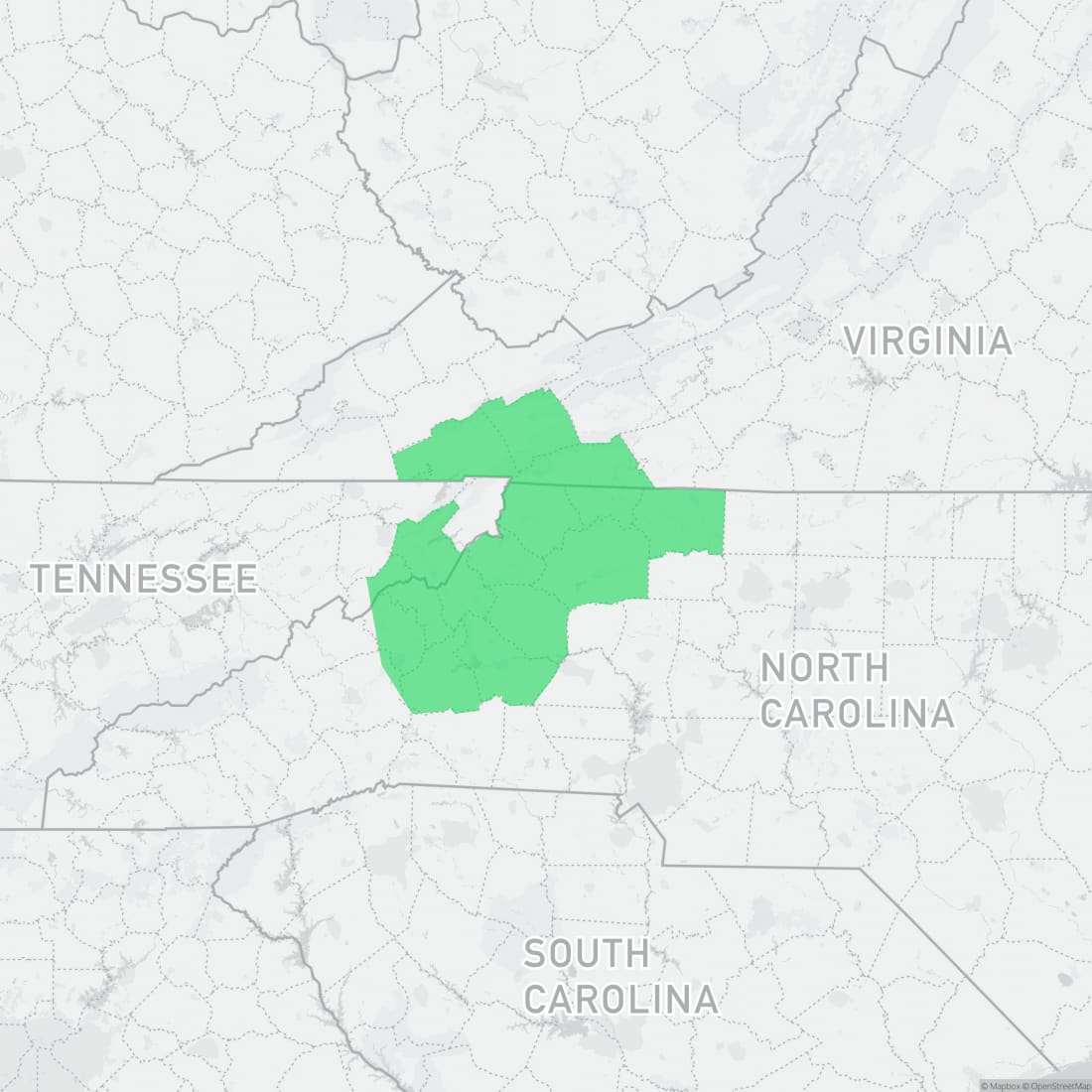
Approximate range. © Mapbox © OpenStreetMap