Imitator Salamander
Desmognathus imitator
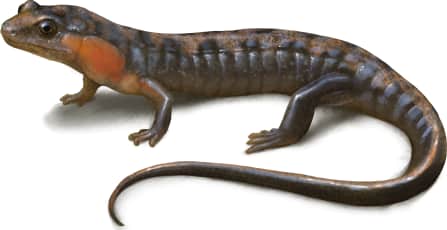
Dorsum ranges from brown to brown black in color with a curved dark brown stripe. Venter is usually blackish gray. Displays a cylindrical tail and 14 costal grooves. Fema…
How to identify
Dorsum ranges from brown to brown black in color with a curved dark brown stripe. Venter is usually blackish gray. Displays a cylindrical tail and 14 costal grooves. Females usually lay cream-colored eggs in monolayers under debris or in rock crevices; clutches typically include 13 to 30 eggs. Larvae display a dark color and light spots which can be orange or brown colored.
Range
From eastern Tennessee to western North Carolina.
Habitat
Inhabit slow, small water sources like streams and seepage pools. Stay under natural debris like leaves and on moist surfaces like wet rocks and moist forest floors.
Variations
Cheek spots on mature individuals can range from yellow to red to orange in color. Some melanistic individuals display grayish black dorsal colors.
Similar species
Name and etymology
Genus
Desmognathus
Greek for jaw (gnathos) ligament (desmos).
Origin
Sources
- Baird, 1850. Journ. Acad. Nat. Sci. Philadelphia, Ser. 2, Vol. 1, p. 282 and p. 285 ↗
Desmognathus. Baird, 1850 - Journ. Acad. Nat. Sci. Philadelphia, Ser. 2, Vol. 1, p. 282 and p. 285
Species epithet
imitator
Latin for imitator or copier.
Origin
Sources
- Dunn, 1927. Copeia, p. 84 ↗
Desmognathus imitator. Dunn, 1927 - Copeia, p. 84
Explore more names in the etymology index.
At a glance
Range
From eastern Tennessee to western North Carolina.
Habitat
Inhabit slow, small water sources like streams and seepage pools. Stay under natural debris like leaves and on moist surfaces…
Guide
Reptiles and Amphibians of North America
Range map
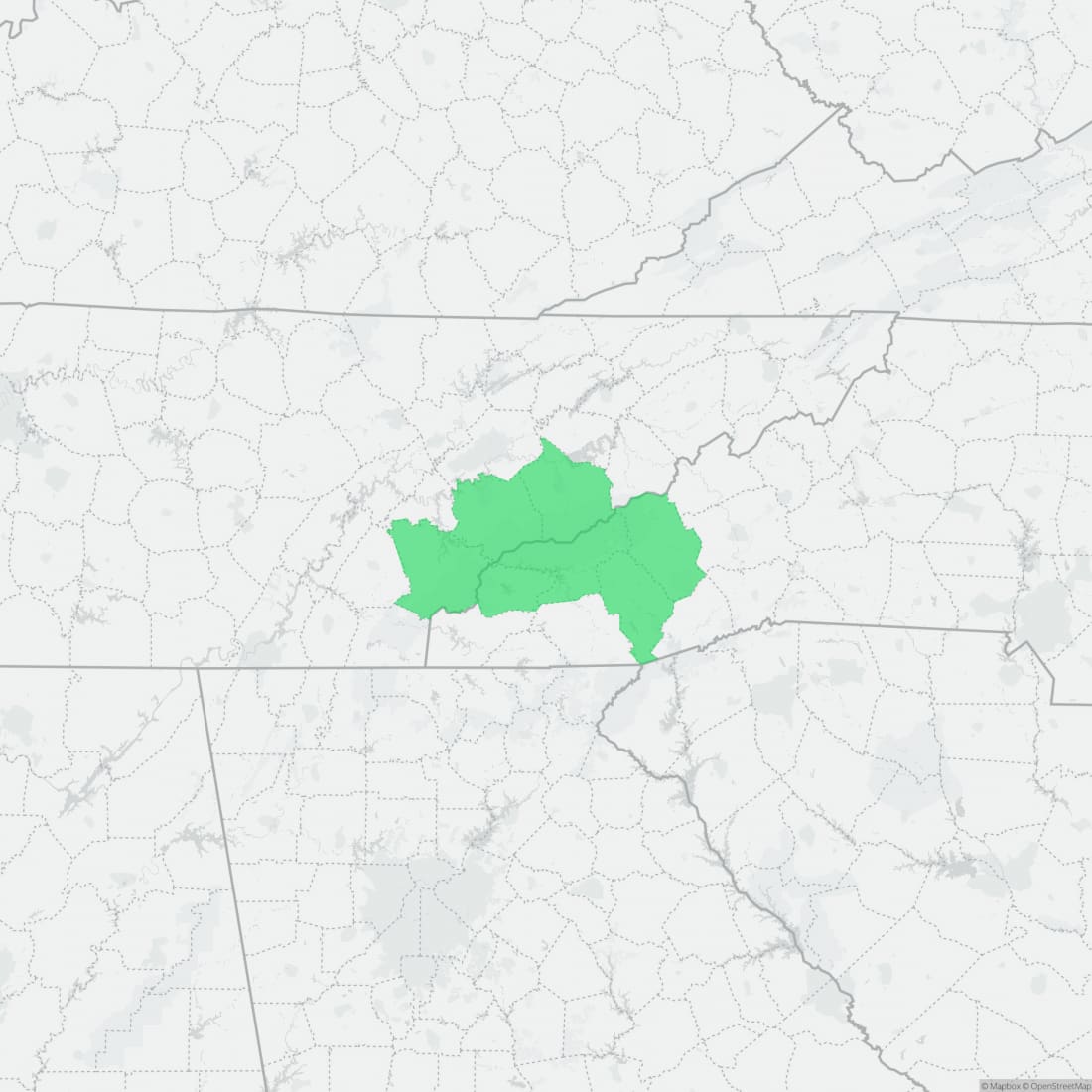
Approximate range. © Mapbox © OpenStreetMap