Southern Flying Squirrel
Glaucomys volans
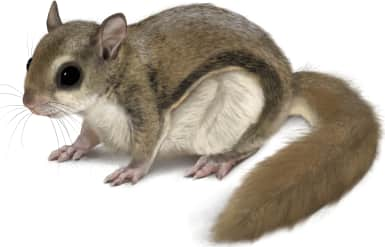
It has a brownish dorsal coat, a white underside, and large eyes. The patagium extends between its limbs for gliding. The tail is flattened.
How to identify
It has a brownish dorsal coat, a white underside, and large eyes. The patagium extends between its limbs for gliding. The tail is flattened.
Range
G. volans is found in the eastern United States and parts of southeastern Canada.
Habitat
G. volans prefers deciduous and mixed deciduous-coniferous forests.
Similar species
G. volans is smaller than G. sabrinus. While their ranges do not overlap significantly, where they do, size is the best distinguishing characteristic.
Name and etymology
Genus
Glaucomys
Greek for silvery (glaukos) mouse (mys)
Origin
Sources
- Palmer, Index Generum Mammalium (1904) ↗
Palmer, T. S. 1904. Index Generum Mammalium: a list of the genera and families of mammals. North American Fauna 23. Government Printing Office, Washington. https://doi.org/10.5962/bhl.title.39809
Species epithet
volans
Latin for flying
Origin
Sources
- Wikipedia: Glaucomys volans ↗
“Glaucomys volans.” Wikipedia. https://en.wikipedia.org/wiki/Southern_flying_squirrel
Explore more names in the etymology index.
At a glance
Range
G. volans is found in the eastern United States and parts of southeastern Canada.
Habitat
G. volans prefers deciduous and mixed deciduous-coniferous forests.
Guide
Mammals of North America
Range map
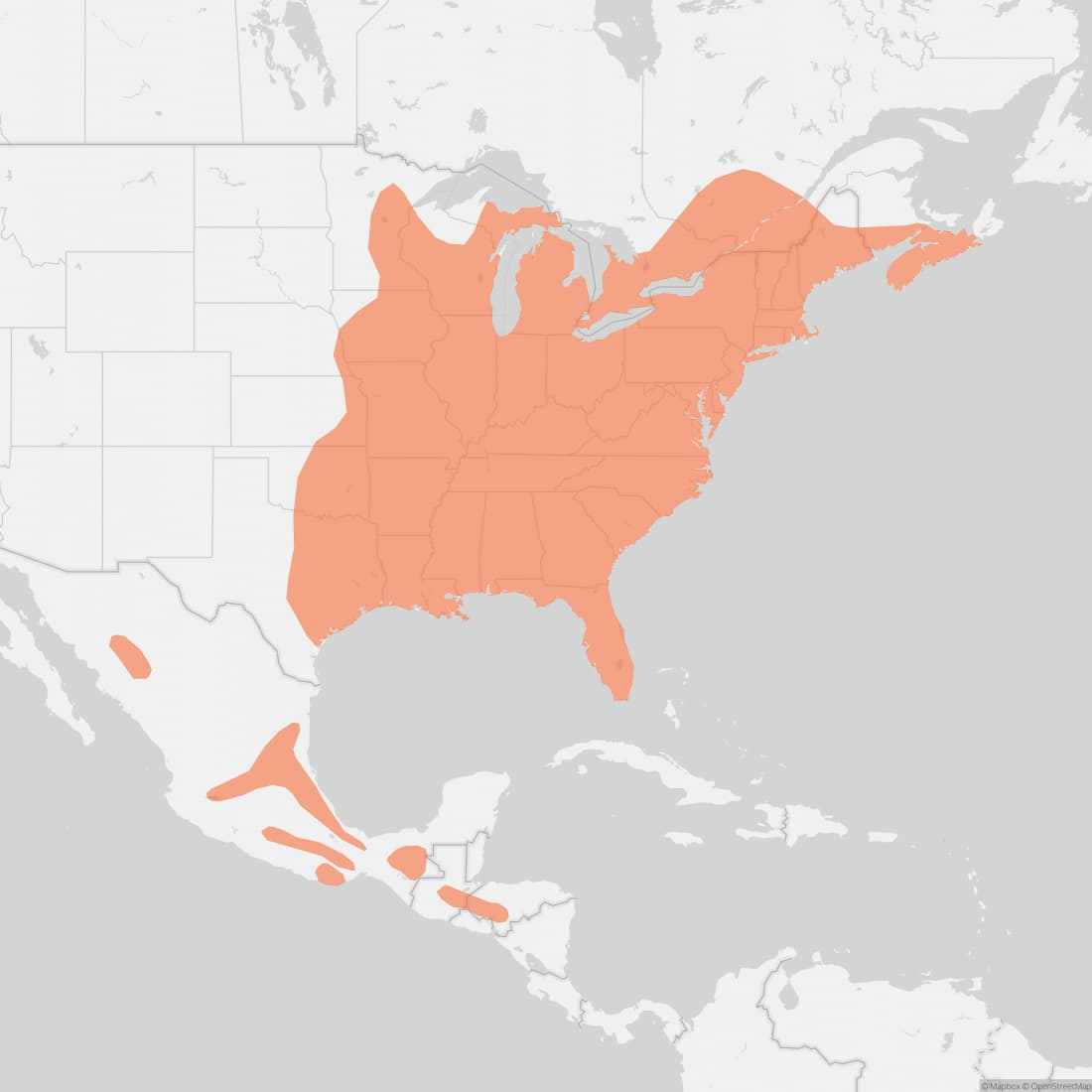
Approximate range. © Mapbox © OpenStreetMap