Western Ribbon Snake
Thamnophis proximus
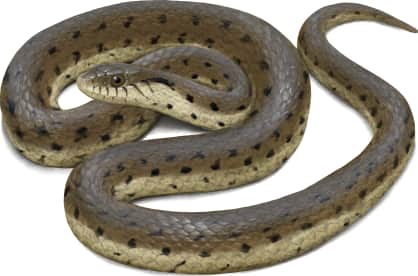
Dorsum is either olive, brown, or black and exhibits three stripes down sides and on back which can be light, orange, yellow, or white. Venter usually light. Top and side…
How to identify
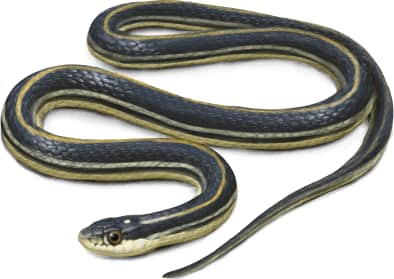
Dorsum is either olive, brown, or black and exhibits three stripes down sides and on back which can be light, orange, yellow, or white. Venter usually light. Top and sides of head usually dark while upper labia are white. Reach sexual maturity in either second or third year. Litters usually range from 4 to 27 young.
Range
From north central United States as far north as southern Wisconsin to the Isthmus of Tehuantepec, Mexico; isolated populations exist in southern Mexico, Belize, Guatemala, El Salvador, Honduras, Nicaragua and Costa Rica.
Habitat
Usually can be found near water sources including ponds, streams, lakes, swamps, and marshes. May hibernate in areas that are far from water sources. Typically eats amphibians, fish, and lizards. During especially hot weather, can be completely nocturnal.
Variations
Parts between dorsum stripes can exhibit marks matching the color of the stripes, or can be plain.
Similar species
Name and etymology
Genus
Thamnophis
Greek for bush (thamnos) snake (ophis).
Origin
Sources
- Fitzinger, 1843. Syst. Rept., p. 26 ↗
Thamnophis. Fitzinger, 1843 - Syst. Rept., p. 26
Species epithet
proximus
Latin for nearest.
Origin
Sources
- (Say, 1823).
Thamnophis proximus. (Say, 1823) -
Explore more names in the etymology index.
At a glance
Size
210 to 1250 mm
Range
From north central United States as far north as southern Wisconsin to the Isthmus of Tehuantepec, Mexico; isolated populatio…
Habitat
Usually can be found near water sources including ponds, streams, lakes, swamps, and marshes. May hibernate in areas that are…
Range map
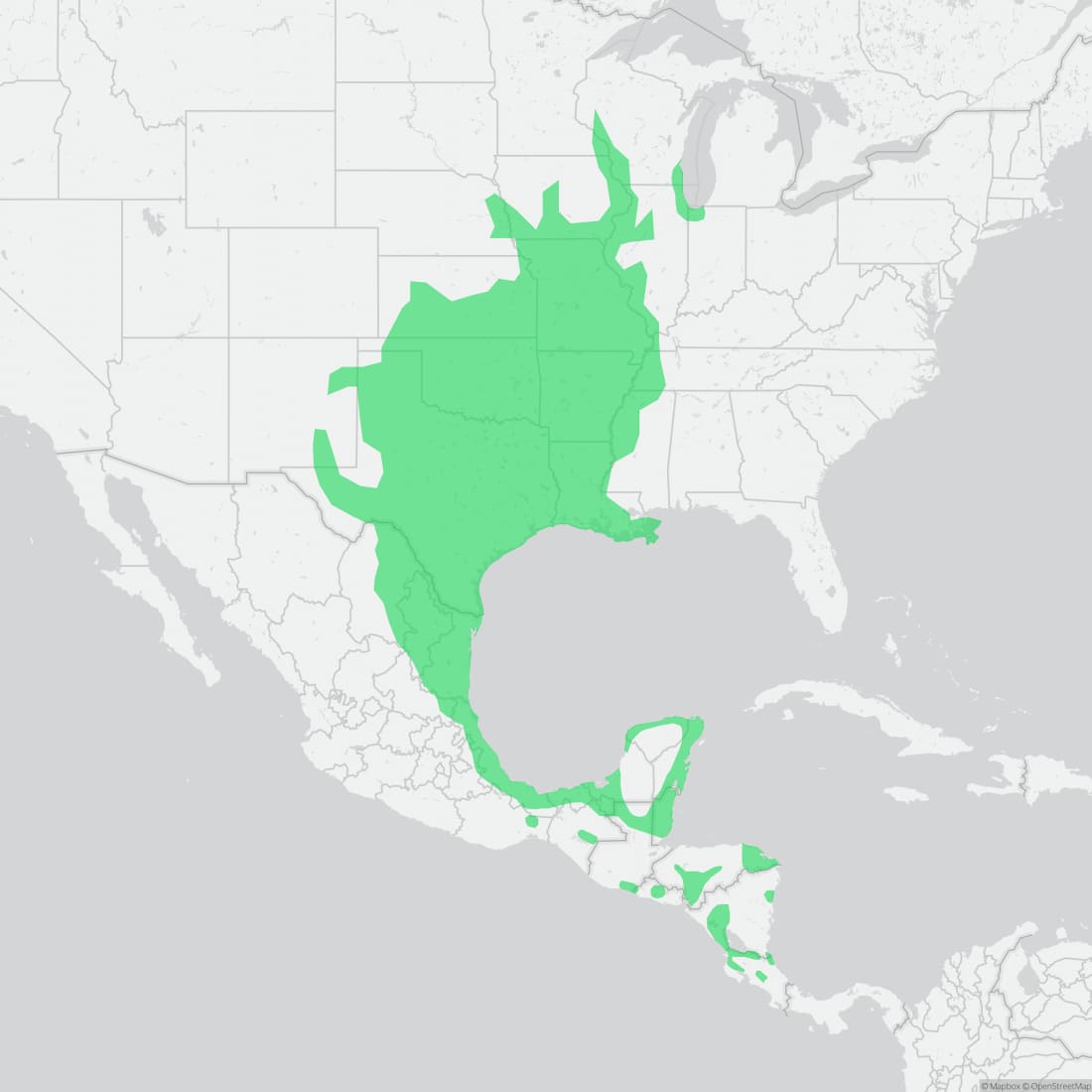
Approximate range. © Mapbox © OpenStreetMap