Two-striped Garter Snake
Thamnophis hammondii
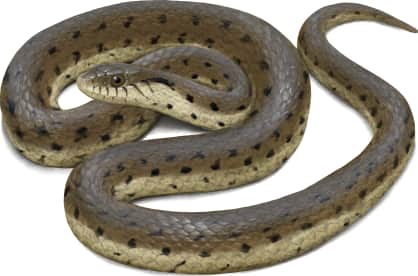
Exhibits a brown, olive, brown, or gray dorsum. Can have four rows of smaller dark blotches on either side of body or gray to yellow stripes on either side of body. Posse…
How to identify
Exhibits a brown, olive, brown, or gray dorsum. Can have four rows of smaller dark blotches on either side of body or gray to yellow stripes on either side of body. Possesses a yellow or reddish venter that can be unmarked or darkly marked. Females and males mate from March to April and young are born from July to October. Average litter is 15 young.
Range
Coastal southern California south to northern Baja California, Mexico; isolated populations exist in La Presa, Baja California.
Habitat
Usually recognized as one of the most aquatic gartersnakes. Inhabits areas near fresh water usually on rocky terrain. This includes deserts, mountains, woodland, and sage scrub.
Variations
Individuals found in Baja California Sur exhibit olive or dark brown dorsum with little other markings. Individuals along the coast from Monterey County to San Luis Obispo County exhibit metallic markings.
Similar species
Name and etymology
Genus
Thamnophis
Greek for bush (thamnos) snake (ophis).
Origin
Sources
- Fitzinger, 1843. Syst. Rept., p. 26 ↗
Thamnophis. Fitzinger, 1843 - Syst. Rept., p. 26
Species epithet
hammondii
Honoring William A. Hammond
Origin
Honors
Sources
- (Kennicott, 1860). Proc. Acad. Nat. Sci. Philadelphia, Vol. 12, p. 332 ↗
Thamnophis hammondii. (Kennicott, 1860) - Proc. Acad. Nat. Sci. Philadelphia, Vol. 12, p. 332
Explore more names in the etymology index.
At a glance
Range
Coastal southern California south to northern Baja California, Mexico; isolated populations exist in La Presa, Baja Californi…
Habitat
Usually recognized as one of the most aquatic gartersnakes. Inhabits areas near fresh water usually on rocky terrain. This in…
Guide
Reptiles and Amphibians of North America
Range map
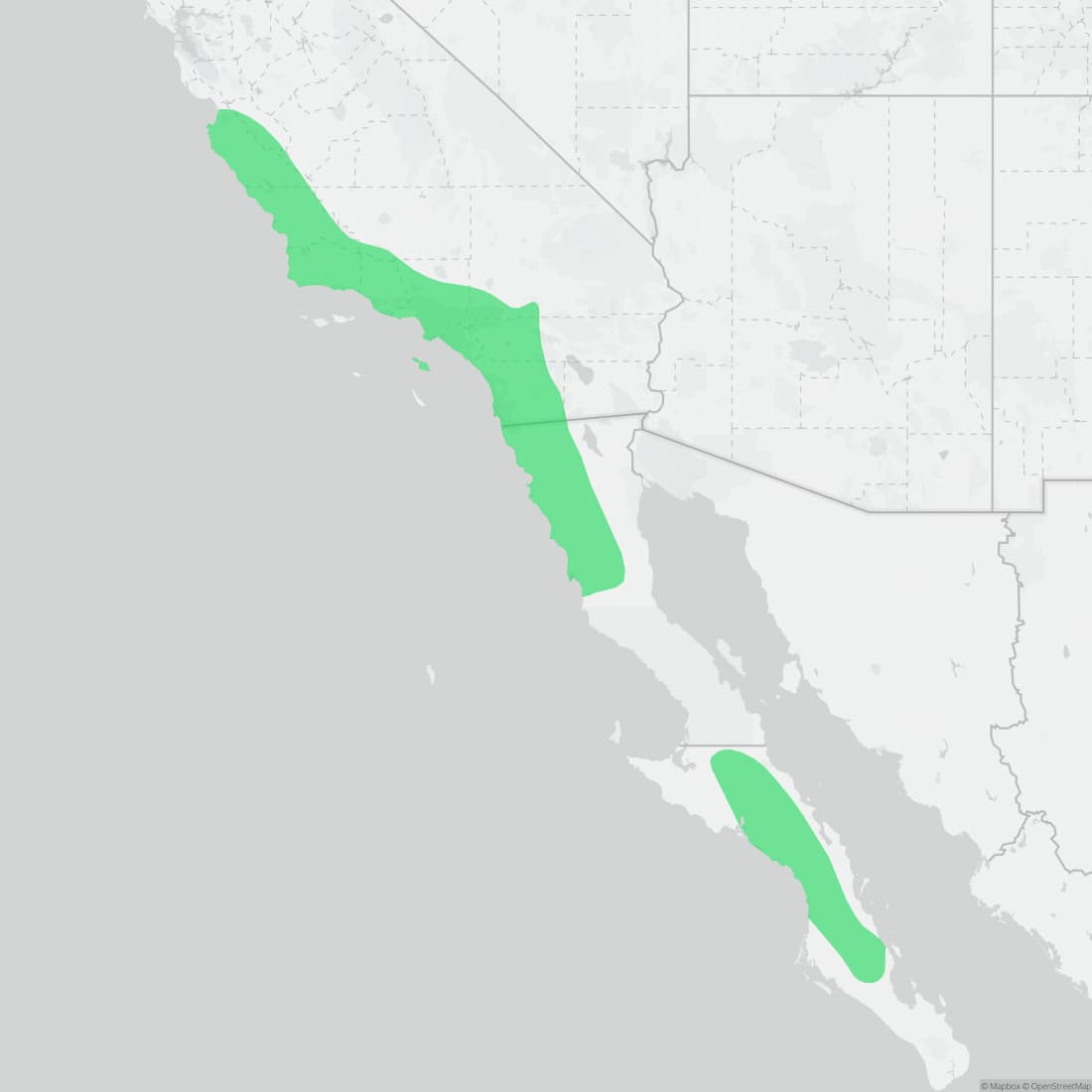
Approximate range. © Mapbox © OpenStreetMap