
Seepage Siren
Siren sphagnicola
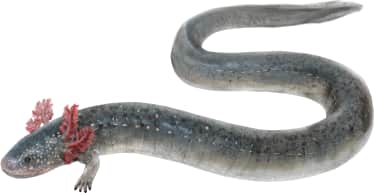
S. sphagnicola holds the title of the smallest described siren species, typically reaching only around 8 inches (20 cm) in length. This fully aquatic salamander lacks hi…
How to identify
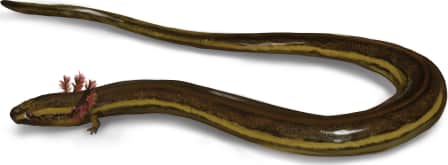
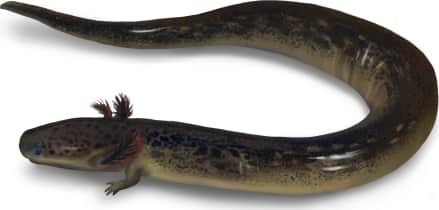
S. sphagnicola holds the title of the smallest described siren species, typically reaching only around 8 inches (20 cm) in length. This fully aquatic salamander lacks hind limbs and boasts a long, eel-like body. External feathery gills, a hallmark of sirens, persist throughout their lives. Coloration tends toward a mouse gray base, occasionally exhibiting a light, grayish-brown sheen on the back. Look for a unique characteristic - small black spots scattered across the head. These spots, along with the visibility of beige sensory pits on the head and a specific range of costal grooves (body folds), aid in distinguishing S. sphagnicola from other sirens.
Range
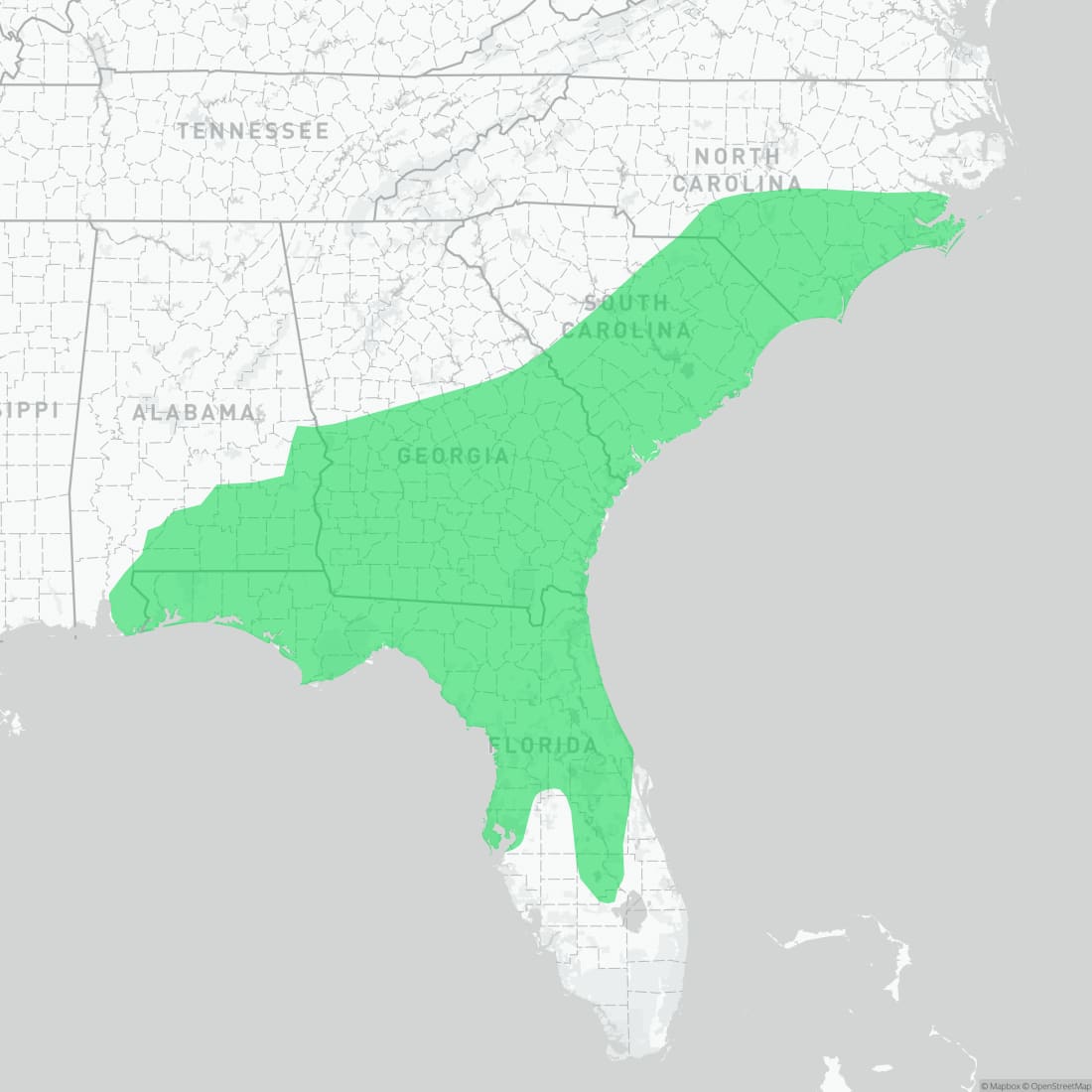
S. sphagnicola inhabits the southeastern United States, specifically the coastal plain stretching from the Florida Parishes of Louisiana eastward to the westernmost tributary creeks of Choctawhatchee Bay in the western Florida panhandle. While populations appear robust within suitable microhabitats, the overall range is smaller than other sirens.
Habitat
S. sphagnicola thrives in specific freshwater environments. Look for them in slow-moving streams, seepage areas, and cypress swamps with abundant vegetation and organic debris. These shallow freshwater habitats provide the ideal conditions for their aquatic lifestyle.
Similar species
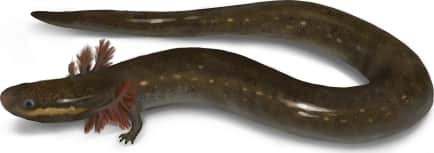
The most likely case of mistaken identity for S. sphagnicola is its close relative, S. nettingi. While both share similar body shapes and gill structures, S. nettingi achieves a larger size and lacks the black head spots and distinct sensory pit visibility of S. sphagnicola. Additionally, S. nettingi often displays a yellow facial stripe absent in S. sphagnicola.
Name and etymology
Genus
Siren
Referencing the Sirens of Greek mythology.
Origin
Sources
- Linnaeus, 1766. Syst. Nat., 12th ed., Vol. 1, Pt. 2, sign. Rrrr 5, Addenda (not paged) ↗
Siren. Linnaeus, 1766 - Syst. Nat., 12th ed., Vol. 1, Pt. 2, sign. Rrrr 5, Addenda (not paged)
Species epithet
sphagnicola
Latin for inhabiting (-cola) sphagnum (Peat moss).
Origin
Sources
- Wikipedia: Siren sphagnicola ↗
“Siren sphagnicola.” Wikipedia. https://en.wikipedia.org/wiki/Seepage_siren
- Wikipedia: Eurycea sphagnicola ↗
“Eurycea sphagnicola.” Wikipedia. https://en.wikipedia.org/wiki/Bog_dwarf_salamander
Explore more names in the etymology index.
At a glance
Range
S. sphagnicola inhabits the southeastern United States, specifically the coastal plain stretching from the Florida Parishes o…
Habitat
S. sphagnicola thrives in specific freshwater environments. Look for them in slow-moving streams, seepage areas, and cypress…
Guide
Reptiles and Amphibians of North America
Range map
Approximate range. © Mapbox © OpenStreetMap