
Western Siren
Siren nettingi
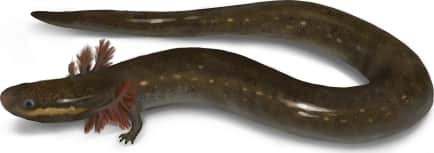
S. nettingi is a fully aquatic salamander lacking hind limbs and possessing a long, eel-like body. Adults can reach lengths between 7 and 19.7 inches (18-50 cm). The gil…
How to identify
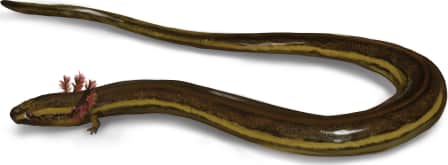
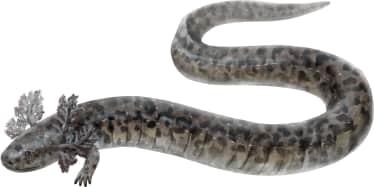
S. nettingi is a fully aquatic salamander lacking hind limbs and possessing a long, eel-like body. Adults can reach lengths between 7 and 19.7 inches (18-50 cm). The gills remain throughout their lives, unlike most salamanders, and external feathery structures, called external gills, flank the head in aquatic larvae. Coloration varies from light to dark brown with a lighter underside, and they may have a yellow stripe running down the back. Their small eyes indicate poor vision. Elongated body bears 34-37 costal grooves
Range
S. nettingi inhabits a complex range spanning parts of the United States and Mexico. Its core distribution lies east-centrally and south in Alabama, where it follows the drainage basin of the Mississippi River northward. This aquatic salamander extends its reach into eastern Missouri, central Illinois, western Indiana, western Kentucky, and western Tennessee. Interestingly, isolated populations exist in southwestern Michigan and a separate pocket stretches from central Tamaulipas in northeastern Mexico north through East Texas to southeastern Oklahoma and central Arkansas. Finally, the range dips south again into Mexico, with scattered populations found from central Tamaulipas to north-central Veracruz.
Habitat
S. nettingi thrives in calm, shallow freshwater habitats with abundant vegetation and organic debris. These include swamps, marshes, ditches, canals, sluggish streams, and seasonal ponds. They can tolerate temporary water loss by burrowing into the mud during dry periods, a process known as aestivation.
Similar species
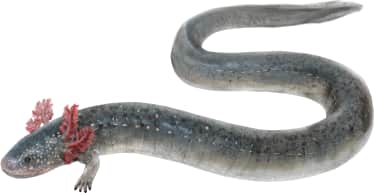
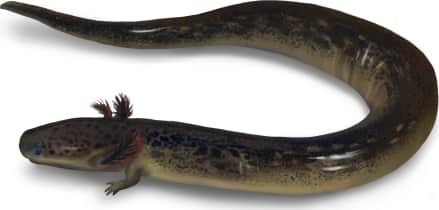
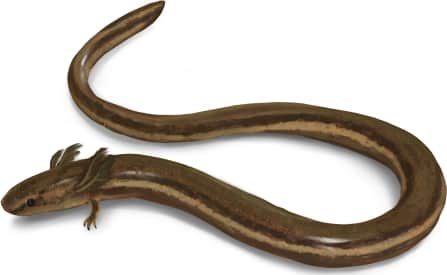
S. nettingi can be confused with other sirens where their ranges overlap. To distinguish between similar-sized S. nettingi and S. sphagnicola, look for facial markings. S. nettingi has a solid yellow stripe along its lips and a yellow patch on its snout (labial stripe and rostral patch). In contrast, S. sphagnicola may have a few beige spots where the stripe would be in other sirens, but nothing more. Additionally, young S. nettingi often have a greenish or yellowish body with gold flecks, features absent in S. sphagnicola.
Name and etymology
Genus
Siren
Referencing the Sirens of Greek mythology.
Origin
Sources
- Linnaeus, 1766. Syst. Nat., 12th ed., Vol. 1, Pt. 2, sign. Rrrr 5, Addenda (not paged) ↗
Siren. Linnaeus, 1766 - Syst. Nat., 12th ed., Vol. 1, Pt. 2, sign. Rrrr 5, Addenda (not paged)
Species epithet
nettingi
Honoring herpetologist M. Graham Netting
Origin
Sources
- Goin, 1942. Ann. Carnegie Mus., Vol. 29, p. 211 ↗
Siren intermedia nettingi. Goin, 1942 - Ann. Carnegie Mus., Vol. 29, p. 211
Explore more names in the etymology index.
At a glance
Range
S. nettingi inhabits a complex range spanning parts of the United States and Mexico. Its core distribution lies east-centrall…
Habitat
S. nettingi thrives in calm, shallow freshwater habitats with abundant vegetation and organic debris. These include swamps,…
Guide
Reptiles and Amphibians of North America
Range map
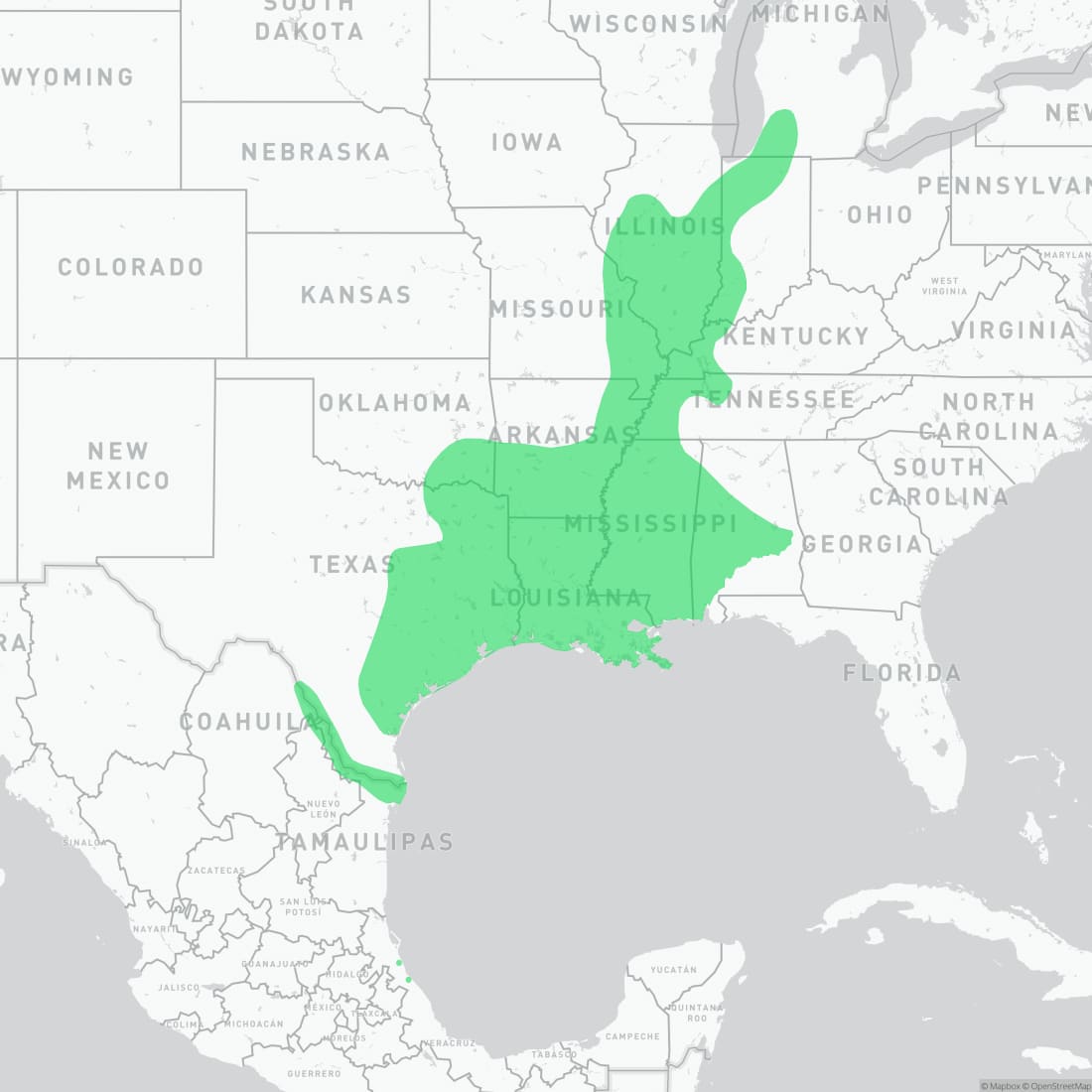
Approximate range. © Mapbox © OpenStreetMap