Northern Rubber Boa
Charina bottae
Smaller constrictor that feels and looks like rubber. Adult dorsum is olive green to brown with smooth and shiny skin. Venter is cream or yellow and can have flecks or mo…
How to identify
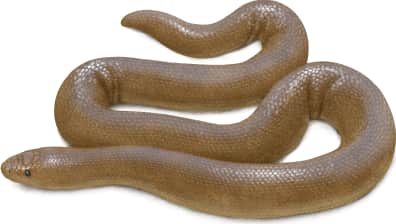
Smaller constrictor that feels and looks like rubber. Adult dorsum is olive green to brown with smooth and shiny skin. Venter is cream or yellow and can have flecks or mottling of brown, orange, or black. Small eyes with vertically oval pupils. Their heads are covered with large symmetrical plates. Tail very similar in size to head and appears short and blunt. Average adult male and female size is between 35-83 cm. Females engage in live bearing between August and November. Litters usually range from 2 to 8 young. Young are pinkish or tan and venters can be yellow to pink. Known to be good swimmers, burrowers, and climbers.
Range
Western coast of North America from southern British Columbia, Canada southward through Washington, Oregon, and west-central California; east through Idaho, western Montana, western Wyoming, central Utah, and central Nevada.
Habitat
Usually stay close to water sources in woodlands, forest clearings, meadows, grassy savannas, sagebrush, and arid canyons. They hide under rotting logs, rocks, or under dead fallen trees. Can withstand colder temperature than most reptiles as low as 50 degrees Fahrenheit. Diet usually composes of mice and can also include shrews, lizards, snakes, and small birds. Prey is killed by constriction before being ingested.
Variations
While all males have a spur on each side of the anal region, some females possess them and others do not. Although primarily nocturnal, they can occasionally be seen sunning on rocks or in open spaces.
Similar species
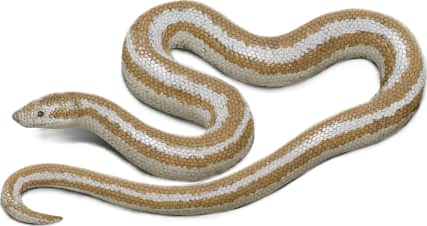
Southern Rubber Boa - Charina umbratica Rosy Boa - Lichanura orcutti
Name and etymology
Genus
Charina
Greek for graceful.
Origin
Sources
- Gray, 1849. Cat. Snakes Brit. Mus., p. 113
Charina. Gray, 1849 - Cat. Snakes Brit. Mus., p. 113
Species epithet
bottae
Honoring Paolo E. Botta.
Origin
Honors
Sources
- (Blainville, 1835). Nouv. Ann. Mus. Hist. Nat. Paris, Vol. 4, p. 289, pl. 26, figs. 1, 1B ↗
Charina bottae. (Blainville, 1835) - Nouv. Ann. Mus. Hist. Nat. Paris, Vol. 4, p. 289, pl. 26, figs. 1, 1B
Explore more names in the etymology index.
At a glance
Range
Western coast of North America from southern British Columbia, Canada southward through Washington, Oregon, and west-central…
Habitat
Usually stay close to water sources in woodlands, forest clearings, meadows, grassy savannas, sagebrush, and arid canyons. Th…
Guide
Reptiles and Amphibians of North America
Range map
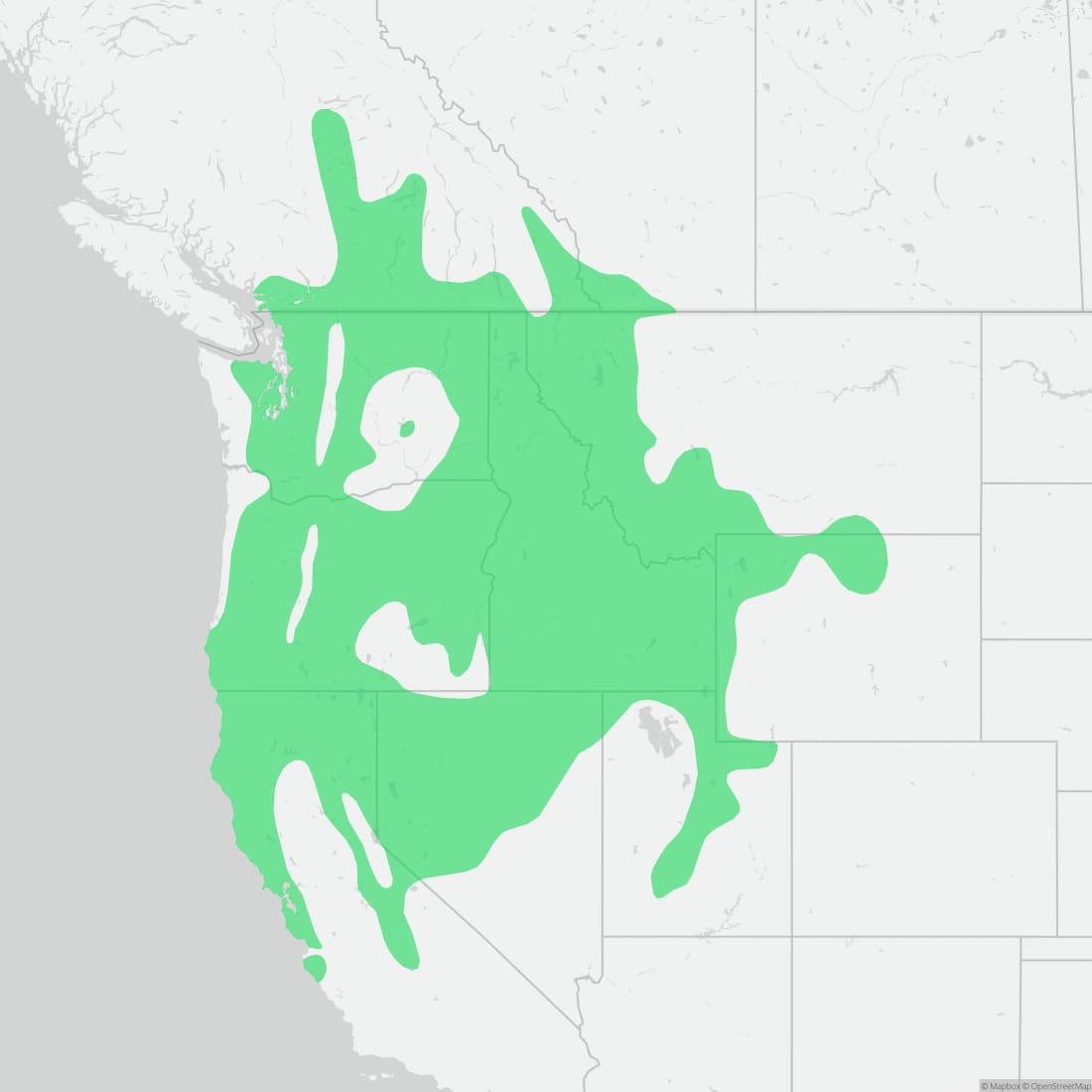
Approximate range. © Mapbox © OpenStreetMap