Southern Rubber Boa
Charina umbratica
This is a non-lethal-to-humans constrictor that reaches a total length of 19.5 and 22 inches for males and females respectively. It has a stout body with shiny, fine, sma…
How to identify
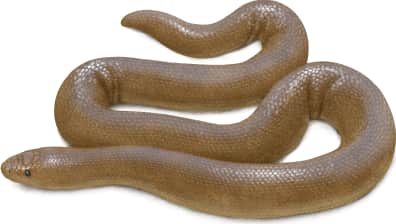
This is a non-lethal-to-humans constrictor that reaches a total length of 19.5 and 22 inches for males and females respectively. It has a stout body with shiny, fine, small scales, and a loose wrinkled skin that lends the snake a rubbery appearance. The eyes are small and vertically slit. The tail is usually short and blunt-ended, resembling a head. The head itself is covered with large scales. It has a uniform dorsal color of light brown, dark brown, tan, pink, or olive-green above, and orange, yellow, or cream-colored below. It is usually patternless but some specimens have a dark mottling. The young snakes of this species is pink or tan, sometimes brightly colored.
Range
This snake is generally endemic to California. Specifically, it can be found in southern California in a few disjunctive areas including the San Bernardino and San Jacinto Mountains.
Habitat
The southern rubber boa thrives in oak-conifer and mixed-conifer forests and shelter in rocks and logs or any other debris in the area. The breeding seasons begins in April and ends in June. The luve young are born in late summer or early autumn. They feed on small mammals, birds, and lizards.
Similar species
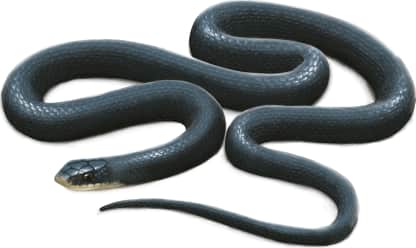
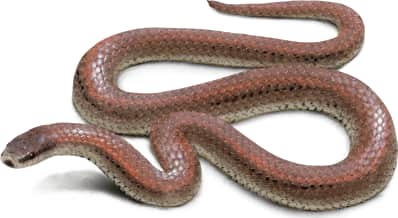
The Northern Rubber Boa (Charina bottae) is 14-33 inches, generally larger than C. umbratica even though it is a smaller species of boa. They also possess smooth shiny scales and wrinkles loose skin. They also have the same small eyes and blunted tails. The North American Racer (Coluber constrictor) is much bigger, reaching lengths between 20-60 inches. While most racers are solid-colored, they lack the rubbery appearance that the rubber boas possess. They also have big eyes and a tapering tail. The juveniles are often patterned too. Sharp-tailed Snake (Contia tenuis) this snake is small with an average total length of 12-18 inches. They are mostly distinguished by the sharp tail-spine they have; it is the protruding end of the tail vertebra. It has a dorsal background color of grayish-brown to brown to brick-red.
Name and etymology
Genus
Charina
Greek for graceful.
Origin
Sources
- Gray, 1849. Cat. Snakes Brit. Mus., p. 113
Charina. Gray, 1849 - Cat. Snakes Brit. Mus., p. 113
Species epithet
umbratica
Latin for living in shade.
Origin
Sources
- Wikipedia: Charina umbratica ↗
“Charina umbratica.” Wikipedia. https://en.wikipedia.org/wiki/Southern_rubber_boa
Explore more names in the etymology index.
At a glance
Range
This snake is generally endemic to California. Specifically, it can be found in southern California in a few disjunctive area…
Habitat
The southern rubber boa thrives in oak-conifer and mixed-conifer forests and shelter in rocks and logs or any other debris in…
Guide
Reptiles and Amphibians of North America
Range map
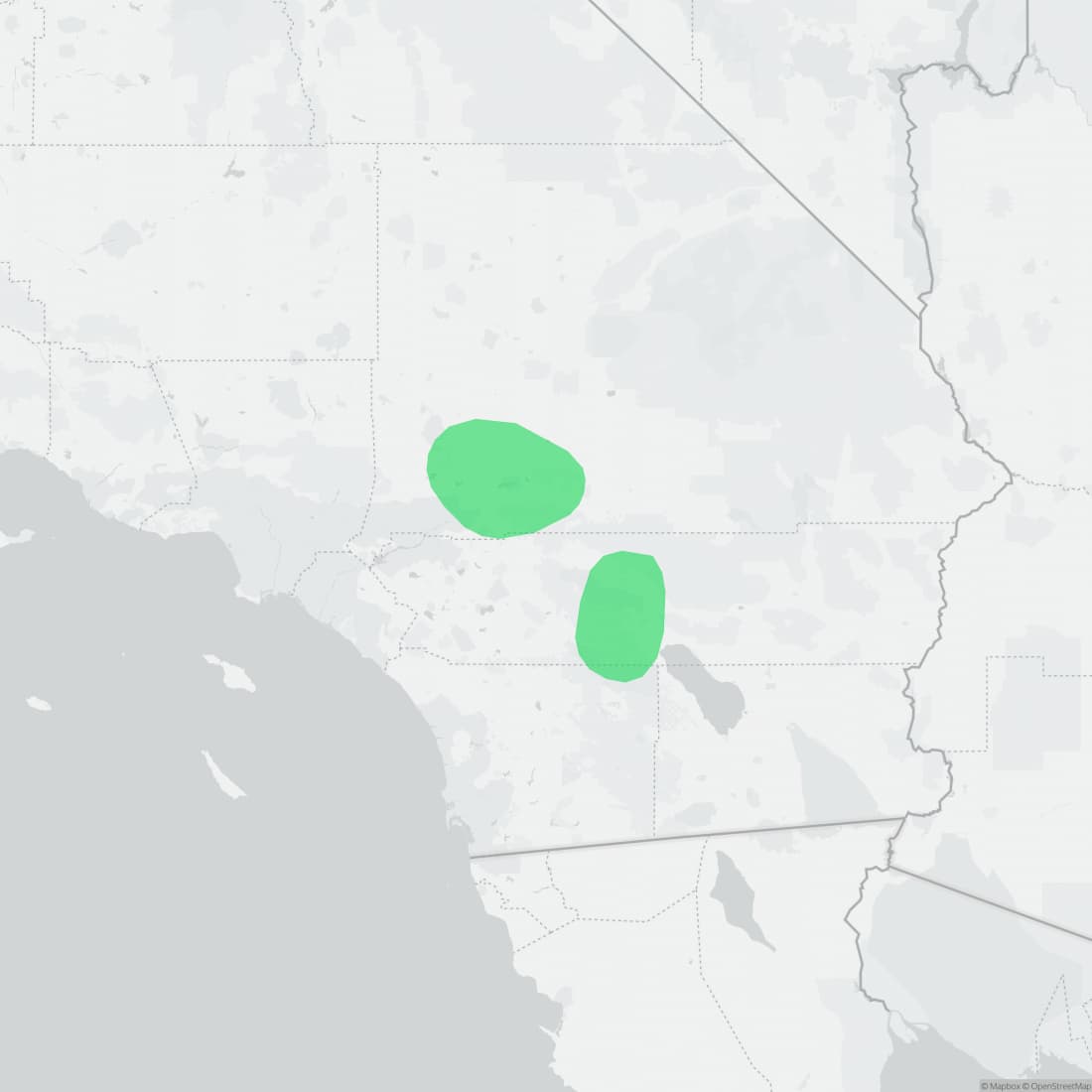
Approximate range. © Mapbox © OpenStreetMap