Rio Grande Cooter
Pseudemys gorzugi
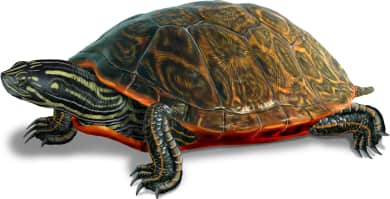
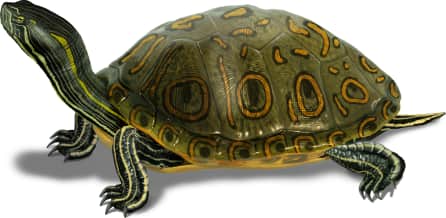
This turtle has an ornately patterned carapace with many irregular patches of concentric rings. Between these patterns, the background color is dark yellow to orange. The…
How to identify
This turtle has an ornately patterned carapace with many irregular patches of concentric rings. Between these patterns, the background color is dark yellow to orange. The rings are alternating colors of greenish yellow and black. The carapace is smooth and the posterior marginal scutes are mildly serrated. Its plastron is mostly yellow with dark seams, and sometimes shaded brown. The skin on its head and neck is black with yellow stripes. Its legs are black with yellow, orange, or red stripes. Adults reach 9.5 inches in carapace length, with females growing larger than males. Shell shape is oval and somewhat flattened.
Range
Found along the Rio Grande River and surrounding areas from the eastern edge of the Texas panhandle down to the Gulf of Mexico. A separate population can also be found in southeastern New Mexico and into the northern Texas panhandle.
Habitat
This aquatic turtle lives in clear, deep pools and clear or muddy streams. It requires lots of emergent logs and rocks for basking.
Variations
Juveniles are more vibrantly colored and patterned than mature adults. Carapace pattern iuqe to each individual.
Similar species
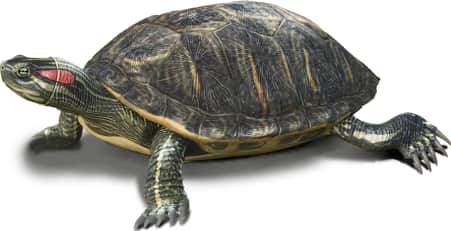
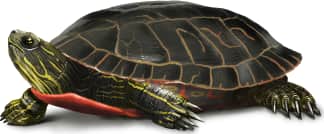
Most likely to be confused with the common slider (*Trachemys scripta*), painted turtle (*Chrysemys picta*), or Mesoamerican slider (*Trachemys venusta*).
Name and etymology
Genus
Pseudemys
Greek for false (pseudo) turtle (emys).
Origin
Sources
- Gray, "1855" 1856. Proc. Zool. Soc. London, Jan. 22, 1856, p. 197 ↗
Pseudemys. Gray, "1855" 1856 - Proc. Zool. Soc. London, Jan. 22, 1856, p. 197
Species epithet
gorzugi
Honoring George Zug.
Origin
Honors
Sources
- Wikipedia: Pseudemys gorzugi ↗
“Pseudemys gorzugi.” Wikipedia. https://en.wikipedia.org/wiki/Rio_Grande_cooter
Explore more names in the etymology index.
At a glance
Range
Found along the Rio Grande River and surrounding areas from the eastern edge of the Texas panhandle down to the Gulf of Mexic…
Habitat
This aquatic turtle lives in clear, deep pools and clear or muddy streams. It requires lots of emergent logs and rocks for ba…
Guide
Reptiles and Amphibians of North America
Range map
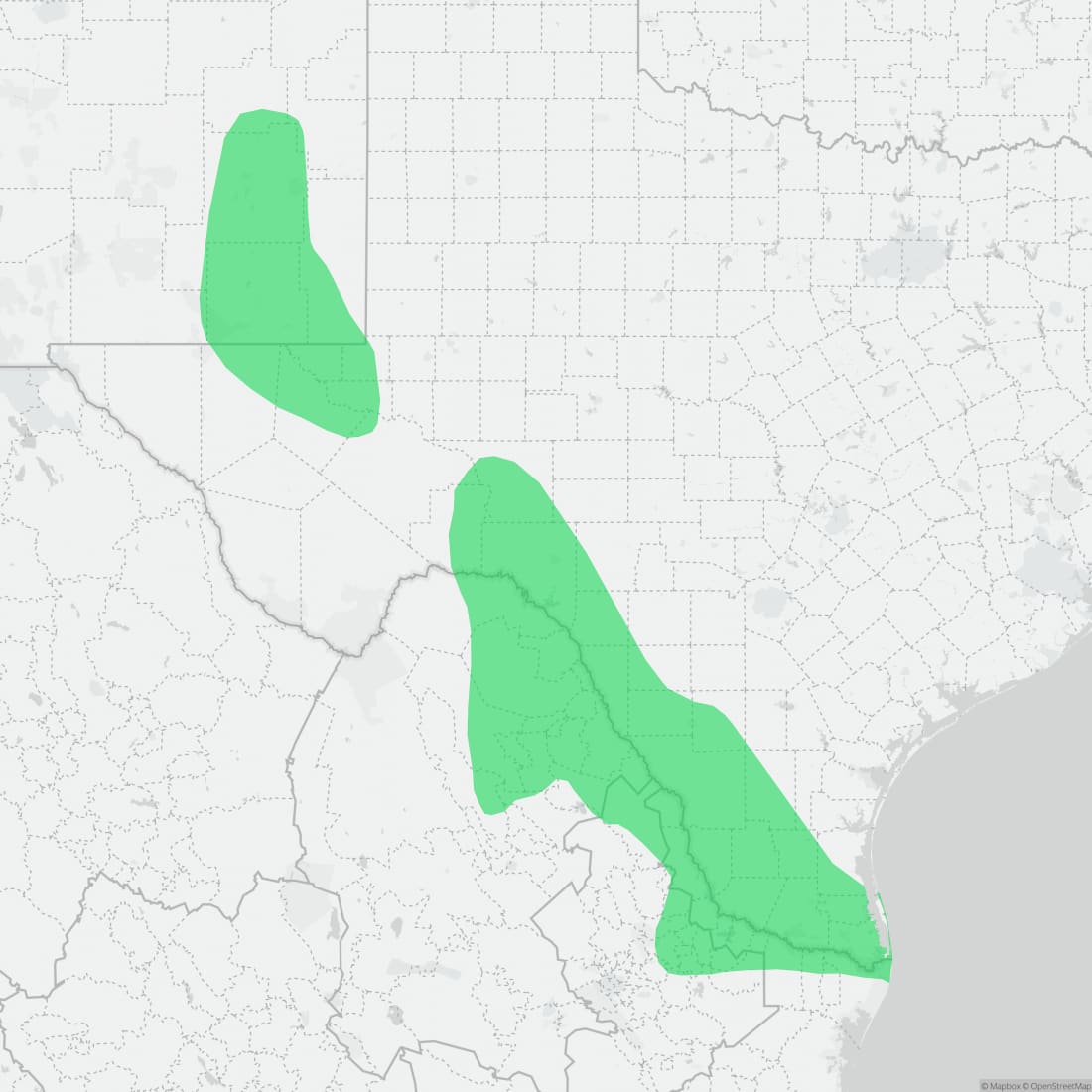
Approximate range. © Mapbox © OpenStreetMap