Green Sea Turtle
Chelonia mydas
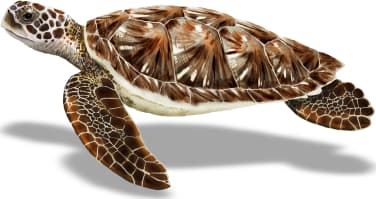
It has a dorsoventrally-flattened body, a beaked head at the end of a short neck, paddle-like arms, suitable for swimming, and an average adult length, weight and carapac…
How to identify
It has a dorsoventrally-flattened body, a beaked head at the end of a short neck, paddle-like arms, suitable for swimming, and an average adult length, weight and carapace length of 5ft, 68-190kg, and 78-112 cm respectively. It has a short snout, an unhooked beak, and a denticulated edge on the sheath of the upper jaw. The green sea turtle has a pair of prefrontal scales on the dorsal surface of its head. Its carapace has 5 central scutes, surrounded by 4 pairs of lateral scutes. The pigmentation of a juvenile’s carapace turns dark-brown to olive, while it is entirely brown, spotted and marbled in adults.
Range
The green sea turtle extends throughout tropical and subtropical oceans worldwide, with the two major subpopulations in the eastern Pacific and the Atlantic Ocean. They are reported to inhabit coastal areas of over 140 countries, with over 80 states with nesting sites. In the US Atlantic coast, the green sea turtles can be seen from Texas, and north to Massachusetts, while they are found in southern California, north to the southernmost tip of Alaska, from the US Pacific coast.
Habitat
They move across 3 habitat types, depending on their life stage. Eggs are laid on beaches, mature turtles spend time in shallow coastal waters, and adults spend time at lagoons and shoals. Generally, their habitat include coral reefs (which provides green, red, and brown algae for feeding and protection against predators and rough storms.), salt marshes, and seagrass beds. Their behaviour changes as they grow. New hatchlings are carnivores as they feed on fish eggs, jellyfish, sponges, while immature juveniles and adults are herbivores and Omnivores. Females mate every 2-4 years and dig a hole, 11-12 inches in the ground to deposit a clutch size of 85-200 eggs.
Variations
Chelonia mydas mydas Chelonia mydas agassizii
Similar species
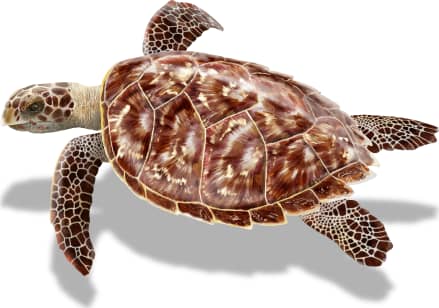
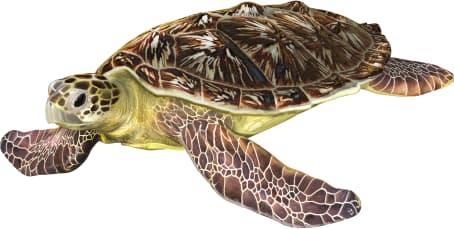
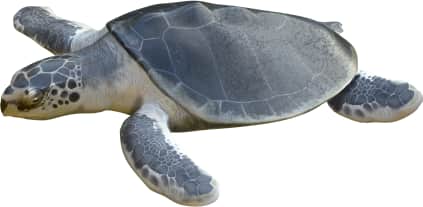
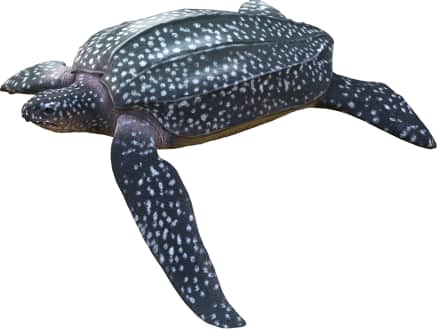
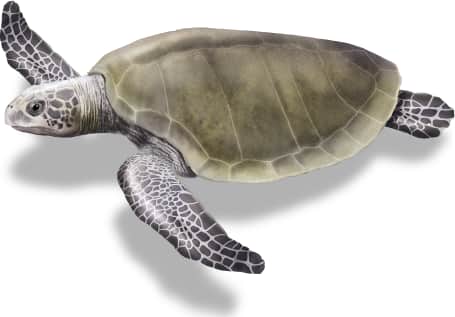
The hawksbill turtle (eretmochelys imbricata) has a length and weight of 65-90 cm and 45-70 respectively. The loggerhead turtle (caretta caretta) is the most abundant species of sea turtles in the US with an average length of 3 feet and a weight of almost 250 pounds. The Kemp’s Ridley turtle (lepidochelys kempii) has a triangular head, with a greyish-green carapace and pale yellowish bottom shell.
Name and etymology
Genus
Chelonia
Greek for tortoise.
Origin
Sources
- Brongniart, 1800. Bull. Sci. Soc. Philom. Paris, Vol. 2, p. 89
Chelonia. Brongniart, 1800 - Bull. Sci. Soc. Philom. Paris, Vol. 2, p. 89
Species epithet
mydas
Greek for damp or wetness (mydos).
Origin
Sources
- (Linnaeus, 1758). Syst. Nat., 10th ed., Vol. 1, p. 197 ↗
Chelonia mydas. (Linnaeus, 1758) - Syst. Nat., 10th ed., Vol. 1, p. 197
Explore more names in the etymology index.
At a glance
Size
100 to 120 cm
Range
The green sea turtle extends throughout tropical and subtropical oceans worldwide, with the two major subpopulations in the e…
Habitat
They move across 3 habitat types, depending on their life stage. Eggs are laid on beaches, mature turtles spend time in shall…
Range map
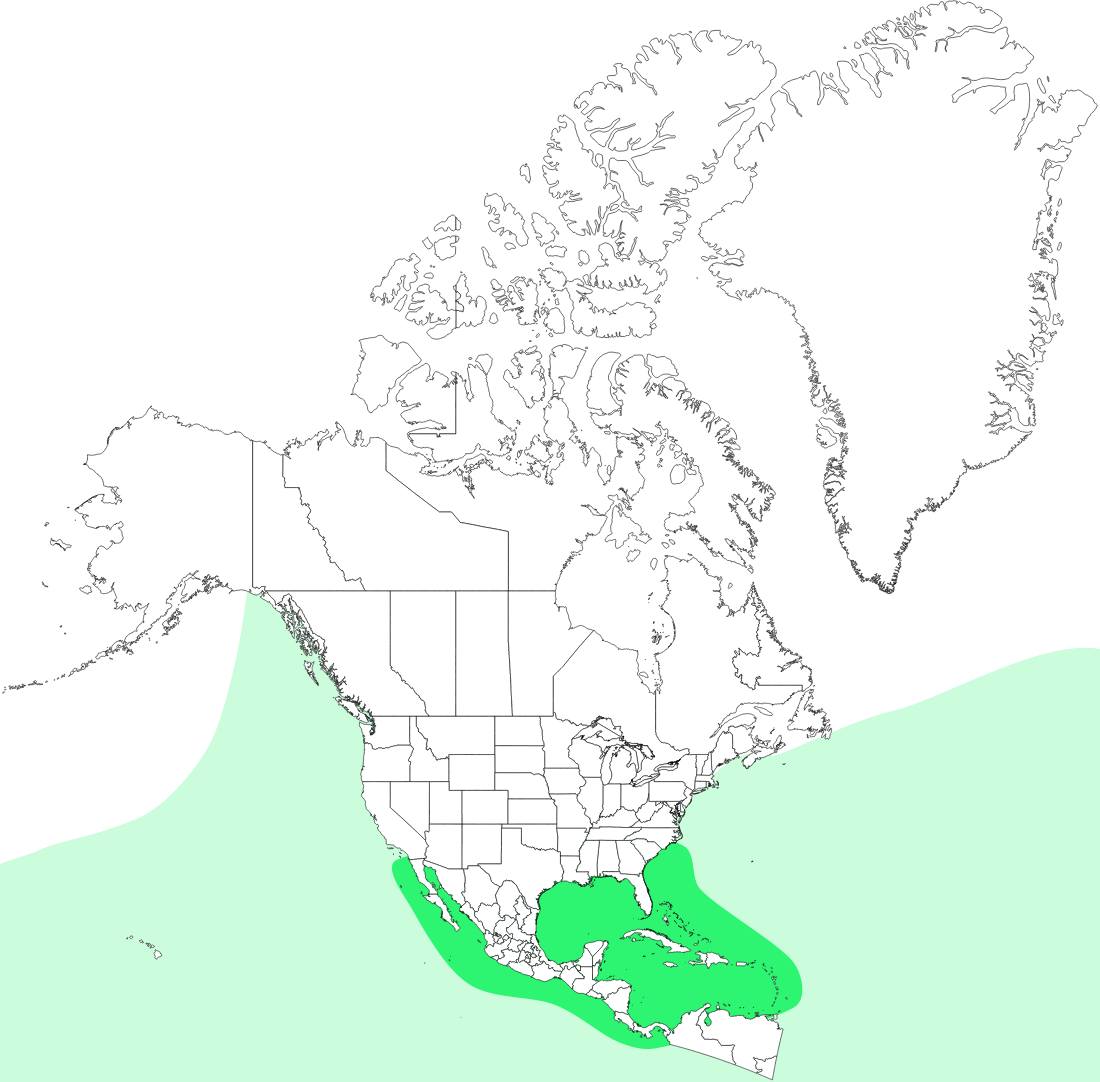
Approximate range. © Mapbox © OpenStreetMap