Narrowhead Garter Snake
Thamnophis rufipunctatus
Named for its distinct narrow, elongated head, this snake averages 32-44 inches in length. It has keeled dorsal scales, large plate-like scales on the head, and smooth ve…
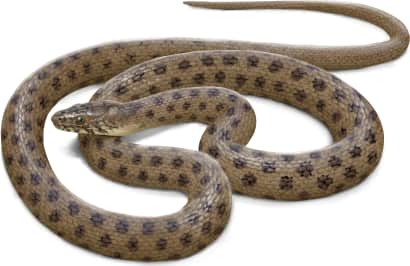
How to identify
Named for its distinct narrow, elongated head, this snake averages 32-44 inches in length. It has keeled dorsal scales, large plate-like scales on the head, and smooth ventral scales. It is often subtly patterned with alternating rows of round dark spots on a mid-toned background. It has dark vertical bars between the scales around its mouth.
Range
This species has 2 disjunct ranges. One stretches east from central Arizona into west central New Mexico. The other is in north central Mexico.
Habitat
This highly aquatic species lives in and around rocky rivers and streams with clear, flowing water. Typically found in desert scrub or conifer forest habitats. It will sometimes drape itself from overhanging branches at the water's edge.
Variations
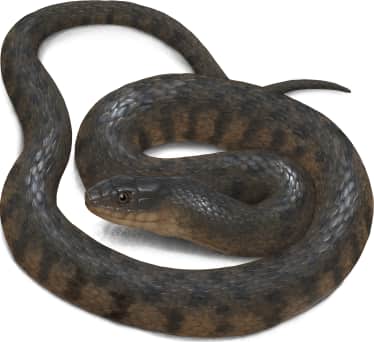
Background coloration can be grey, brown, or olive green. Spots can be darker brown, green, orange, or even black. Spots are usually subtle, but can be distinct.
Similar species
The unique shape of its head makes this snake hard to confuse with other species. It is most similar to the Mandrean narrow-headed garter snake (*Thamnophis unilabialis*) which is only found in Mexico. It resembles the Mississippi green watersnake (*Nerodia cyclopion*) which is only found in the southeastern US.
Name and etymology
Genus
Thamnophis
Greek for bush (thamnos) snake (ophis).
Origin
Sources
- Fitzinger, 1843. Syst. Rept., p. 26 ↗
Thamnophis. Fitzinger, 1843 - Syst. Rept., p. 26
Species epithet
rufipunctatus
Latin for reddish (rufus) spots (punctatus).
Origin
Sources
- (Cope, 1875).
Thamnophis rufipunctatus. (Cope, 1875) -
Explore more names in the etymology index.
At a glance
Range
This species has 2 disjunct ranges. One stretches east from central Arizona into west central New Mexico. The other is in nor…
Habitat
This highly aquatic species lives in and around rocky rivers and streams with clear, flowing water. Typically found in desert…
Guide
Reptiles and Amphibians of North America
Range map
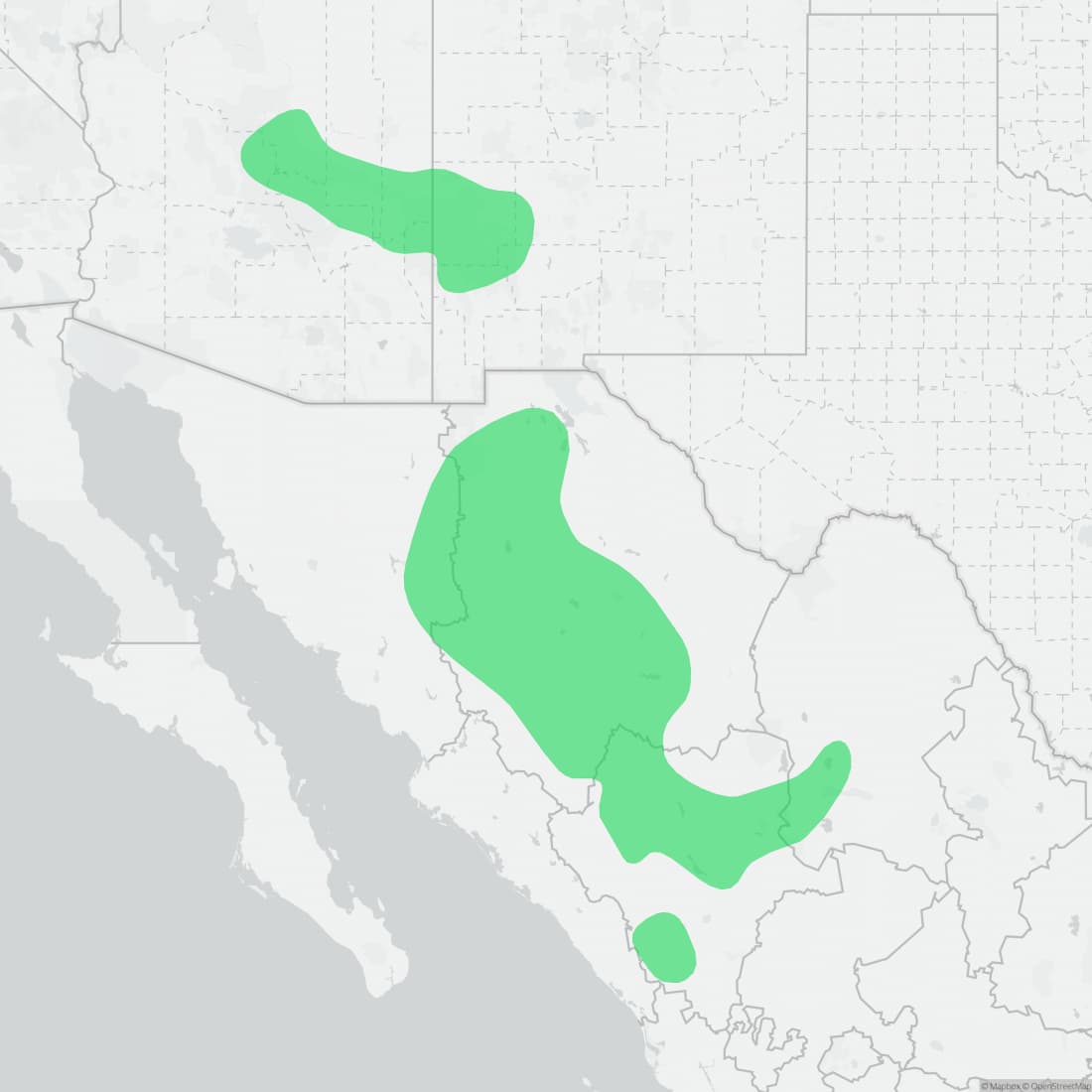
Approximate range. © Mapbox © OpenStreetMap