Florida Worm Lizard
Rhineura floridana
This extremely unique species looks much more like an earthworm than a lizard. It grows to 7-12 inches in length and is the same width all over, with a blunt head and tai…
How to identify
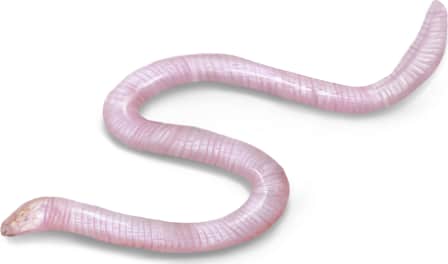
This extremely unique species looks much more like an earthworm than a lizard. It grows to 7-12 inches in length and is the same width all over, with a blunt head and tail. It has no legs, and its eyes are so underdeveloped that they can't be seen externally. It has ring-shaped scales down the length of its body, almost identical to the segments of a worm. It does have a few lizard-like plated scales on the top of its head, and its upper mandible juts forward beyond the lower mandible. It is uniformly pale pink in color.
Range
Ranges throughout north central Florida, with a small extension of range into south central Georgia.
Habitat
This species spends most of its life burrowing underground in soil, sand, or leaf detritus, only emerging after heavy rain. Often found in pine or broadleaf hammocks.
Variations
No significant variations in appearance are known.
Similar species
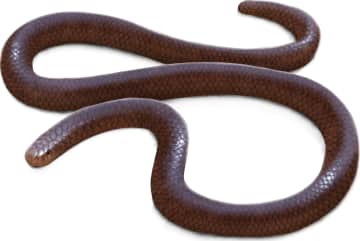
This very unique species is more likely to be mistaken for an earthworm than any other reptile species. However, it could be mistaken for the Brahminy blindsnake (*Indotyphlops braminus*), which is an introduced species in Florida. It also shares similarities with other worm-like snakes found in the western United States, including the Texas blind snake (*Rena dulcis*), or western threadsnake (*Rena humilis*).
Name and etymology
Genus
Rhineura
Greek for broad (eurys) nose (rhinos).
Origin
Sources
- Cope, 1861. Proc. Acad. Nat Sci. Philadelphia, Vol. 13, p. 75 ↗
Rhineura. Cope, 1861 - Proc. Acad. Nat Sci. Philadelphia, Vol. 13, p. 75
Species epithet
floridana
Belonging to Florida
Origin
Sources
- (Baird, 1858). Proc. Acad. Nat. Sci. Philadelphia, Vol. 10, p. 255 ↗
Rhineura floridana. (Baird, 1858) - Proc. Acad. Nat. Sci. Philadelphia, Vol. 10, p. 255
- (Goff, 1936). Occ. Papers Mus. Zool. Univ. Michigan, No. 327, p. 1 ↗
Nerodia floridana. (Goff, 1936) - Occ. Papers Mus. Zool. Univ. Michigan, No. 327, p. 1
Explore more names in the etymology index.
At a glance
Range
Ranges throughout north central Florida, with a small extension of range into south central Georgia.
Habitat
This species spends most of its life burrowing underground in soil, sand, or leaf detritus, only emerging after heavy rain. O…
Guide
Reptiles and Amphibians of North America
Range map
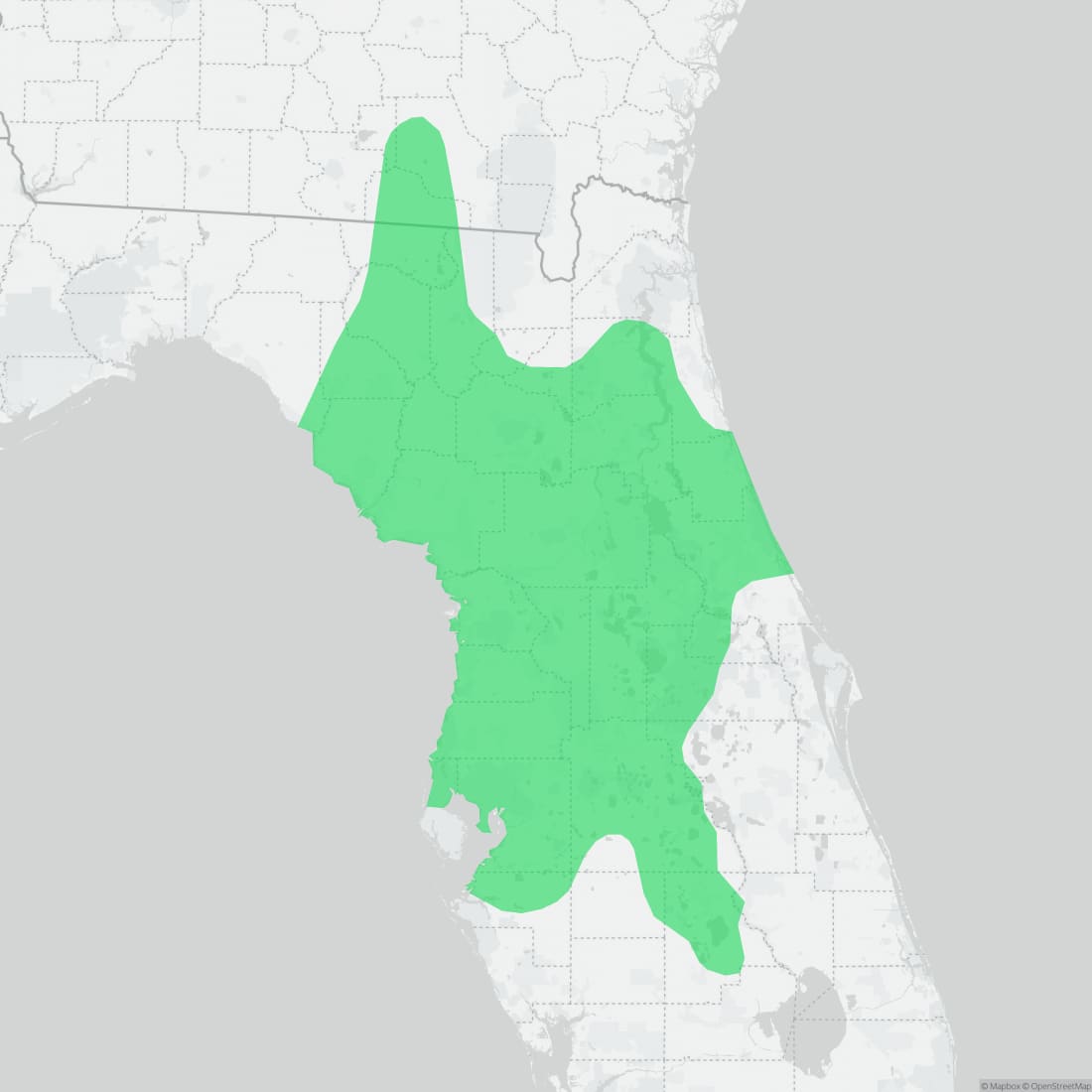
Approximate range. © Mapbox © OpenStreetMap