San Marcos Salamander
Eurycea nana
The San Marcos salamander is a small, voiceless, earless, slender lungless salamander that is averagely 2 inches in length but can reach up to 3.25 inches. The limbs are…
How to identify
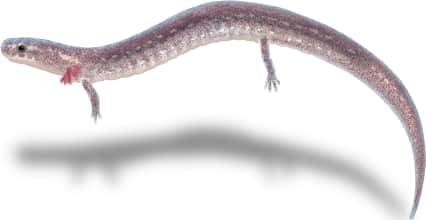
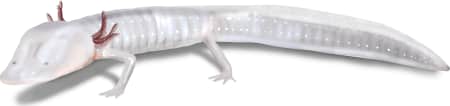
The San Marcos salamander is a small, voiceless, earless, slender lungless salamander that is averagely 2 inches in length but can reach up to 3.25 inches. The limbs are short and it has 5 toes on its hind feet and the forefeet have 4. This salamander has 16-17 costal grooves and obvious gill fringes. The dorsal coloration is brown, the ventral color is a yellowish-white and the midline has flecks of pale yellow. The eyes are protruding. The males have less outlined mental and caudal hedonic glands compared to the females.
Range
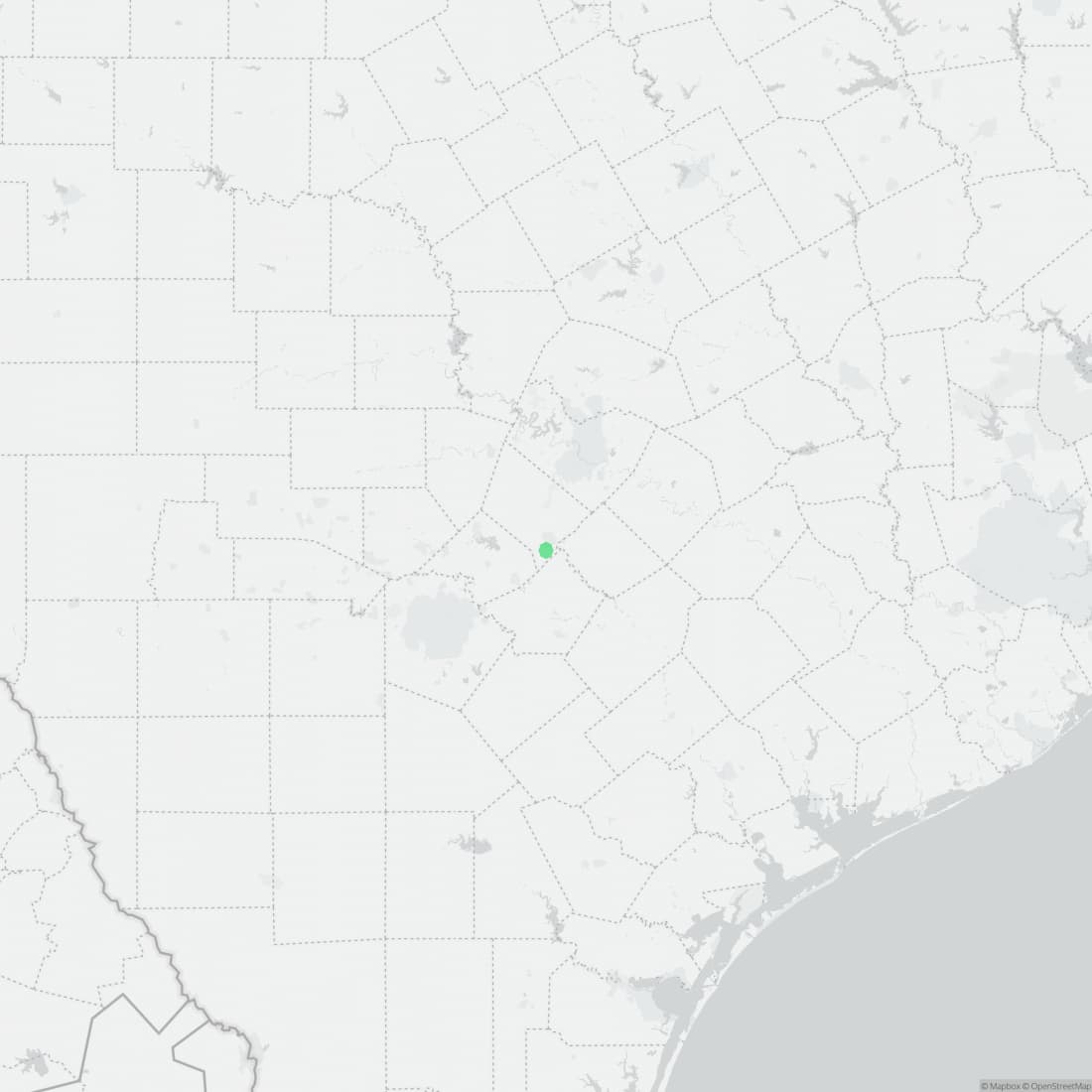
The range of this salamander is limited and can only be found in or around the source of the San Marcos Rivers in Texas.
Habitat
The San Marcos salamanders thrive in shallow, alkaline springs with algae and thick moss that can provide areas for hunting food and shelter from predators (mostly local fish). In cold seasons they shelter underneath logs underwater. Breeding occurs throughout and egg clutches are averagely made up of 20 jelly-covered eggs. The larvae resemble tadpoles and hatch after 24 days. This species of salamander is insectivorous but also eats arthropods, mollusks, and aquatic crustaceans.
Similar species
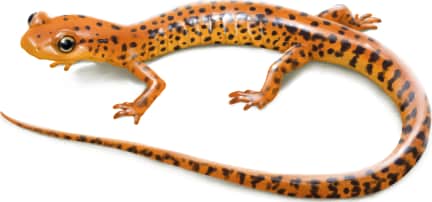
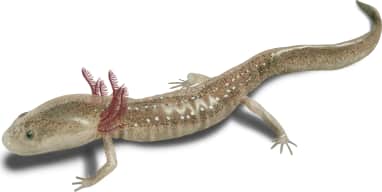
The Barton Springs salamander (Eurycea sosorum) is averagely 2.5 inches. It has reduced eyes and a golden iris. Coloration in this salamander varies widely but may include gray-brown, dark gray, plain-gray, purple-gray, and yellowish-brown. The Long-tailed Salamander (Eurycea longicauda) typically has a coloration of yellow and has a very long tail. The tail takes up to 60% of the total body length. The Texas Cave Salamander (Eurycea rathbuni) has an average length that ranges between 3.3-5.4 inches. It has a flat head and snout. It has a finned tail that tapers at the end. The eyes are vestigial and lie beneath the skin. It has red external gills.
Name and etymology
Genus
Eurycea
Probably honoring Eurydice the wife of Orpheus in Greek mythology. Although Rafinesque, who named the genus, only wrote "mythological"
Origin
Honors
Sources
- Rafinesque, 1822. Kentucky Gazette, Lexington, N. S., Vol. 1, No. 9, Feb. 28, p. 3, column 6
Eurycea. Rafinesque, 1822 - Kentucky Gazette, Lexington, N. S., Vol. 1, No. 9, Feb. 28, p. 3, column 6
Species epithet
nana
Latin for dwarf (nanus).
Origin
Sources
- Bishop, 1941. Occ. Pap. Mus. of Zool. Univ. Michigan, No. 451, p. 6, pl. I, fig. 1 ↗
Eurycea nana. Bishop, 1941 - Occ. Pap. Mus. of Zool. Univ. Michigan, No. 451, p. 6, pl. I, fig. 1
Explore more names in the etymology index.
At a glance
Range
The range of this salamander is limited and can only be found in or around the source of the San Marcos Rivers in Texas.
Habitat
The San Marcos salamanders thrive in shallow, alkaline springs with algae and thick moss that can provide areas for hunting f…
Guide
Reptiles and Amphibians of North America
Range map
Approximate range. © Mapbox © OpenStreetMap