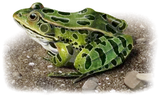
Canyon Tree Frog
Hyla arenicolor
Highly variable in appearance, the canyon tree frog is colored to match its surrounding habitat. They reach a length of 2-2.5 inches and have bumpy skin. General color pa…
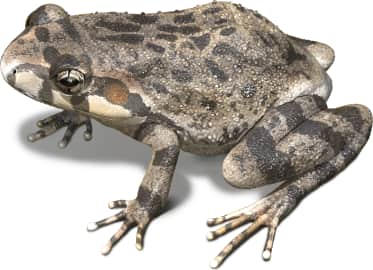
How to identify
Highly variable in appearance, the canyon tree frog is colored to match its surrounding habitat. They reach a length of 2-2.5 inches and have bumpy skin. General color pattern is a light background with darker irregular spots that merge to form bands on the hind legs. A bright yellow groin is also typical for this species. They can be distinguished from similar species by the presence of a light patch beneath each eye, bordered on each side by a dark patch.
Range
Ranges throughout the central southwestern United States, from central Utah and Colorado through most of Arizona and western New Mexico. Range extends south through central and southern Mexico. An isolated population can be found in the Texas panhandle.
Habitat
This species prefers rocky plateaus and can survive in arid regions. It is generally ground-dwelling, and often found in canyon pools.
Variations
Color palette can be shades of green, brown, grey, tan, or even pinkish. Frogs that live in limestone habitats are lighter in color, while those that live in granite habitats are darker.
Similar species
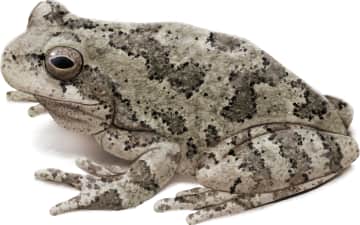
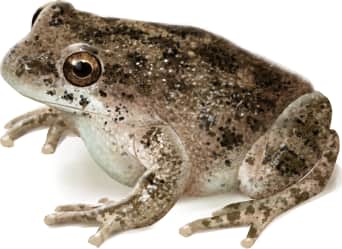
Looks quite similar to the California tree frog (*Pseudacris cadaverina*), which is found much further west. Also bears resemblance to the gray tree frog (*Hyla versicolor*) or Cope's gray tree frog (*Hyla chrysoscelis*), both found further east.
Name and etymology
Genus
Hyla
Honoring Hylas, an Argonaut from greek mythology, who name means "belonging to the woods"
Origin
Honors
Sources
- Laurenti, 1768. Syn. Rept., p. 32
Hyla. Laurenti, 1768 - Syn. Rept., p. 32
Species epithet
arenicolor
Latin for sandy(arena) color(color) referencing its sandy color
Origin
Sources
- Cope, 1886. Journ. Acad. Nat. Sci. Philadelphia, Ser. 2, Vol. 6, p. 84 ↗
Hyla arenicolor. Cope, 1886 - Journ. Acad. Nat. Sci. Philadelphia, Ser. 2, Vol. 6, p. 84
Explore more names in the etymology index.
At a glance
Range
Ranges throughout the central southwestern United States, from central Utah and Colorado through most of Arizona and western…
Habitat
This species prefers rocky plateaus and can survive in arid regions. It is generally ground-dwelling, and often found in cany…
Guide
Reptiles and Amphibians of North America
Range map
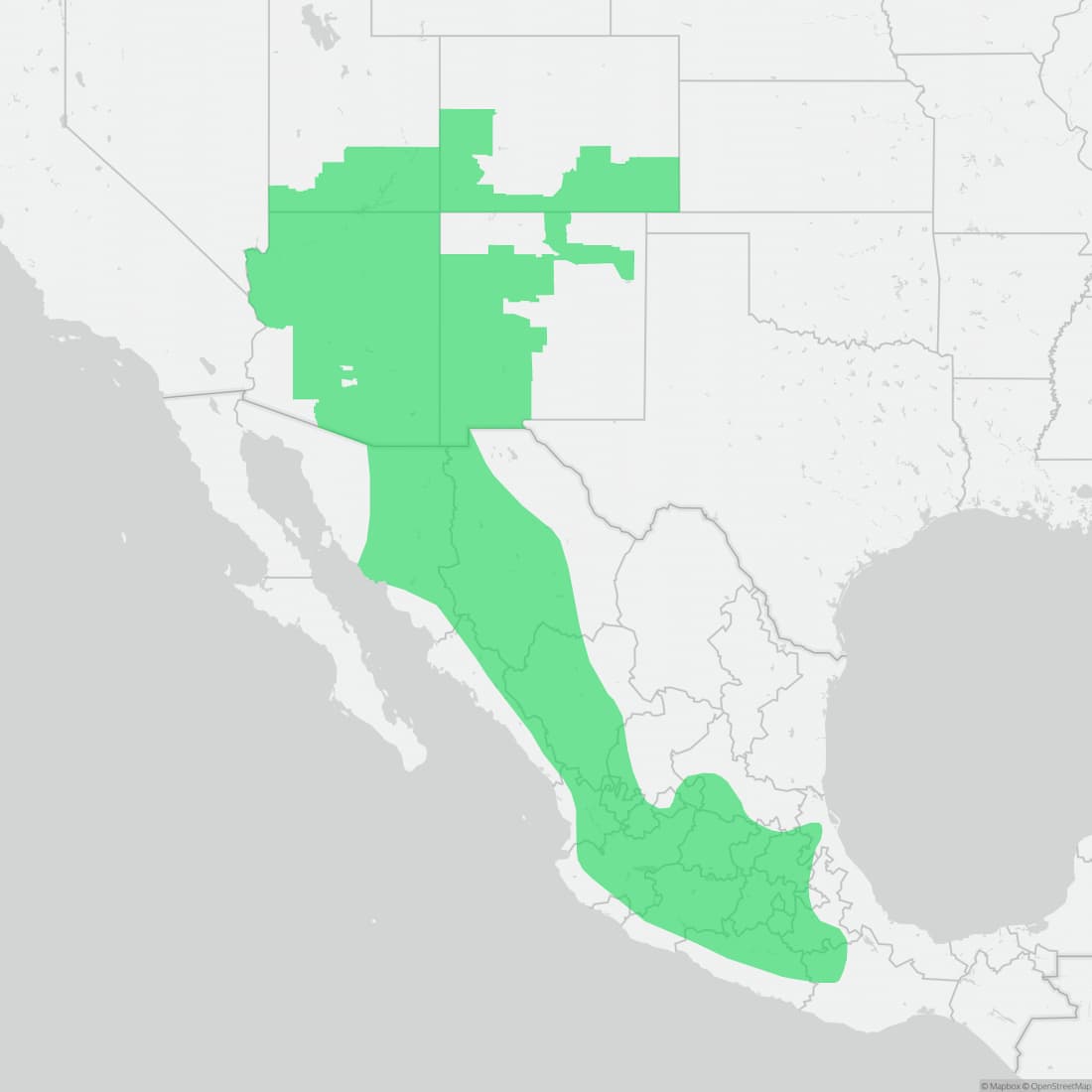
Approximate range. © Mapbox © OpenStreetMap