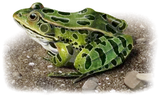
Gray Tree Frog
Hyla versicolor
This frog can be identified by a blotchy pattern on its skin, resembling lichen; the white spot beneath each eye, and a dark stripe that reaches the front of the legs. Th…
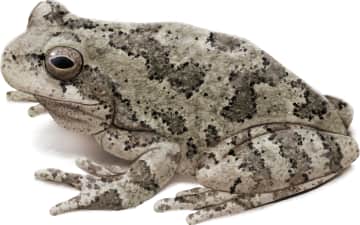
How to identify
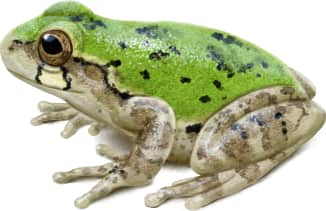
This frog can be identified by a blotchy pattern on its skin, resembling lichen; the white spot beneath each eye, and a dark stripe that reaches the front of the legs. They have white bellies, while their limbs are yellow or orange underneath. The tops of their bodies can change color from grey to green or brown, depending on the environment and how much stress they’re under.
Range
The gray tree frog's range covers wide swathes of the east United States, from northern Florida to central Texas and parts of southeastern Canada.
Habitat
The Gray Tree Frog is a largely arboreal species that occupies various wooded habitats. It’s frequently found in forests, swamps, backyards and on agricultural land. Like all amphibians, it starts out life in the water and moves onto dry land. It migrates upward with age; off flat ground and into the trees.
Variations
This species is sexually dimorphic, with females the slightly larger of both genders.
Similar species
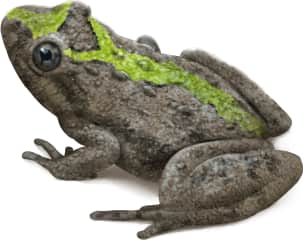
Similar species to the Gray Tree Frog are – The Bird-voiced Tree Frog, Hyla avivoca Blanchard’s Cricket Frog, Acris blanchardi Canyon Tree Frog, Hyla arenicolor Cope’s Gray Tree Frog, Hyla chrysocelis
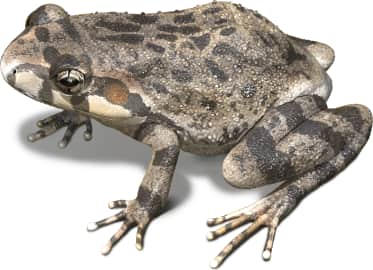
Name and etymology
Genus
Hyla
Honoring Hylas, an Argonaut from greek mythology, who name means "belonging to the woods"
Origin
Honors
Sources
- Laurenti, 1768. Syn. Rept., p. 32
Hyla. Laurenti, 1768 - Syn. Rept., p. 32
Species epithet
versicolor
Lating for changing(versi) color(color) referencing its ability to change color
Sources
- Le Conte, 1825. Ann. Lyc. Nat. Hist. New York, Vol. 1, No. 2, p. 281 ↗
Hyla versicolor. Le Conte, 1825 - Ann. Lyc. Nat. Hist. New York, Vol. 1, No. 2, p. 281
Explore more names in the etymology index.
More illustrations
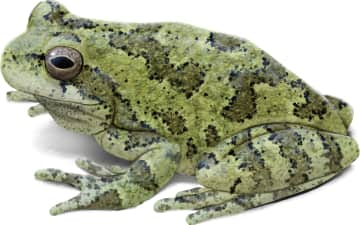
Green color
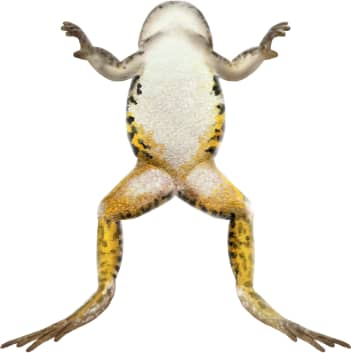
At a glance
Range
The gray tree frog's range covers wide swathes of the east United States, from northern Florida to central Texas and parts of…
Habitat
The Gray Tree Frog is a largely arboreal species that occupies various wooded habitats. It’s frequently found in forests, swa…
Guide
Reptiles and Amphibians of North America
Range map
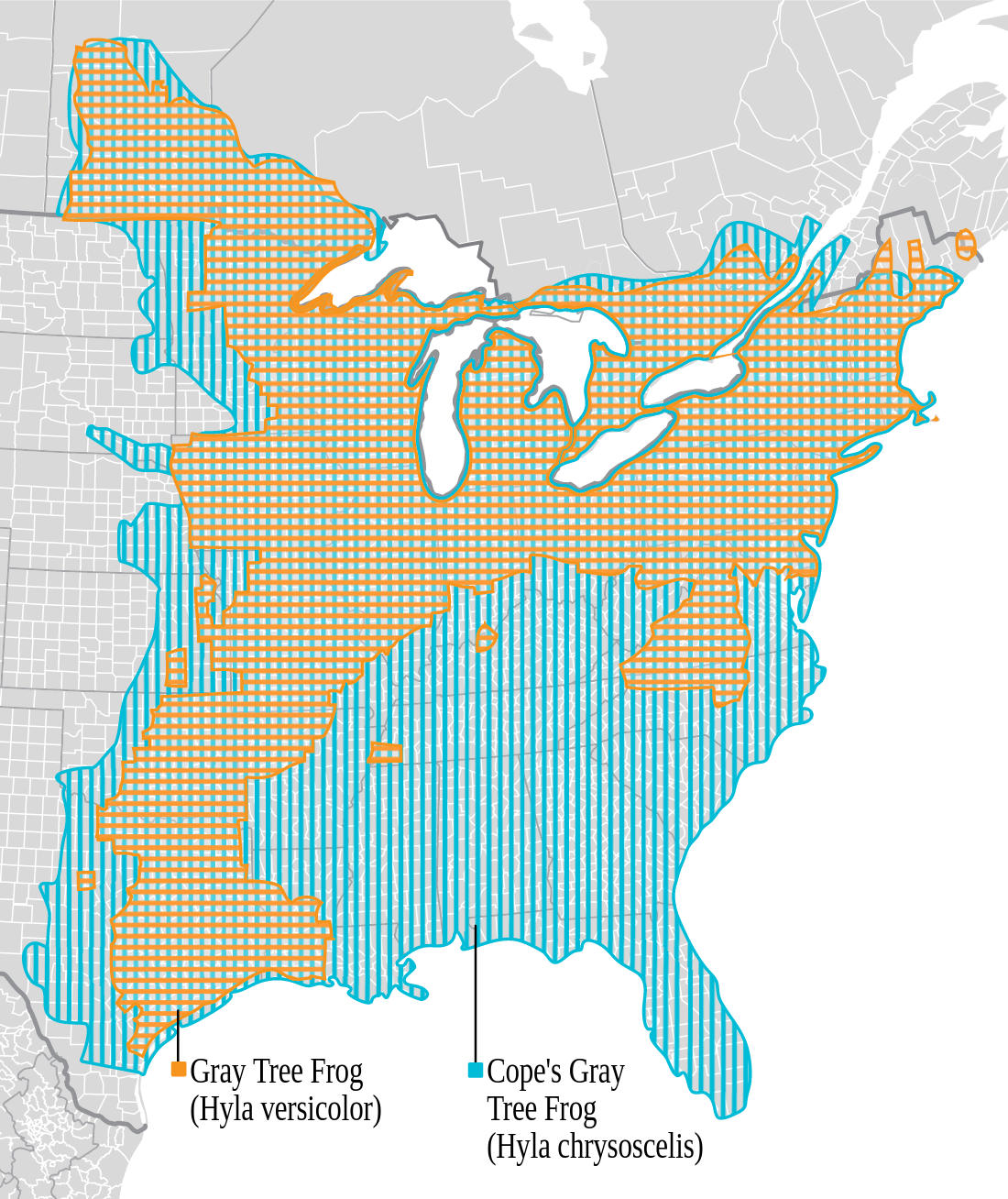
Approximate range. © Mapbox © OpenStreetMap