Piedmont Dusky Salamander
Desmognathus bairdi
D. bairdi has a relatively compressed but keeled tail. Adults typically consisting of a distinct dorsal stripe with well-defined but iirregular borders. D. bairdi often h…
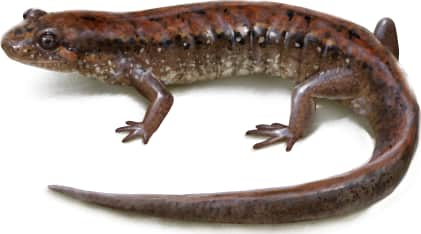
How to identify
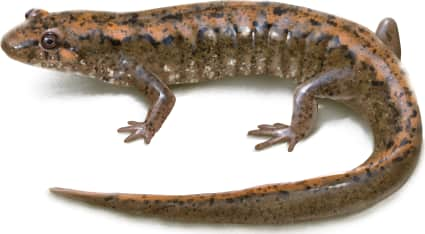
D. bairdi has a relatively compressed but keeled tail. Adults typically consisting of a distinct dorsal stripe with well-defined but iirregular borders. D. bairdi often has a row of light-colored "portholes" on the side.
Range
D. bairdi inhabits the Piedmont and margins of the upper Coastal Plain in North Carolina, north-central South Carolina and southeastern Virginia
Habitat
D. bairdi can be found in streamside habitats, under rocks, logs, and leaf packs. It often is found in Ravine-type habitats in the Piedmont and Sandhill populations.
Similar species
Name and etymology
Genus
Desmognathus
Greek for jaw (gnathos) ligament (desmos).
Origin
Sources
- Baird, 1850. Journ. Acad. Nat. Sci. Philadelphia, Ser. 2, Vol. 1, p. 282 and p. 285 ↗
Desmognathus. Baird, 1850 - Journ. Acad. Nat. Sci. Philadelphia, Ser. 2, Vol. 1, p. 282 and p. 285
Species epithet
bairdi
Honoring herpetologist Spencer Fullerton Baird
Origin
Sources
- The Reptile Database: Desmognathus bairdi ↗
Uetz, P., et al. The Reptile Database. s.v. “Desmognathus bairdi.” https://reptile-database.reptarium.cz/species?genus=Desmognathus&species=bairdi
Explore more names in the etymology index.
At a glance
Range
D. bairdi inhabits the Piedmont and margins of the upper Coastal Plain in North Carolina, north-central South Carolina and so…
Habitat
D. bairdi can be found in streamside habitats, under rocks, logs, and leaf packs. It often is found in Ravine-type habitats i…
Guide
Reptiles and Amphibians of North America
Range map
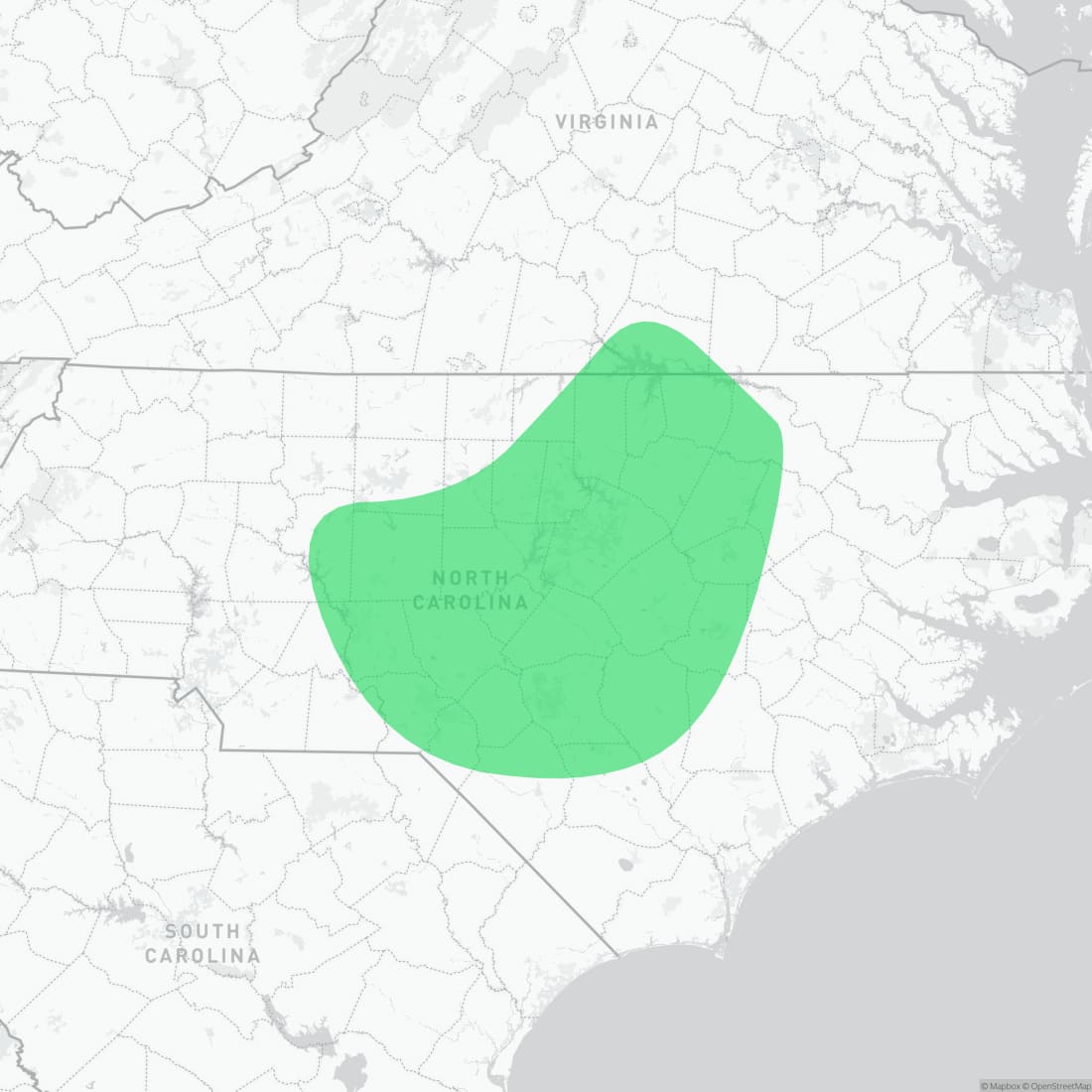
Approximate range. © Mapbox © OpenStreetMap