Big Spring Legless Lizard
Anniella campi
From 4 – 7 inches, the Big Spring Legless Lizard relatively small. It is also slender and has no legs. The snout is shaped like a shovel and the scales are smooth and shi…
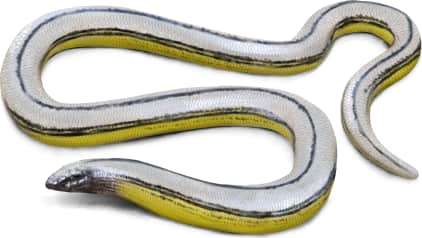
How to identify
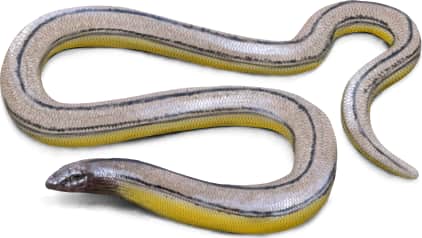
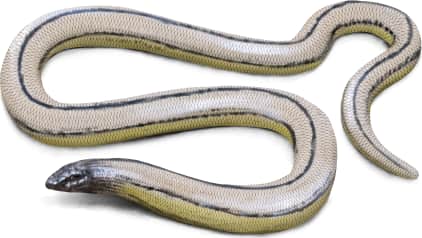
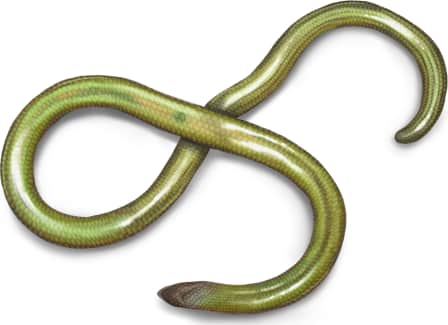
From 4 – 7 inches, the Big Spring Legless Lizard relatively small. It is also slender and has no legs. The snout is shaped like a shovel and the scales are smooth and shiny. It has eyelids, and this is a major differentiating factor because snakes do not have eyelids. The dominating color on this lizard is yellow as its dorsum is usually yellowish-grey, the sides are a bright yellow and the ventral area is yellow as well.
Range
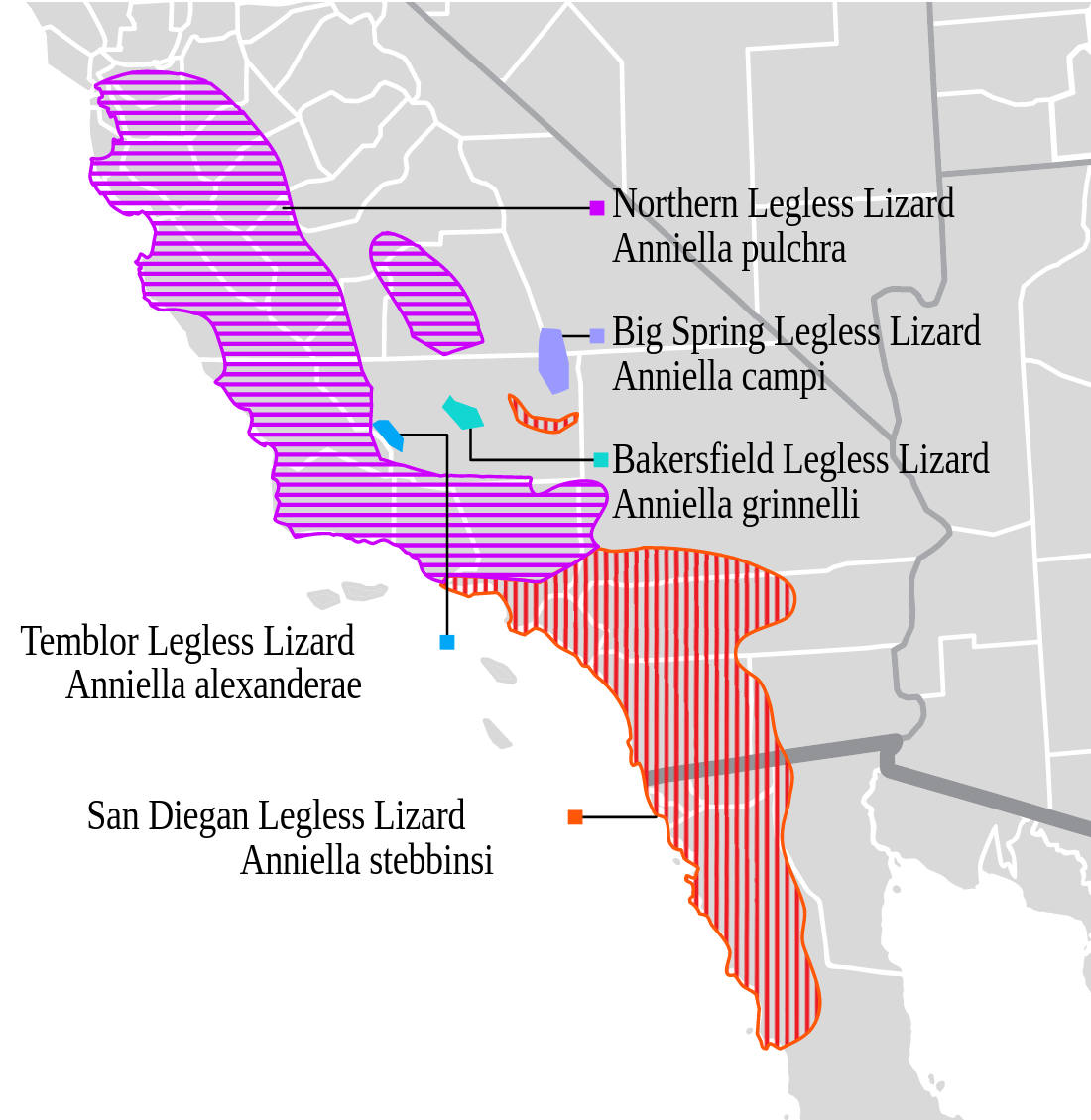
They can be found in three major localities. The first is the Big Spring in Texas. Second is the Parham and Papenfuss where it’s been reported at southern Inyo County, north of Big Spring. The third locality is south of Big spring in Kern County. It is also found in Sierra Nevada, California.
Habitat
You can find this lizard burrowing in moist soil with warm temperature and sandy, loose texture. It doesn’t bask in direct sunlight and lives mostly underground in foliage under trees. It can be found in suburban gardens in Southern California. They eat primarily, larval insects, termites, beetles, and spiders.It has a detachable tail that can regenerate. It is viviparous and is speculated to breed between early spring and July 1 – 4.
Similar species
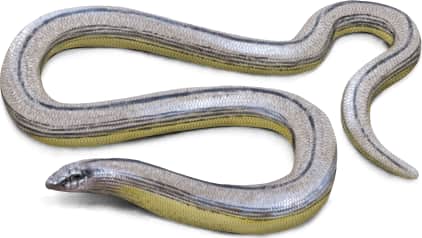
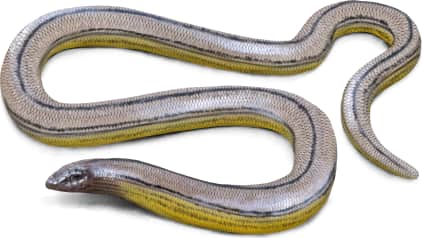
Temblor Legless Lizard or Anniella alexanderae is very similar in terms of basic features like scale texture and eyelids. However, the major difference is that it has a light grey ventral coloring. Southern California Legless Lizard or Anniella stebbinsi is also similar in appearance but can be distinguished by the yellow ventral coloration and its mid-dorsal stripes that reach the tip of the tale from the parietals. Northern California Legless Lizard or Anniella pulchra varies because its dorsal coloration can be silver, metallic, beige, dark brown or black
Name and etymology
Genus
Anniella
Latin for little (-ella) ring (annela).
Origin
Sources
- Gray, 1852. Ann. Mag. Nat. Hist., Ser. 2, Vol. 10, p. 440 ↗
Anniella. Gray, 1852 - Ann. Mag. Nat. Hist., Ser. 2, Vol. 10, p. 440
Species epithet
campi
Honoring Charles Lewis Camp.
Origin
Honors
Sources
- Wikipedia: Anniella campi ↗
“Anniella campi.” Wikipedia. https://en.wikipedia.org/wiki/Anniella_campi
Explore more names in the etymology index.
More illustrations
At a glance
Range
They can be found in three major localities. The first is the Big Spring in Texas. Second is the Parham and Papenfuss where i…
Habitat
You can find this lizard burrowing in moist soil with warm temperature and sandy, loose texture. It doesn’t bask in direct su…
Guide
Reptiles and Amphibians of North America
Range map
Approximate range. © Mapbox © OpenStreetMap